
Last updated November 23, 2026
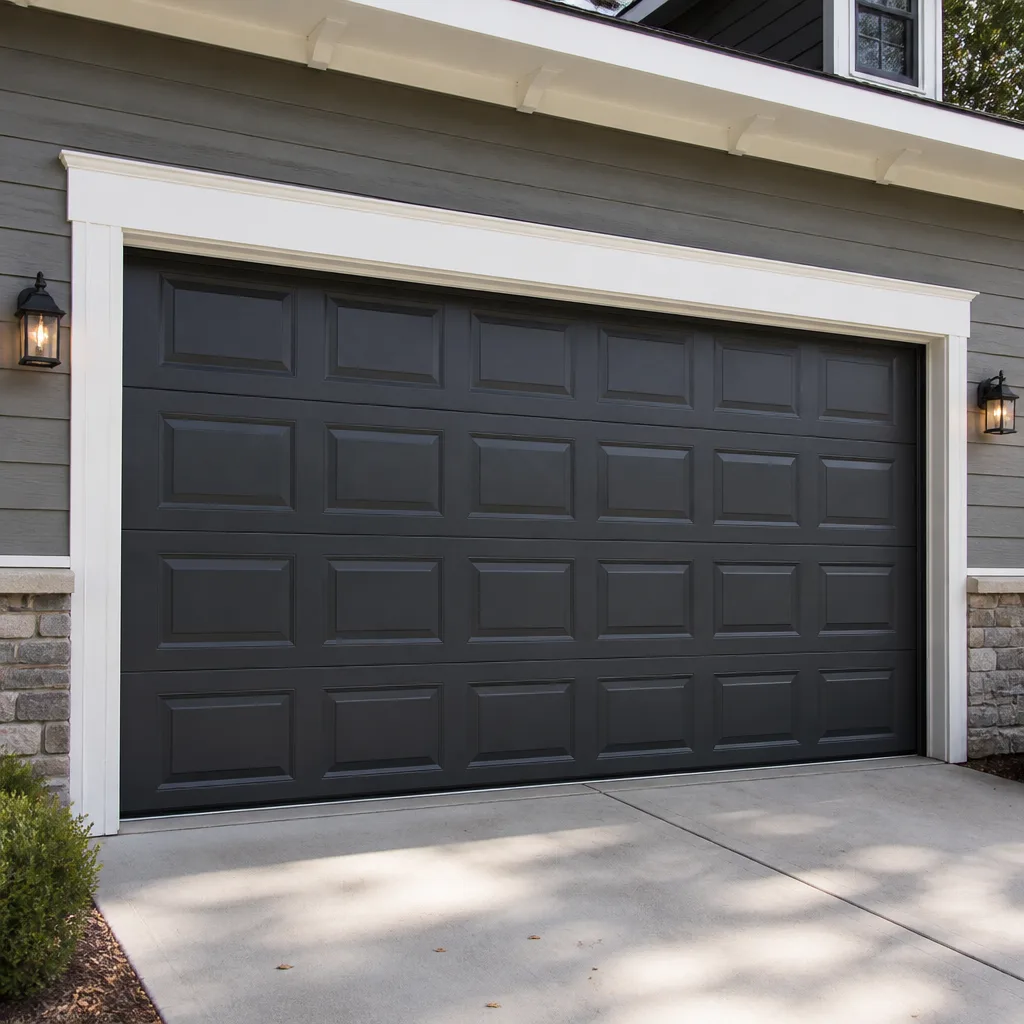 Raised-panel steel
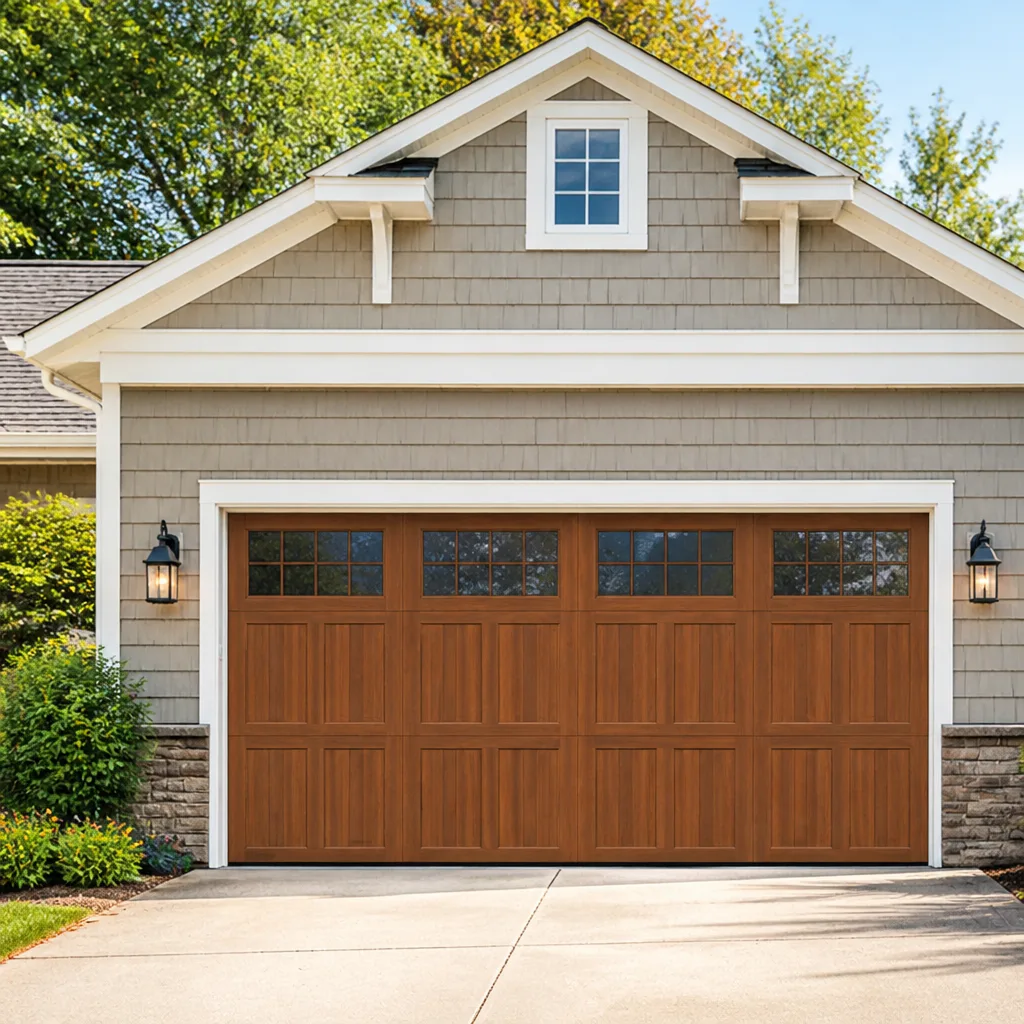
 Carriage house
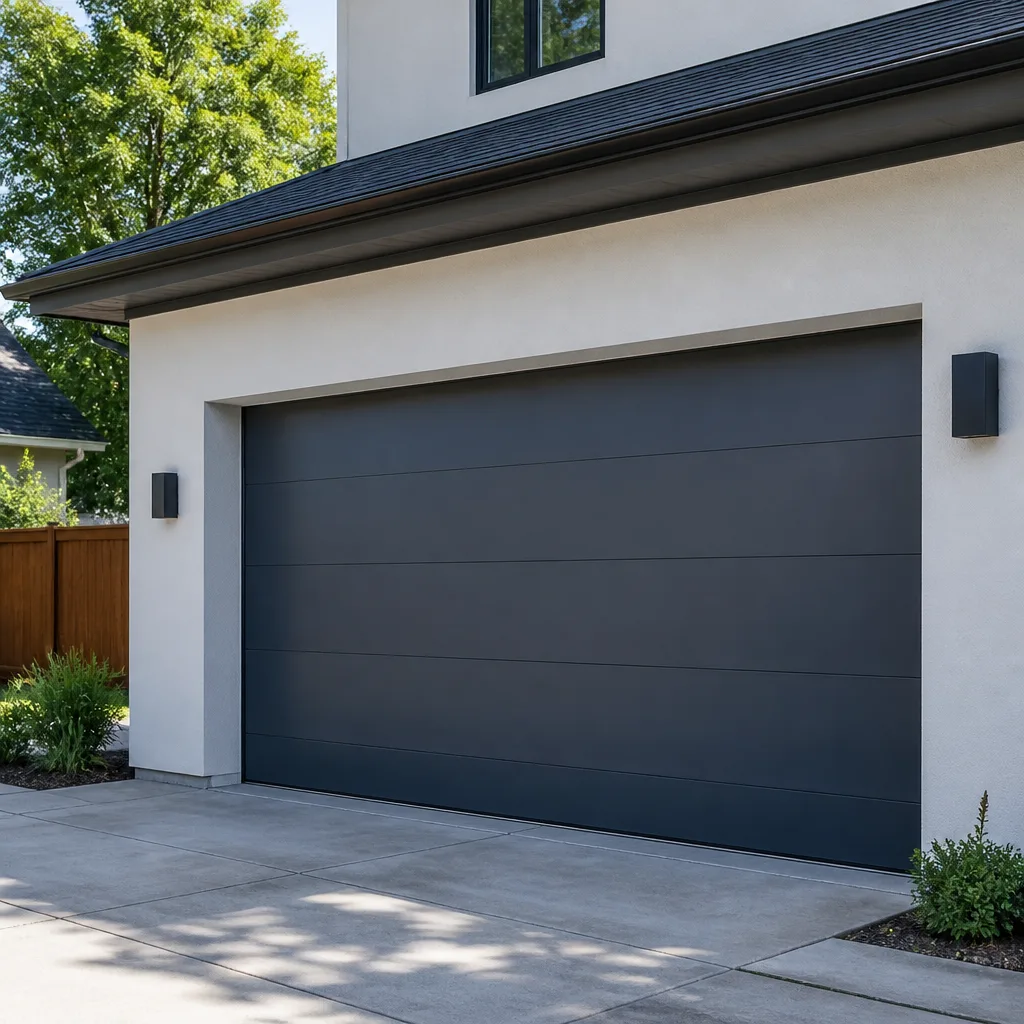 Modern flush
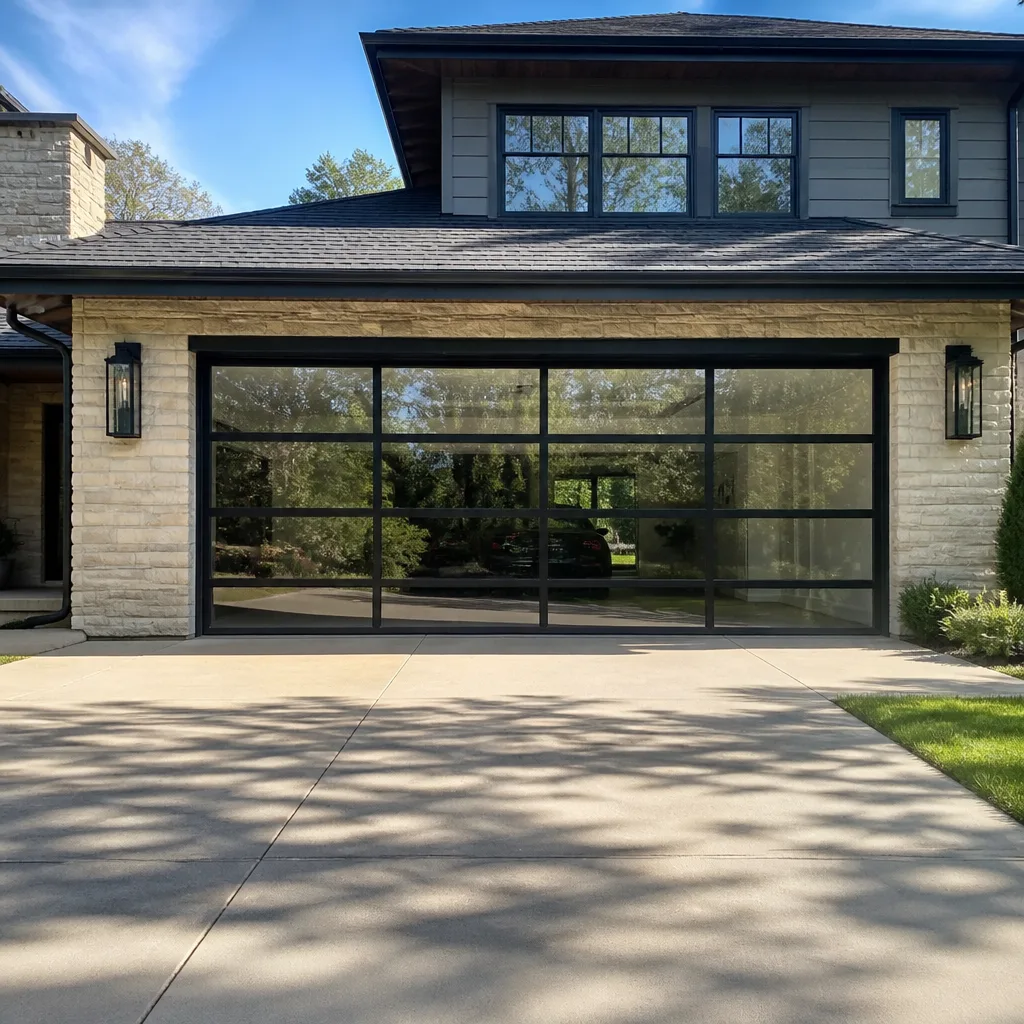 Full-view glass
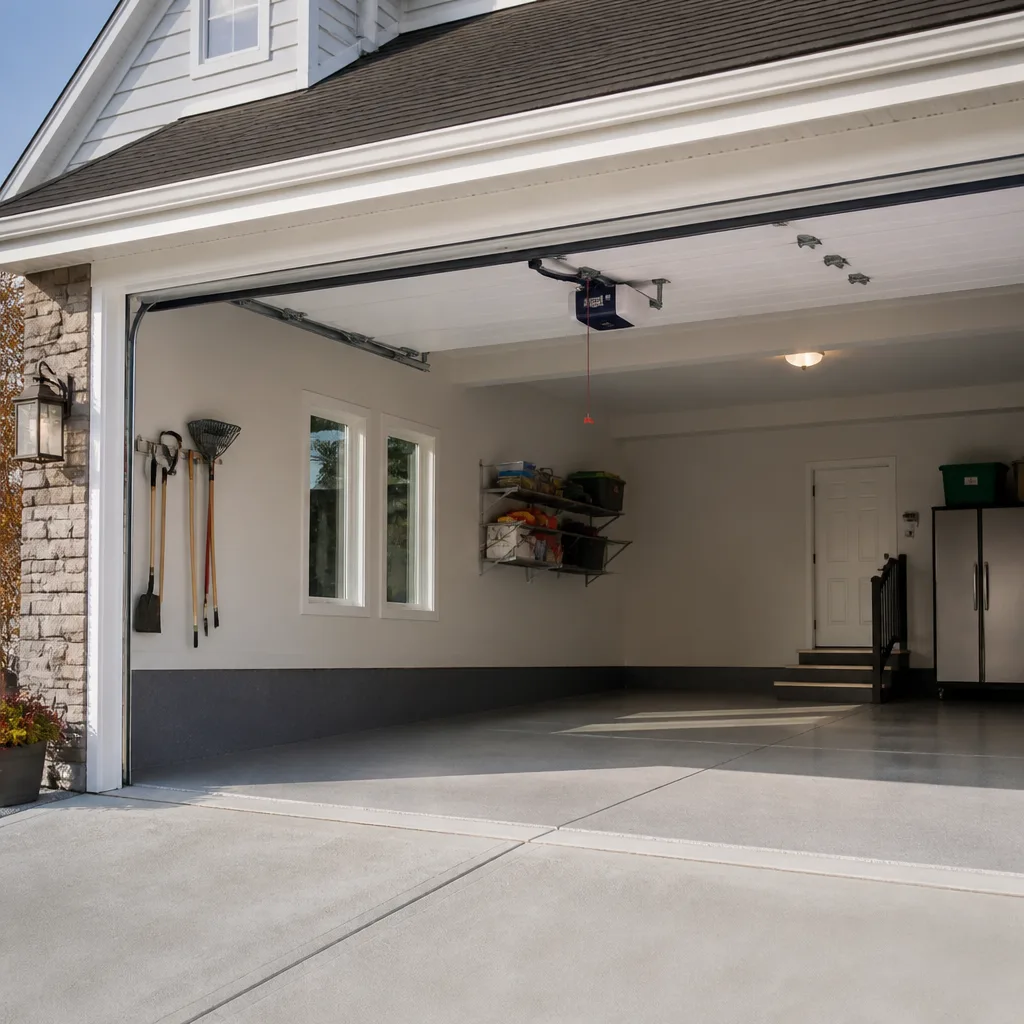 LiftMaster openers
 Chamberlain openers
Full 25-point door and opener safety check with every visit - springs, cables, rollers, tracks, and your LiftMaster or Chamberlain opener included
You get a price before we start. It does not change when the pro arrives.
Get your free estimateGarage Door Warning Signs: A Waterbury Homeowner’s Reference Guide
The most expensive garage door failures almost never happen without warning. They happen after months of ignored warnings. Most homeowners treat a door that needs “a little extra push” to close as a minor annoyance. In reality, that push means the spring tension has dropped far enough that the opener motor is compensating for it. The motor is doing work it wasn’t designed to do, and the spring is closer to snapping than it looks. Warning signs follow a predictable timeline. Learning to read that timeline tells you whether you have days, weeks, or months before something fails. This guide walks through those signs in order, from early-stage wear to imminent failure, with the specifics Waterbury homeowners actually run into.
Quick Answer
Garage door warning signs fall into two categories: signs of early-stage wear you can schedule around (squealing rollers, minor vibration, slow opener response) and signs of imminent failure that need attention now (visible spring gaps, frayed cables, an off-track door, or a door that reverses before it closes). Anything involving the springs, cables, or door balance should never be tested by hand. Listen to the sounds, watch the travel, and call a technician if anything feels off.
Styles & brands we work with
- Raised-panel steel
- Carriage house
- Modern flush
- Full-view glass
- LiftMaster openers
- Chamberlain openers
Table of Contents
- The Escalation Timeline: Days vs. Months
- Decoding the Sounds: Grinding, Popping, Squealing, Rattling
- Visual Wear Indicators You Can Safely Observe
- Balance, Tension, and the “Extra Push” Problem
- Off-Track Doors: Why They Come Back
- Opener Behavior: Hesitation, Reversal, Slow Response
- What Waterbury’s Winters Do to Your Door Hardware
- The Monthly Five-Minute Check
The Escalation Timeline: Days vs. Months
Warning signs stack. A roller starts squealing, then the door starts vibrating, then the opener starts hesitating, then one day the spring lets go. Nature doesn’t skip steps. That sequence is your best diagnostic tool, and it applies to any door brand, from a Clopay steel door to an older Wayne Dalton model. Here’s how we read that timeline for homeowners across Waterbury.
Signs that mean “act now”
- A visible gap in the spring coils. A torsion spring should be tightly wound. A gap of an inch or more, or a spring that looks stretched, means it’s lost integrity and could fail without further warning. Do not stand under it. Do not touch it.
- A frayed or snapped cable. Cables under tension are as dangerous as springs. A cable with broken strands, kinks, or a loose end is a stop-driving-the-door situation.
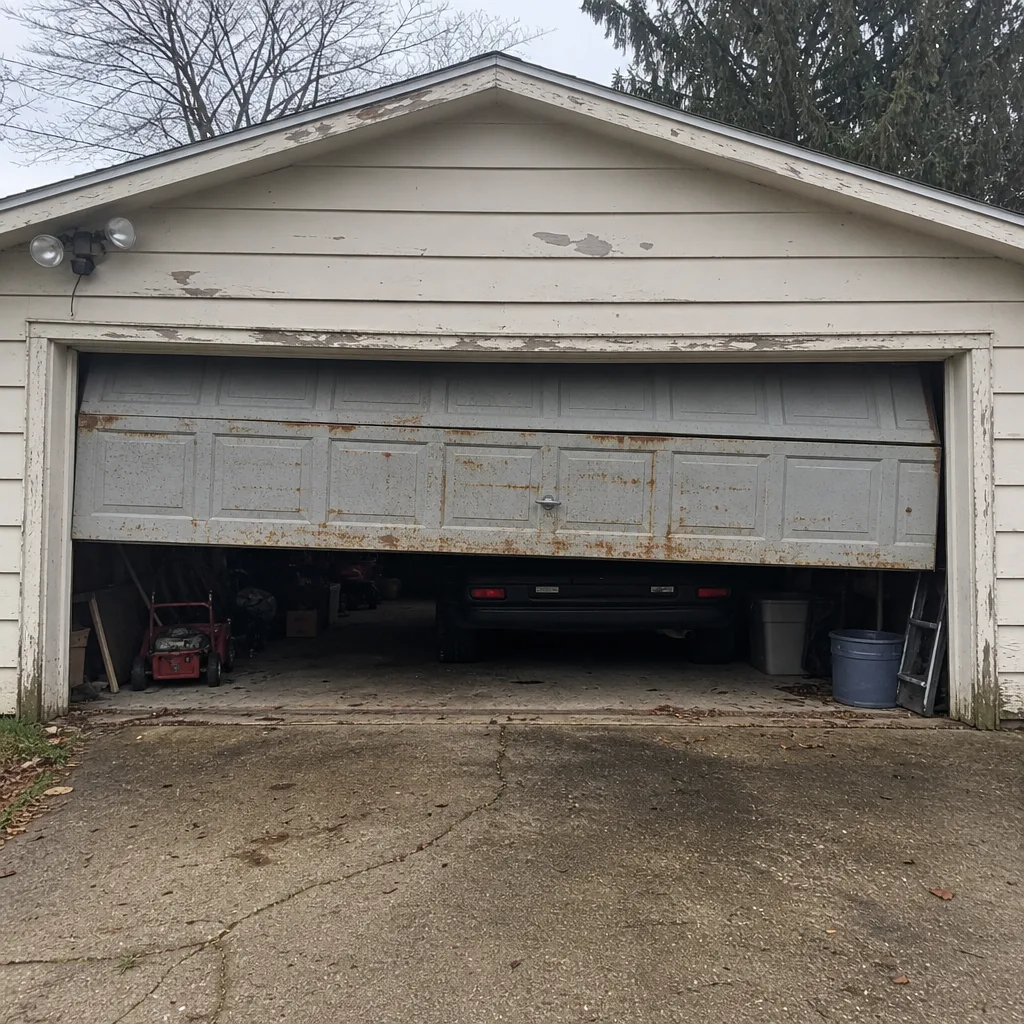
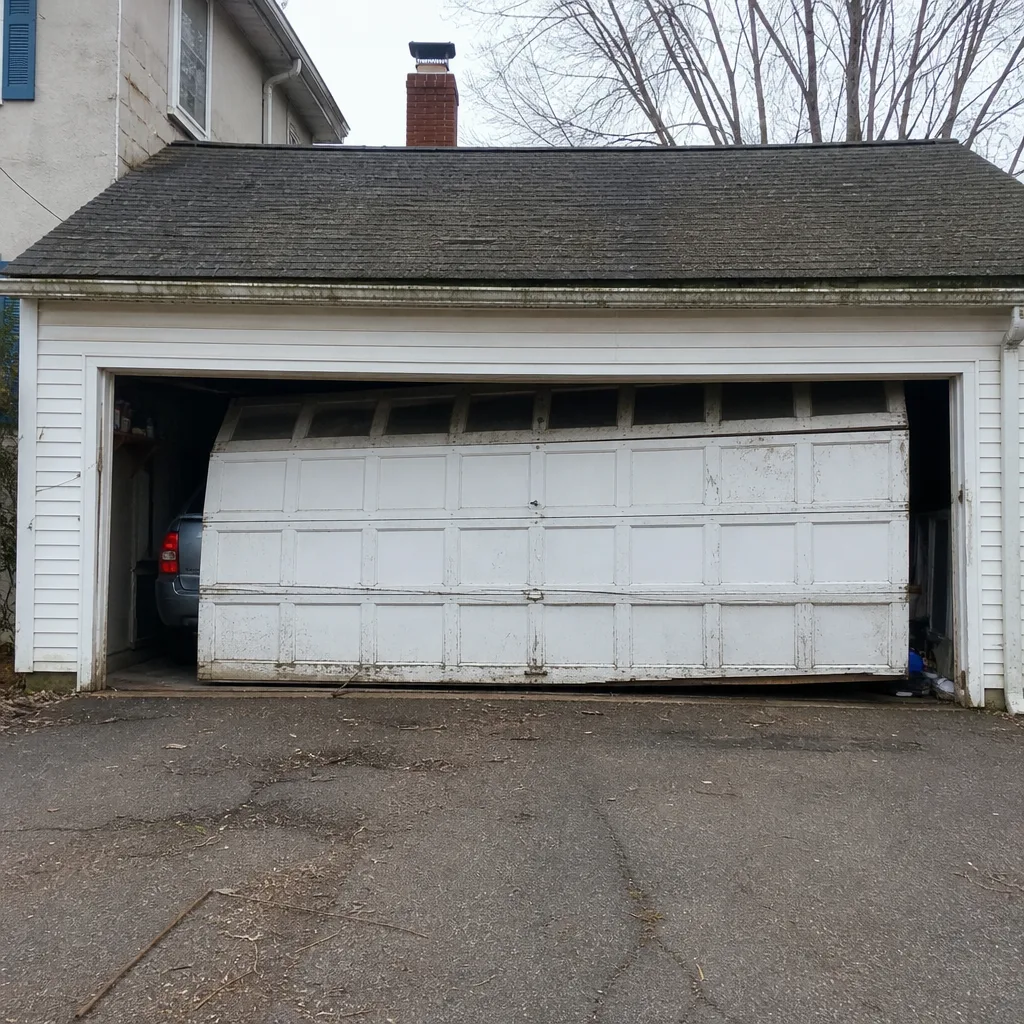
- An off-track door or one that looks crooked when closed. The door could drop or jam mid-travel. Leave it down and call.
- A door that reverses immediately or won’t stay closed. If the opener is fighting the door and losing, drive mechanism or force settings are involved. A door that won’t seal is also an open invitation in a neighborhood where the garage faces the alley or driveway.
- Loud popping or snapping sounds from the overhead area. That’s likely a spring, and springs don’t announce themselves twice.
Signs that mean “schedule within 30 days”
- Squealing or grinding on open and close. Rollers, hinges, or the opener’s gear assembly are wearing.
- Slow opener response. A LiftMaster or Chamberlain unit that hesitates a half-second before moving usually has a sensor or logic board issue. It’ll get worse.
- A door that shudders on the way up. Uneven tension or a bent track section.
- Small vibration at the top of the travel. A sign the torsion bar or center bearing is starting to wear.
In our experience, the “act now” list almost always starts as a symptom on the 30-day list. Homeowners in Waterbury who catch it there avoid the emergency call entirely.
Decoding the Sounds: Grinding, Popping, Squealing, Rattling
Each sound points to a specific component. When you call us, the sound you describe tells us more than a photo of the door ever could. Here’s how to interpret what you’re hearing, and where each noise sits on the timeline.
Grinding
Grinding is metal-on-metal contact. Common sources: worn steel rollers with dry bearings, a torsion bar turning in a dry center bearing, or an opener’s gears chewing themselves down. Grinding accelerates. The longer it runs, the more parts it takes with it. On a Genie or Chamberlain opener, grinding often means the drive gear is on the way out. Grinding from the overhead assembly is a schedule-this-week sign, not a next-month sign.
Popping
A single loud pop followed by a door that suddenly feels heavier than it did before is almost always a broken torsion spring. Multiple smaller pops during travel usually point to the door jumping on the track or a loose hinge plate. Both deserve a call, but the single pop with a sudden weight change is the urgent one. Do not attempt to open the door by hand after that pop.
Squealing
Squealing is the early warning. Nylon or steel rollers squeal when they’re dry. Hinges squeal when they need lubrication. A squeal on the open cycle only, with no other symptoms, is generally the most benign sound on this list. It’s also the cheapest one to deal with before it becomes grinding.
Rattling
Rattling on open and close generally points to loose hardware: lag bolts backing out of the jamb, a loose bottom bracket, or track brackets that need tightening. Rattling is common on older doors in Waterbury’s older housing stock, where the wood framing behind the brackets has dried out and shrunk over time. A rattle that shows up suddenly after a cold snap usually means a fastener has let go.
Visual Wear Indicators You Can Safely Observe
You can see a lot from the floor without touching anything. Here’s what to look for during a monthly walk-around. Observe only. Never handle the spring, cable, or bottom bracket. Those components are under extreme tension, and an untrained hand near them is how serious injuries happen.
- Look at the torsion spring above the door. A healthy spring is one continuous, tight coil. A gap, a stretched section, or orange-rust pitting along the coil means it’s near the end of its life. Note the color band on the spring – it tells a technician the wire size and cycle rating.
- Look at the cables on both sides. Cables should run clean and straight along the drum. Broken strands, fraying near the drum, or a cable that’s come off its drum is a stop-driving sign.
- Look at the rollers. Steel rollers wear into a flat spot. Nylon rollers crack. Any roller that shows a flat edge or visible crack should be replaced as a set.
- Look at the hinges. Rust streaks under a hinge, or a hinge plate that’s pulled away from the panel, is a wear indicator.
- Look at the tracks. Tracks should be straight and parallel. A bend, a dent, or a visible gap between track and door is a de-rail waiting to happen.
- Look at the weather seal. A seal that’s cracked, torn, or lying flat means daylight and cold air are getting through. In Waterbury’s winters that’s a real problem, not a cosmetic one.
- Look at the panels. A door that’s been bumped by a car or backed into by a bicycle leaves a dent that can throw the panel out of alignment even if the track looks fine.
If any of these look wrong, note it and call. A quick garage door repair visit prevents small issues from becoming structural ones.
Balance, Tension, and the “Extra Push” Problem
That “extra push” is not a personality quirk of your door. It’s a measurable symptom. Here’s what’s happening behind it and why it matters.
A garage door is a balance system. The torsion spring (or springs, for heavier doors) is sized to hold the door at roughly its own weight in every position, so the opener only has to guide it. When the spring loses tension, the door becomes heavier than the spring can hold. The opener motor is now doing the work the spring was designed to do. That loads the opener’s gear train, heats up the motor, and accelerates wear on both. On a LiftMaster or Chamberlain unit, the motor will often start reversing or stalling before it fails outright – the safety logic holds the door back because it can’t lift it cleanly.
How to test balance without touching the hardware
- Start with the door fully closed.
- Pull the manual release cord to disconnect the opener. The opener arm will detach; the door will stay down.
- Lift the door by hand to about waist height and let go. Hold on. A balanced door stays roughly where you left it. A door that falls hard means the spring is losing tension.
- Reconnect the release and test the opener. If it struggles, the spring is the culprit, not the opener.
If that test feels at all uncertain, stop and call. A door whose spring is failing can drop faster than a hand can react. Waterbury Garage Door Repair handles garage door spring repair as a stand-alone service because this is the most mechanically hazardous part of the trade and the one most often done badly by generalists.
Off-Track Doors: Why They Come Back
An off-track door is never a one-time event. If the door has come off the track once, the cause is still there. Rollers pop off the track when the geometry of the door changes: a bent track, a bent panel, a broken roller, a bent hinge, or a torsion bar that’s shifting. Fighting the door back onto the track might work for an afternoon. It doesn’t fix what put it there, and it often bends the track further in the process.
In Waterbury, we see this pattern most on older doors where the wood frame behind the track has moved with the seasons. A door that tracked fine in October can pop a roller in February because the jamb has shrunk just enough to shift the track a fraction of an inch. The fix isn’t a bigger hammer on the track; it’s finding out what moved and correcting it.
If your door has ever been off-track:
- Leave it down until a technician sees it.
- Don’t force it back with a lever. You’ll bend a second component.
- Don’t run the opener to “test” it. If the door is off-track, running the opener will drag the door along the ground and damage the panels.
- Do look at the door from outside, straight on. A visible tilt or gap at the top is a clear signal that alignment needs checking.
Opener Behavior: Hesitation, Reversal, Slow Response
Openers rarely fail suddenly. They behave oddly first. Reading those behaviors correctly separates a sensor problem from a force setting problem from a drive problem. The right diagnosis saves you from replacing an opener that’s actually fine.
Sensors
If the door reverses immediately after starting to close, or refuses to close at all, check the two photo-eye sensors at the door base first. One is usually a small colored LED. If it’s blinking, the beam is blocked or misaligned. Wipe the lenses, look for cobwebs or a dropped leaf, and check that both sensor brackets are screwed tight. Waterbury’s pollen season and winter road salt tracked in on tires both leave residue on the lenses.
Force settings
Openers have a force adjustment that tells them how hard to push before reversing. If the force is set too low, the door reverses on its own weight. If it’s set too high, the safety reverse can fail to trigger when it should. Both are adjustments a technician makes with a scale and a door-specific procedure, not a guess at a dial. Force settings that suddenly need adjustment usually mean the door has gotten heavier – a spring issue.
Drive problems
A slow response, a hesitation before the opener moves, or a door that stops mid-travel all point to the drive system. Chain drives, belt drives, and screw drives each wear differently. On a Chamberlain or Genie belt drive, a stretched belt slips before it breaks. On a chain drive, the gear at the top of the rail wears into a hook shape. In our experience, this is where a called-out garage door opener repair saves the most money. Diagnosing the drive system accurately is cheaper than replacing an opener because a symptom looked like a failure.
What Waterbury’s Winters Do to Your Door Hardware
Waterbury’s climate puts your door through a year of thermal cycling that inland California or Florida doors never see. Cold snaps in the teens, thaws, wet springs, and hot humid summers work on every metal component. The result is a specific pattern of wear you can plan around.
- Lubricant dries and thins faster in the cold. Rollers that were quiet in October start squealing in December. The right lubricant, not the wrong one, makes the difference. Silicone or lithium grease formulated for cold weather; never WD-40 as a long-term solution.
- Wood jambs move with the seasons. Older homes in the Bunker Hill and Columbia Boulevard neighborhoods commonly have original wood framing that shrinks in the cold. Tracks ride on that framing, so a track that was true in summer sits slightly off in winter.
- Springs cycle more in cold weather. Every open and close counts as one cycle on the spring. If your household opens the door more than twice a day, and the door cycles in freezing weather, spring life will run shorter than the manufacturer’s cycle rating.
- Ice and snow affect the seal and the bottom bracket. Meltwater refreezing under the door pushes up on the bottom seal and can bend the bottom bracket.
- Salt and grit tracked in from the driveway get onto the tracks. Clean the track channels at the start of winter so rollers aren’t rolling over grit all season.
If you live in Waterbury and your door sounds different in January than it did in September, that’s the season talking. Get it looked at before the first hard freeze, not after.
The Monthly Five-Minute Check
Here’s a routine we recommend to every homeowner we talk to in Waterbury. Five minutes once a month keeps small symptoms from stacking into a real failure.
- Listen. Open and close the door once. Note any new sound.
- Watch the travel. Does the door move smoothly, or does it shudder? Does it stay level, or tilt on the way up?
- Look at the spring and cables from the floor. Observe only. Note gaps, fraying, or rust.
- Check the sensors. Look for blinking LEDs and wipe the lenses.
- Test the safety reverse. Place a piece of wood a couple of inches thick flat under the middle of the door, close the door, and confirm it reverses on contact. If it doesn’t, stop using the opener until a technician checks it.
- Check the weather seal. Look for daylight under the door when it’s closed.
- Write down the date and any new sound. Next month, compare.
Two minutes of note-taking a month is what separates a homeowner whose door just quietly retires and one whose door surprises them on a Tuesday morning on the way to work.
Common Mistakes to Avoid
- Testing tension by hand. The instinct to grab the torsion bar and “see how much give it has” is exactly how hand injuries happen. Springs are under thousands of pounds of stored energy. Observe, don’t touch.
- Replacing the spring with the wrong size. A spring is matched to a specific door weight and cycle rating. A mismatched spring cycles out early or loads the opener with a load it can’t carry. This is one of the most common do-it-yourself call-backs we see in Waterbury.
- Assuming the opener is the problem. When the opener hesitates, the cause is often the spring or a sensor. Diagnosing the drive before checking balance is a quick way to buy a new opener you didn’t need.
- Forcing an off-track door back into place. The track bends. The panel dents. The cause is still unaddressed, so the door comes off again within weeks. Find the root cause first.
- Skipping the safety reverse test. A door whose safety reverse has failed is a genuine safety risk, not just a convenience issue. Test it monthly, every month, no exceptions.
- Leaving a “temporary” fix in place through the winter. Waterbury winters turn a small problem into a much larger one. If something is broken in October, get it fixed before the December cold makes it worse.
- Skipping the monthly check because nothing sounds wrong. Silent wear – a frayed cable, a stretched spring, a cracked roller – doesn’t make a sound. The visual observation is what catches it.
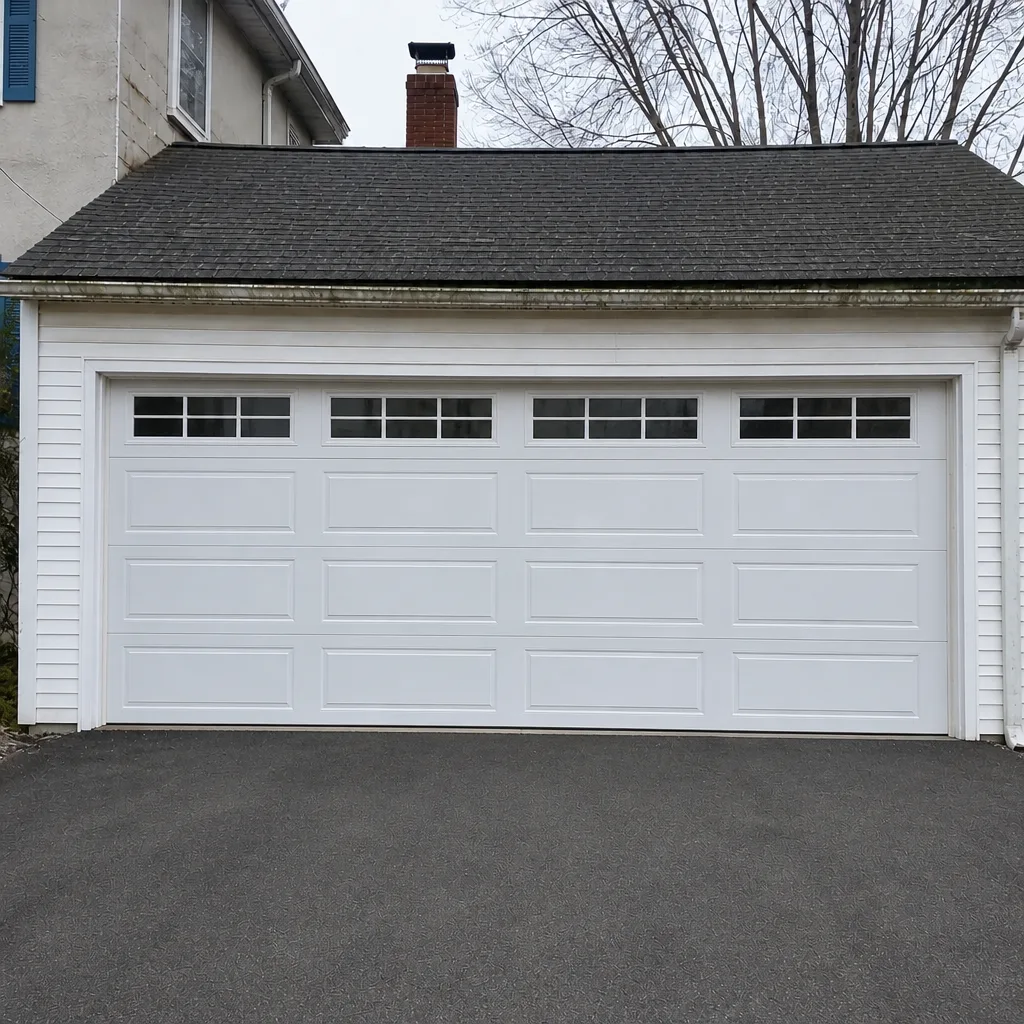
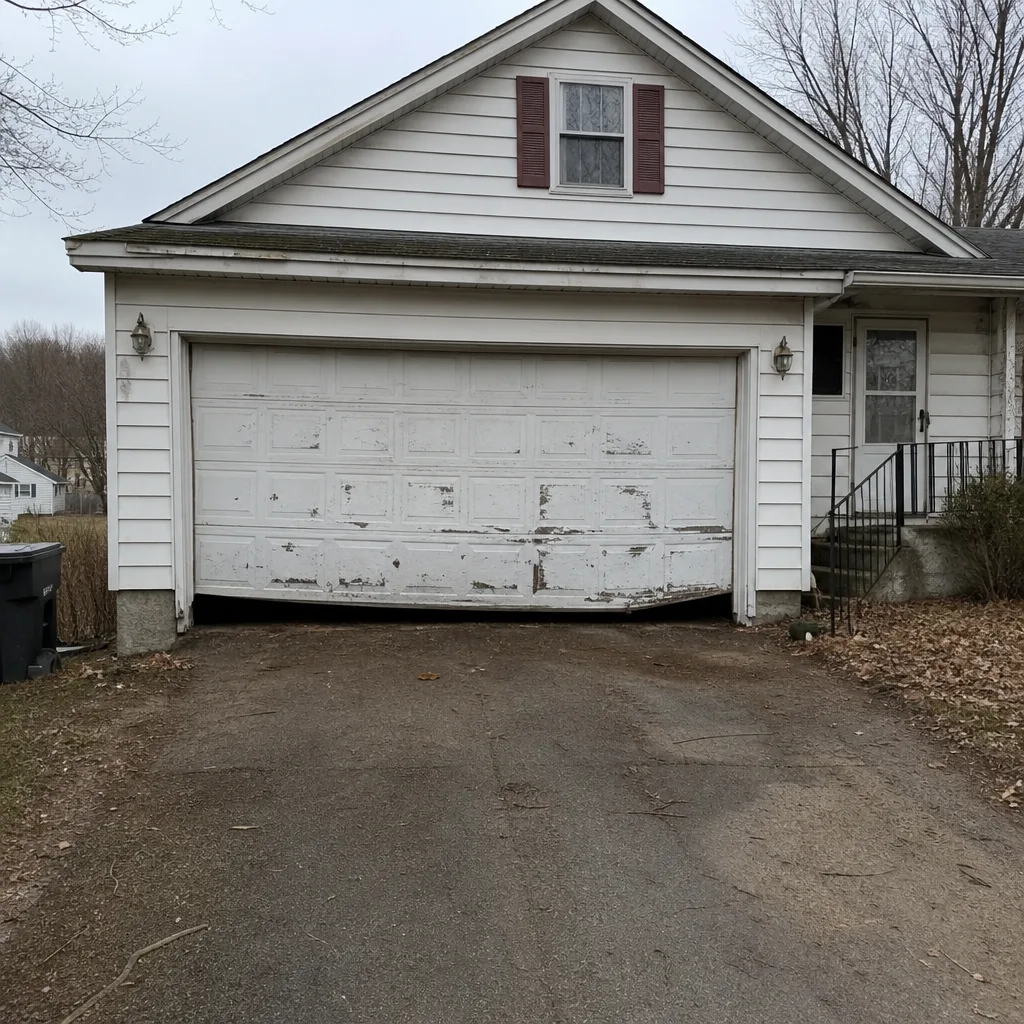
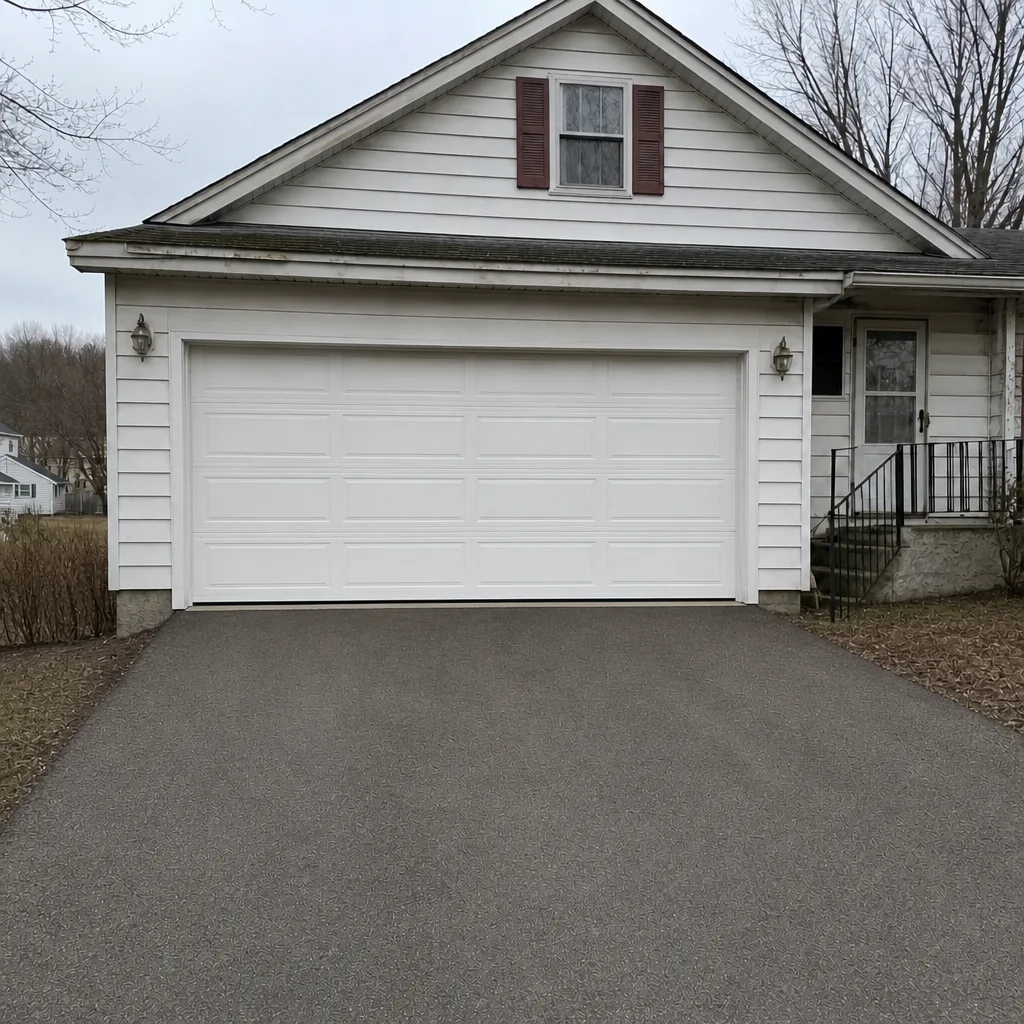
See the difference
 Before
 After
 Before
 After
 Before
 After
When to Call a Professional
Call a professional the moment any of the following is true: your spring shows a visible gap; a cable is frayed or off its drum; the door has come off the track; the door has become noticeably harder to lift; the opener reverses without a clear sensor obstruction; or you’ve heard a single loud pop from the overhead assembly. Also call if you’ve done the monthly balance test and the door drops more than you’d expect. Waterbury Garage Door Repair offers free estimates in Waterbury. Call (833) 513-8667. We answer 24/7, with fast dispatch from 7am to 7pm, Sunday through Friday. Our technicians have up to 8 years of experience working on LiftMaster, Chamberlain, Genie, Clopay, Amarr, Wayne Dalton, Craftsman, and Raynor equipment. Every repair is quoted and agreed before any work starts, so you know the price before we touch the door.
Frequently Asked Questions
The most common warning sign in Waterbury is a door that feels heavier at the bottom of the travel, usually with a squeal or grind on open. That’s the balance test telling you the spring is losing tension. It’s the single earliest sign homeowners notice, and it’s the one most worth calling on. Call (833) 513-8667 to book a free estimate.
No. You can observe a spring from the floor by looking for coil gaps, stretching, or rust, but you should never handle or test a spring or cable by hand. They’re under extreme tension and can cause serious injury. A technician tests them with proper tools and the door supported. Call us if you have any doubt about what you’re seeing.
Spring life depends on two things: how many times the door cycles and whether the spring is matched to the door weight. Cold weather cycles count the same as warm-weather cycles, so a Waterbury door that opens four times a day uses spring life faster than an identical door in a warmer climate. If your door has started to feel heavier over the course of a few months, the spring is past its useful life.
A door that reverses before closing is almost always caused by a sensor obstruction, a misaligned sensor, or a sensor with dirty lenses. Check the two photo-eye sensors at the door base first. If they’re clean, aligned, and their LEDs aren’t blinking, the cause is force settings or the drive system – and that’s a technician call. We handle garage door opener repair on all the major brands.
Yes, treat it as one. An off-track door can drop, jam, or damage the panels further if you run the opener. Leave the door down and call. Never try to force it back with a lever. The cause behind the first derailment is still there, so the door needs a diagnosis, not a shove.
Once a month, every month, year-round. Listen, watch the travel, look at the spring and cable from the floor, check the sensors, and test the safety reverse with a piece of wood. Five minutes. Skipping the check because “it sounds fine” is how silent wear turns into an emergency. If anything looks off, call (833) 513-8667 for a free estimate.
The Bottom Line
Warning signs follow a timeline. Early-stage wear (squealing, vibration, slow opener response) buys you weeks or months to schedule a repair. Imminent-failure signs (spring gaps, frayed cables, off-track doors, no safety reverse) demand attention now. The two categories rarely overlap by accident. Your job is to notice the early signs and hand off the late ones to a technician, because springs and cables are genuinely dangerous and deserve someone who works on them every day. If you take one thing from this guide, take this: a door that needs extra push to close is telling you something, and the earlier you act on it, the cheaper the outcome.
Waterbury Garage Door Repair works on the equipment already on your door, from LiftMaster and Chamberlain openers to Clopay and Wayne Dalton doors. Free estimates, upfront pricing, and the written quote sets the price. Call (833) 513-8667. We answer 24/7, with fast dispatch from 7am to 7pm, Sunday through Friday. For a look at everything we handle, start at Waterbury Garage Door Repair.
Written by the team at Waterbury Garage Door Repair.