
Last updated November 23, 2026
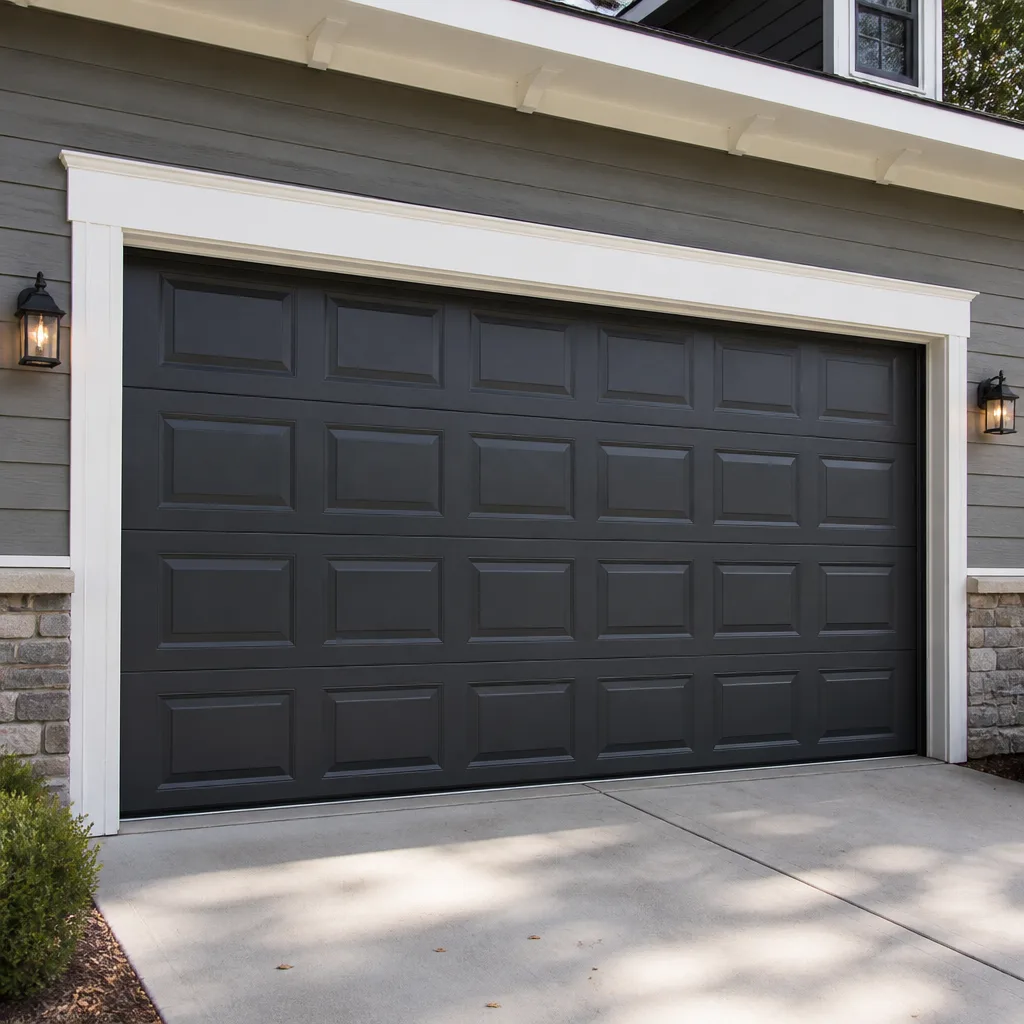 Raised-panel steel
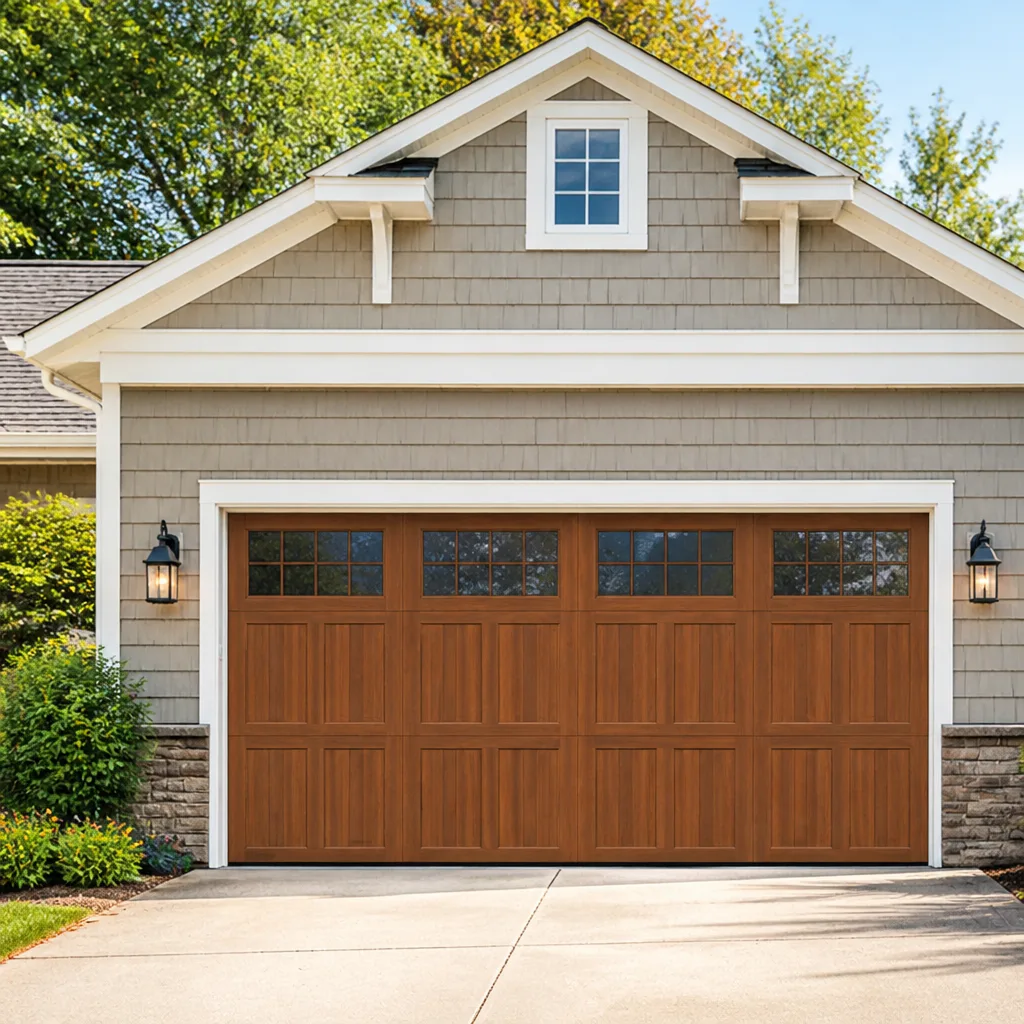
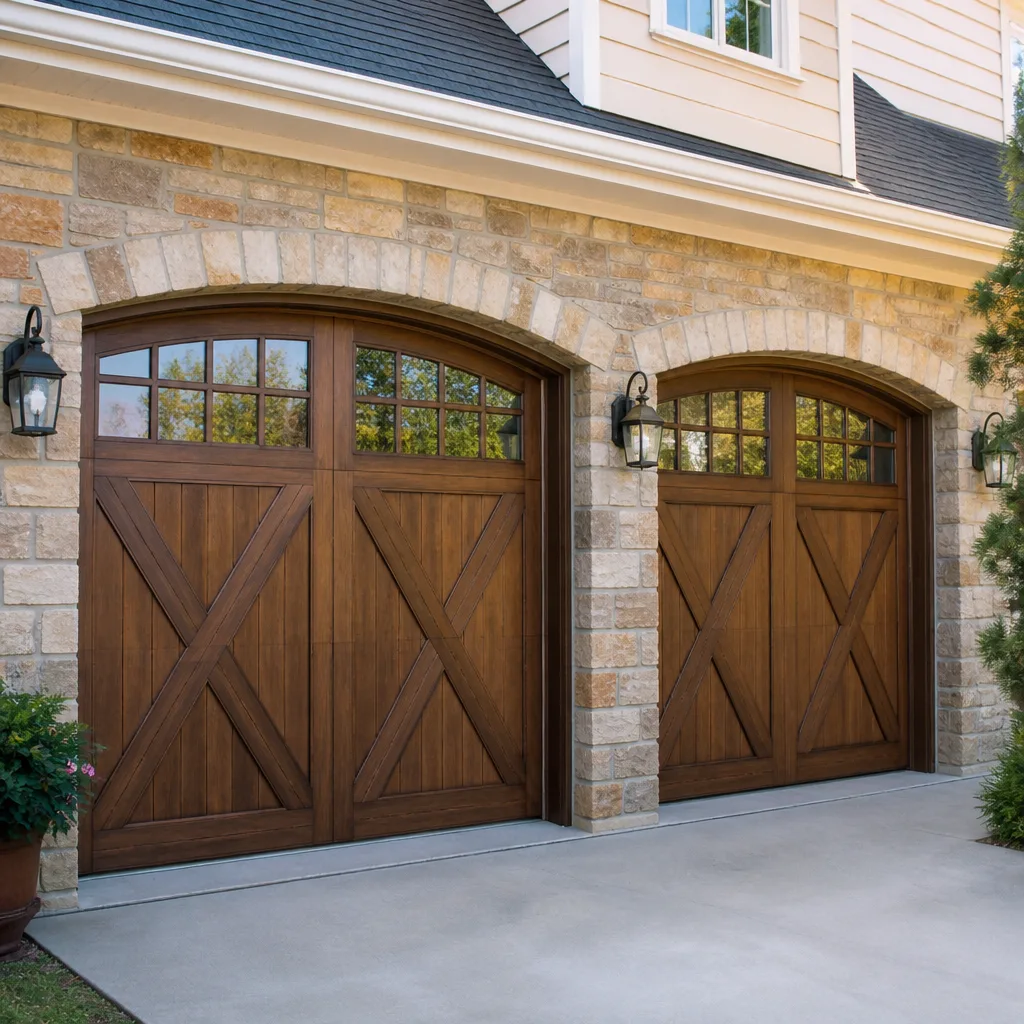 Carriage house
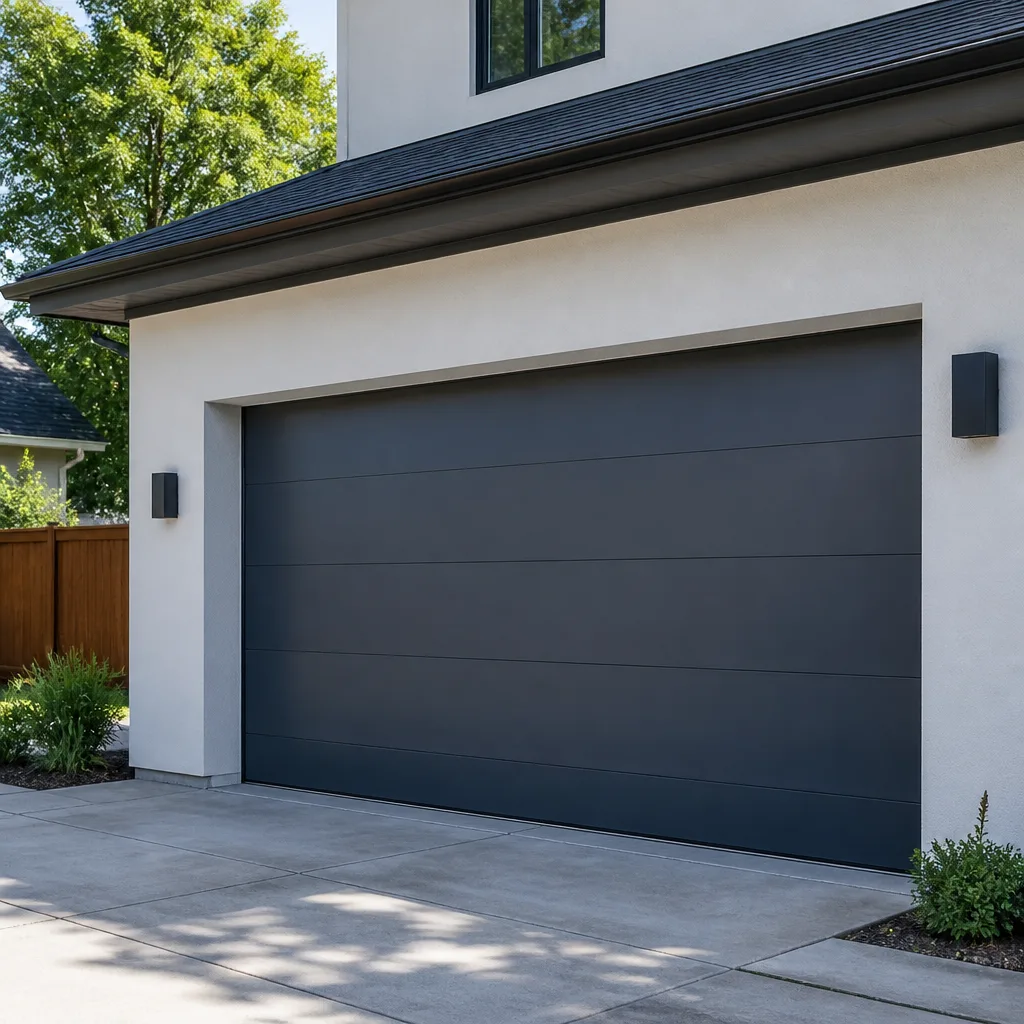 Modern flush
 Full-view glass
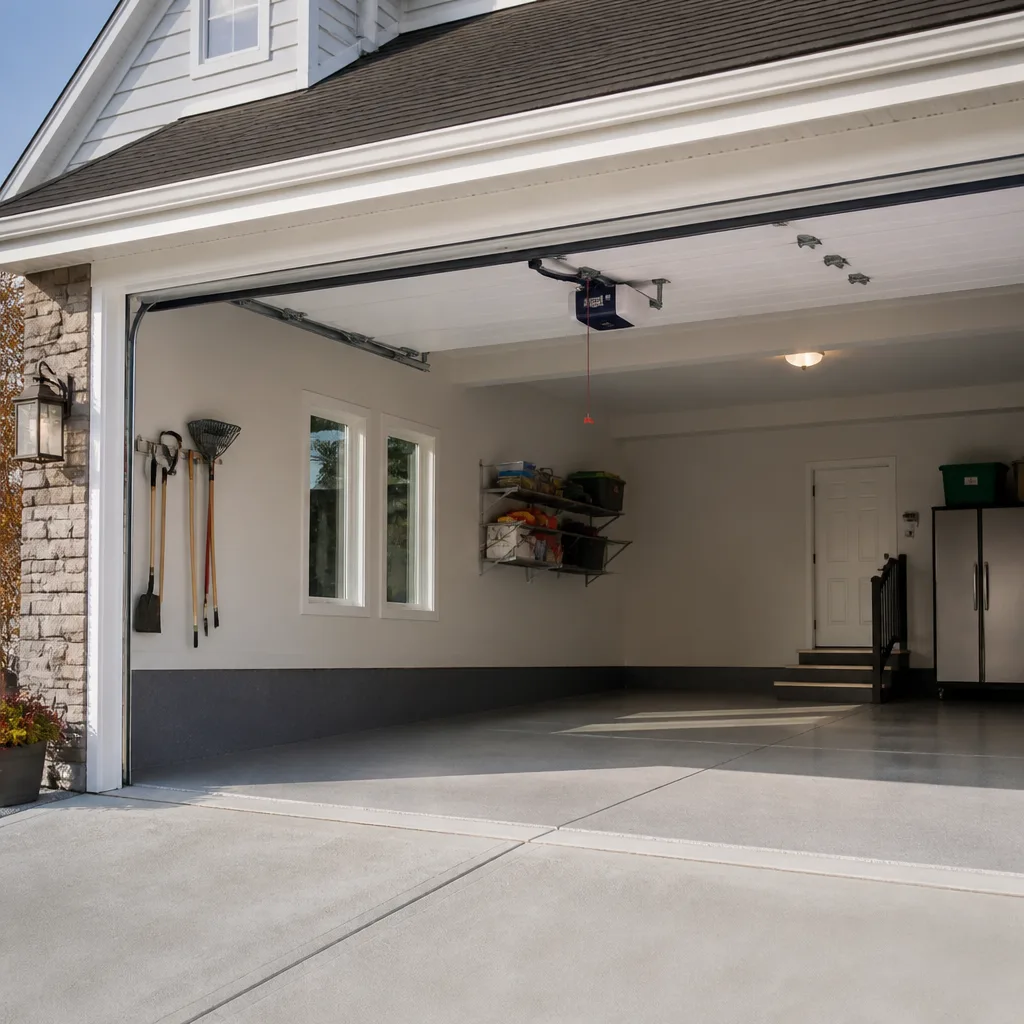 LiftMaster openers
 Chamberlain openers
Full 25-point door and opener safety check with every visit - springs, cables, rollers, tracks, and your LiftMaster or Chamberlain opener included
You get a price before we start. It does not change when the pro arrives.
Get your free estimateGarage Door Repair Troubleshooting in Waterbury: Common Problems and How to Fix Them
A garage door that reverses before it reaches the floor is not a sensor problem most of the time. In our experience, it’s usually a limit switch setting that has drifted or a door that’s gone out of balance, and a new set of sensors won’t fix either one. That gap between what the door is doing and what’s actually causing it is where most Waterbury homeowners lose money. This guide is built to close that gap. You’ll learn how to read your door’s behavior the way a technician does, sort opener faults from mechanical faults with a simple manual test, understand what freeze-thaw cycles and humidity swings do to Waterbury hardware, and know exactly which fixes are safe to try and which ones you should never touch.
Quick Answer
Start with one test before you diagnose anything: pull the manual release cord and run the door by hand. If it moves smoothly, your problem is almost always the opener – a limit switch, a worn capacitor, or a sensor alignment. If it binds, drags, or hangs, your problem is mechanical – springs, cables, rollers, or track alignment – and no amount of opener adjustment will solve it. From there, the three loudest symptom clusters in Waterbury break down cleanly: a door that won’t lift or drops hard means spring failure, a door that runs but doesn’t move the door means opener failure, and a door that grinds or pulls sideways means track misalignment.
Styles & brands we work with
- Raised-panel steel
- Carriage house
- Modern flush
- Full-view glass
- LiftMaster openers
- Chamberlain openers
Table of Contents
- The Manual Disconnect Test: Separate Opener Faults from Mechanical Faults
- Three Symptom Clusters That Point to Spring, Opener, or Track
- What Waterbury Weather Does to Tracks, Springs, and Bottom Seals
- Why Your Door Works by Hand but Struggles on the Opener
- Safe DIY Fixes vs. Repairs That Send People to Urgent Care
- Opener Symptoms That Look Like Spring Failure but Aren’t
- A Step-by-Step Troubleshooting Sequence for Any Failing Door
- When to Call a Professional
The Manual Disconnect Test: Separate Opener Faults from Mechanical Faults
Before you call anyone, before you adjust a single limit screw, run the manual disconnect test. It takes two minutes and it’s the single most useful diagnostic step a homeowner can do. The result tells you which half of the system the problem lives in, and that alone stops most Waterbury homeowners from paying for the wrong repair.
Here’s how it works. With the door fully closed, pull the manual release cord hanging from the trolley. That disconnects the opener’s carriage from the door so the opener runs free and the door operates independently. Then lift the door by hand, about halfway, and let it go.
- Pull the release cord with the door fully closed so the trolley disconnects cleanly.
- Lift the door slowly by hand to about waist height and feel for resistance, grinding, or catching.
- Release the door gently at the halfway point. A balanced door should hold roughly in place or drift down slowly under control.
- Lower it fully by hand and listen for scraping, popping, or uneven travel.
- Reconnect the trolley by running the opener until it clicks back into the carriage, then test with the remote.
What the Result Tells You
If the door lifts with light, even pressure and holds near the halfway mark, the mechanical side is healthy. Your problem is in the opener: the logic board, a limit setting, the safety sensors, or a failing motor capacitor. If the door feels heavy, binds on one side, drops hard, or won’t stay up, you have a mechanical problem – a broken spring, a snapped cable, worn rollers, or a track that’s out of line.
That result changes everything about what you should do next. An opener problem on a Chamberlain or Genie unit might be a fifteen-minute adjustment. A mechanical problem on a door with a failed spring is a repair you should not attempt. Getting the diagnosis right first is the whole point of the test.
Three Symptom Clusters That Point to Spring, Opener, or Track
Garage doors fail in patterns. When a door misbehaves, the specific combination of symptoms almost always drops into one of three clusters, and once you know which cluster you’re in, the likely culprit is clear. We’ve seen thousands of these patterns on Waterbury doors, and the clusters hold up whether it’s a Clopay steel door or an Amarr carriage-house model.
Cluster 1: Spring Failure
The door won’t lift at all, or it lifts a few inches and drops hard. The opener may hum for a second and then stop. You may hear a loud bang from the garage – the sound of a torsion spring breaking is sudden and unmistakable. The door feels extremely heavy when you try to lift it by hand. Springs carry the full weight of the door, and when one breaks, the door becomes a dead weight. Do not run the opener when you suspect a spring failure. It will strain the motor and can strip the drive gears. This is the cluster where you call for garage door spring repair the same day.
Cluster 2: Opener Failure
The door operates fine by hand but the opener won’t move it, or it moves it erratically. The opener might hum without moving, click but not engage, reverse immediately, or run the motor with nothing happening at the door. The drive belt or chain may be slack, the capacitor may be worn, or the logic board may have failed. On modern Wi-Fi-connected units from Chamberlain and LiftMaster, the app often shows a fault code that narrows it down. This cluster is what we handle as garage door opener repair.
Cluster 3: Track Misalignment
The door moves but it grinds, squeals, or pulls to one side. You may see a visible bend in one of the vertical or horizontal tracks. The door might jam a few feet up and refuse to go further, or it might travel crookedly and leave a gap on one side. Rollers may have popped out of the track entirely. This cluster is almost always a mechanical alignment problem, not an opener problem, and adjusting the opener makes it worse. The safest path is a full garage door repair evaluation before the door is run again.
What Waterbury Weather Does to Tracks, Springs, and Bottom Seals
Waterbury sits in a climate that punishes garage door hardware in ways warmer parts of the country never see. Freeze-thaw cycles in winter, combined with summer humidity swings, work on doors year-round in ways that don’t show up in a mild climate. If you live in Waterbury, the problems you’re dealing with are likely weather-shaped, and understanding that saves you from chasing the wrong fix.
Freeze-Thaw Cycles and the Bottom Seal
The bottom seal on your garage door is the first thing winter attacks. During a freeze-thaw cycle, moisture gets into the rubber seal, freezes overnight, expands, and cracks the material. Over a single winter, a seal that looked fine in October can be brittle and leaking by March. The consequences go beyond a draft: water gets under the door, the floor slab absorbs it, and you’re looking at rusted bottom brackets, corroded rollers, and a door that freezes to the floor on cold mornings. If your door sticks to the floor and pulls loose with a tearing sound, the seal and the weatherstripping are both suspect.
Humidity Swings and Track Alignment
Wooden door frames and the wood framing around the opening expand and contract with summer humidity in a way that steel and aluminum don’t. In Waterbury, that means the jamb shifts seasonally, and the vertical tracks that are lag-bolted to it can go slightly out of plumb. A track that’s a quarter inch out of line in July might be fine in January and binding again by August. This is why a door that “only sticks sometimes” is often a track alignment issue, not an intermittent opener problem. Long-term, the answer is re-aligning the track and checking the lag bolts for tightness.
Cold-Weather Spring Fatigue
Steel torsion springs are work-hardened metal under constant tension. Cold weather makes the steel less ductile, and springs that are near the end of their cycle count can snap in a cold snap rather than warming up gradually. In Waterbury, spring failures concentrate in the first real cold stretch of the season. If your door is over a decade old and hasn’t had a spring inspection, the first hard freeze is worth a pre-emptive check.
Road Salt and Slab Corrosion
Road salt tracked in on tires finds its way onto the garage floor and eventually onto the bottom brackets, rollers, and hinges. In Waterbury, that means the lower section of the door sees more corrosion than the panels above it. It’s a slow problem, but it’s why the bottom hinges wear out before the top ones on most doors here.
Why Your Door Works by Hand but Struggles on the Opener
A door that balances perfectly by hand but fights the opener is telling you something specific: the opener itself is the weak link. This is one of the most common misdiagnoses we see in Waterbury, because the natural assumption is “the door must be too heavy, so the springs are weak.” That assumption costs homeowners money on spring work they don’t need.
When the door passes the manual disconnect test – easy lift, controlled drop, holds near halfway – the springs are doing their job. The opener is doing its job too, but it’s doing it with less force than it used to. That loss of force has a few common causes.
The Motor Capacitor
An AC motor of the type found in most older openers uses a start/run capacitor to deliver the initial torque. Capacitors age. When one weakens, the motor still turns, but with reduced torque. The door seems sluggish, the opener strains, and on a cold morning it may stall completely. Replacing the capacitor is a small, inexpensive repair that restores full power. It’s the first thing a good technician checks when the door is mechanically fine but the opener is struggling.
Drive Belt or Chain Tension
A drive belt that has stretched or a chain that has slackened will slip under load. The opener motor spins, but the carriage doesn’t move the door. You may hear the motor running with no door movement, or hear a slapping sound from the rail. Belt tension on belt-drive units from Genie and Chamberlain is adjustable, but the adjustment has a limit, and a worn belt should be replaced rather than tightened past spec.
Force and Limit Settings
Modern openers have adjustable force and travel limits. When a door is rebalanced or a spring is replaced, the force setting sometimes needs to be recalibrated. If it’s set too low, the opener trips its safety reverse immediately on a cold morning. If it’s set too high, the door can crush the safety reverse threshold. Our technicians recalibrate force and limits as part of any spring or opener repair so the two systems work together.
Worn Rollers and Hinges
Nylon rollers on a door that has run for years wear flat on one side. That flat spot adds friction at every revolution. The door still balances, but the opener has to work harder to push it. Replacing rollers and hinges is cheap, and it makes a real difference on a door that’s otherwise sound.
Safe DIY Fixes vs. Repairs That Send People to Urgent Care
Some garage door problems are genuinely safe to fix yourself. Others have put homeowners in Waterbury in the emergency room. The line between the two is not obvious, and the damage from crossing it is not theoretical. Here’s where we draw it.
Safe to Try Yourself
- Lubrication. A few drops of garage door lubricant on the hinges, rollers, and torsion bar bearings quiets a squealing door and reduces wear. Don’t use WD-40 on the springs and don’t over-lubricate the track.
- Limit switch adjustment. If the door stops six inches short of the floor or reverses before it touches, the travel limit is off. The adjustment screws on the opener are labeled and safe to turn a quarter turn at a time. Test after every adjustment.
- Safety sensor alignment. If the door reverses immediately after closing begins, check that the two sensors at the bottom of the opening are facing each other and the indicator lights on each are solid, not blinking. Wipe the lenses, check for an obstruction, and gently nudge the brackets back into alignment.
- Track cleaning. Wipe the inside of the vertical and horizontal tracks with a damp cloth. Don’t use grease on the track – it attracts grit.
- Remote and keypad batteries. A remote that only works up close is almost always a battery issue. Replace it before assuming the opener is failing.
Never Attempt These Yourself
- Torsion spring replacement. Torsion springs store enough energy to break a wrist or worse. The winding bars can slip, and there is no safe way to work on a spring under tension without the right tools and training. This is the single most dangerous part of any garage door, and it’s why we handle it as a named, specialized service.
- Cable replacement. Cables are under tension and can snap back with lethal force. Even inspecting a frayed cable should be done by a technician.
- Track replacement. A door that comes off a misaligned track can fall. Track work requires supporting the door’s weight while you work, which is not a homeowner job.
- Bottom bracket work. The bottom bracket is where the cable attaches, and it’s under constant tension. It’s the part most likely to fail catastrophically if handled incorrectly.
- Section replacement on a door with a broken spring. The door is unstable and can drop unexpectedly. Don’t try to replace a section while the door is unsupported.
Opener Symptoms That Look Like Spring Failure but Aren’t
Some opener failures mimic spring failures closely enough that homeowners call for spring repair they don’t need. Knowing the difference saves you money and gets you the right repair on the first visit. The manual disconnect test splits the two, but these are the specific patterns to watch for.
A Door That Opens Fine but Won’t Close
This is almost always a safety sensor or a travel limit issue, not a spring or mechanical problem. The door reverses immediately when closing begins, or it never starts down at all. Check the sensors first. In Waterbury, sunlight hitting one sensor in the afternoon is a common cause, as is a spider web across the lens. If the door has a newer Chamberlain or LiftMaster opener with a diagnostic LED, the blink pattern will tell you exactly which sensor is out.
A Door That Hums but Doesn’t Move
The opener motor runs, you hear it, but the door doesn’t budge. That’s a drive train issue – a broken belt, a stripped gear, or a failed capacitor. It is not a spring failure. The spring is fine; the opener can’t deliver its power to the door. The manual test confirms it: if the door lifts easily by hand, the springs are healthy.
A Door That Moves a Few Inches and Stops
This one can go either way. If the door moves a few inches and then stops with the motor still running, it’s likely a force limit or a bind in the track. If the door moves a few inches and then drops back hard, you may be looking at a broken spring or a cable that’s come loose. Run the manual test: heavy door means spring or cable, easy door means opener or track.
A Door That Opens Fine but Doesn’t Close All the Way
This is nearly always a travel limit setting that has drifted. The limit switch controls how far the door travels, and on modern openers it can drift after years of use or after a power surge. It’s a safe, adjustable fix. But it can also be a sign the door has gone out of balance and the opener is fighting it, so it’s worth having the balance checked if the limit drifts twice.
A Step-by-Step Troubleshooting Sequence for Any Failing Door
When a door stops working, run this sequence in order. Each step eliminates a category of problem so you don’t waste money on parts you don’t need. It takes about ten minutes and it will tell you more than any single symptom will.
- Check the power. Confirm the opener is plugged in and the outlet is live. Check the breaker panel for a tripped breaker. This sounds obvious, but a dead opener with a healthy door gets diagnosed as a failed motor more often than it should be.
- Check the break-in protection. Many openers have a small emergency release that a previous owner may have engaged. Confirm the opener is not in lockout mode.
- Check the safety sensors. Look at the two sensors at the bottom of the opening. The LED on each should be solid. If either is blinking, wipe the lens, check for obstructions, and confirm the two are aligned. A door that reverses immediately is usually a sensor fault.
- Run the manual disconnect test. Pull the release cord, lift the door by hand, and note whether it’s heavy, smooth, or binding. This single step tells you whether you’re dealing with an opener problem or a mechanical one.
- Check the balance. Lift the door to halfway and let go. It should hold roughly in place. If it drops hard or won’t stay up, the springs are losing tension or have failed.
- Look at the springs and cables. From a safe standing distance, look at the torsion spring above the door for a visible gap or a separated coil. Look at the cables for fraying. If either looks wrong, stop – do not run the door.
- Check the track alignment. Look down the length of each vertical track from a low angle. A visible bend or a gap between the roller and the track edge signals misalignment. Don’t try to bend the track back yourself.
- Check the opener limits and force. If the door is healthy by hand and the sensors are aligned, the limit or force setting is the next suspect. On most openers, the adjustment is a labeled screw or a menu item, and a quarter turn is usually enough.
- Check the rollers and hinges. If the door is noisy, oily, or gritty in the track, rollers and hinges are worn. Lubrication helps, but replacing worn parts is the real fix.
What to Note Before You Call
Before you call us, jot down the make and model of your opener if you can see it, and note what the door does when you try to run it. If you have a LiftMaster or Chamberlain opener with an app, the fault code from the app is genuinely useful – it usually narrows the diagnosis to a single component. If you can tell us “the door opens by hand but the opener hums and doesn’t move it,” we already know the likely cause before we arrive. That’s faster and cheaper for you.
Common Mistakes to Avoid
- Replacing sensors when the door reverses before it hits the floor. Most of the time this is a limit switch setting or a balance issue. New sensors cost money and don’t fix either. Run the manual disconnect test first.
- Adjusting the opener when the door is binding. If the door drags on one side or grinds, the opener isn’t the problem and turning up the force setting just wears out the motor faster.
- Running the opener on a door with a broken spring. This is the most common expensive mistake. The opener is designed to lift a balanced door, not dead weight. Running it on a broken spring can burn out the motor or strip the drive gear.
- Greasing the track. The track is supposed to be clean and dry. Grease attracts grit in Waterbury’s road-salt winter and turns the track into a grinding paste that wears rollers fast.
- Ignoring a sticking bottom seal. When the door sticks to the floor on a cold morning, it’s the seal letting in moisture. Replacing the seal early is cheaper than replacing the rusted bottom brackets it leads to.
- Tightening a torsion spring yourself. You can’t safely wind a torsion spring with hand tools. Winding bars slip. This is the repair we most often see as a water-cooler story from someone who tried it. Don’t.
- Assuming a “sometimes” problem is intermittent opener failure. It’s usually a track that has shifted seasonally with humidity. The door binds in July, runs fine in January, and binds again next summer. That’s a track alignment problem, not an opener problem.
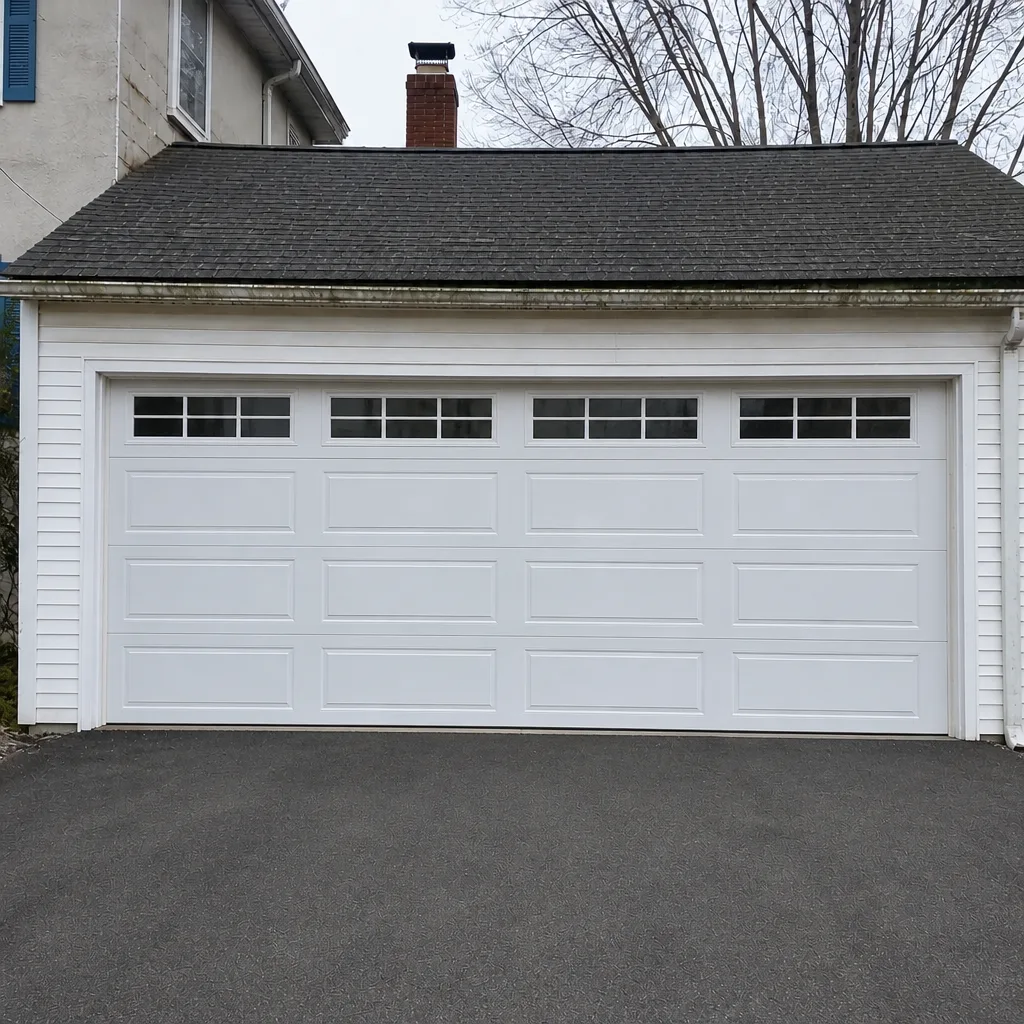
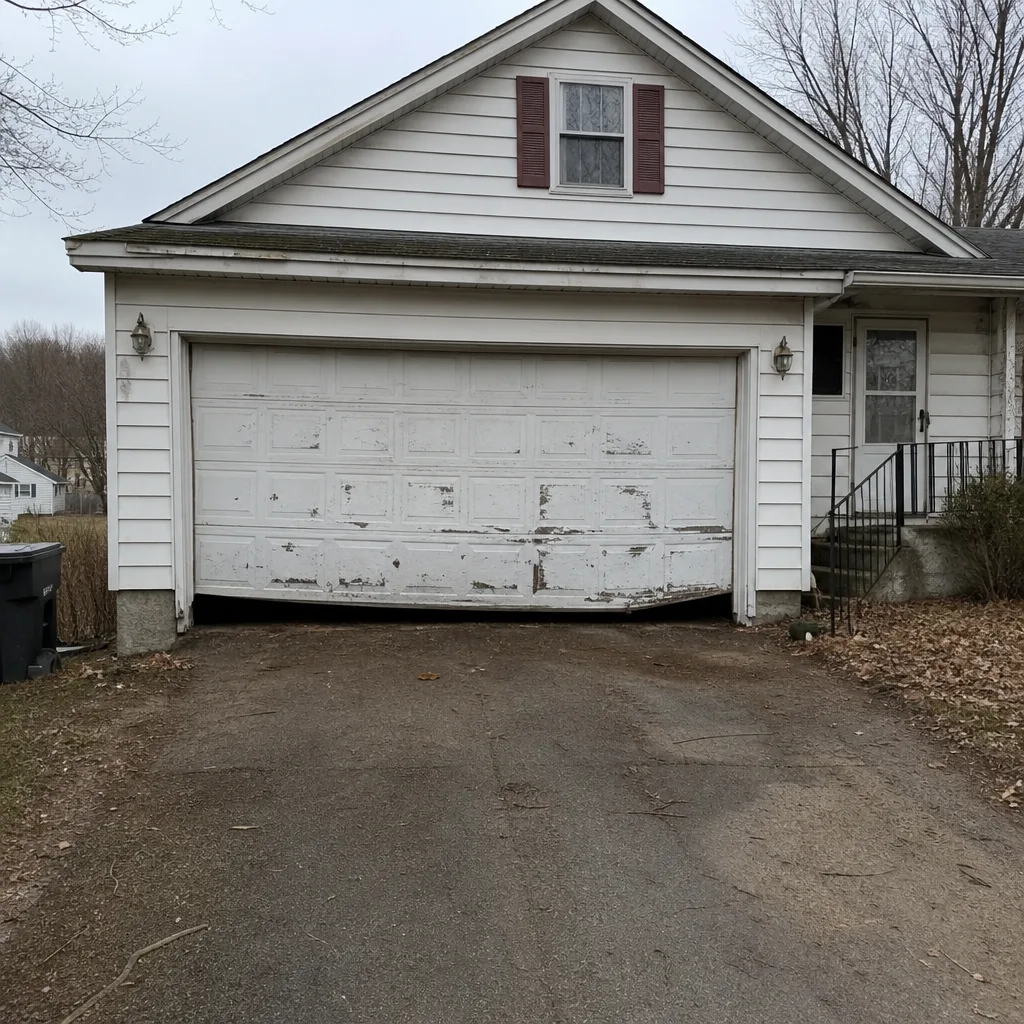
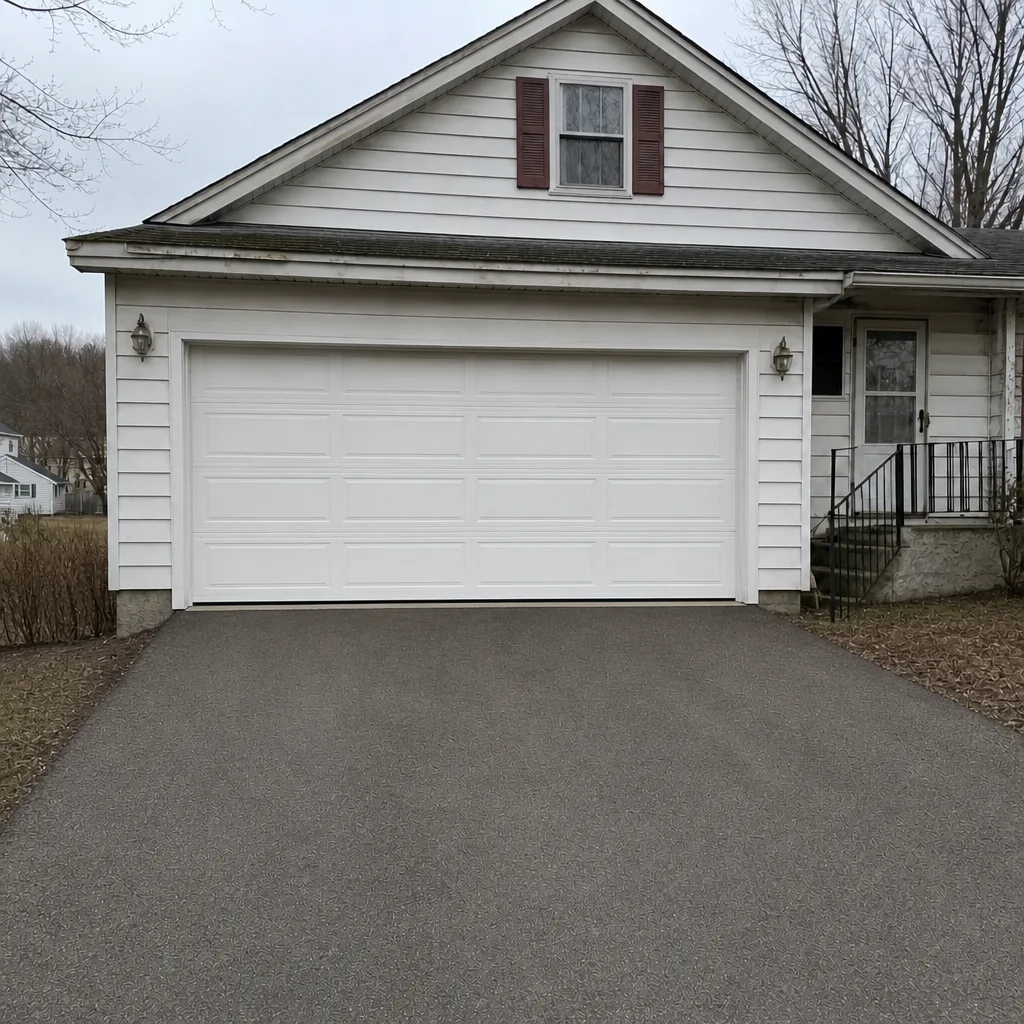
See the difference
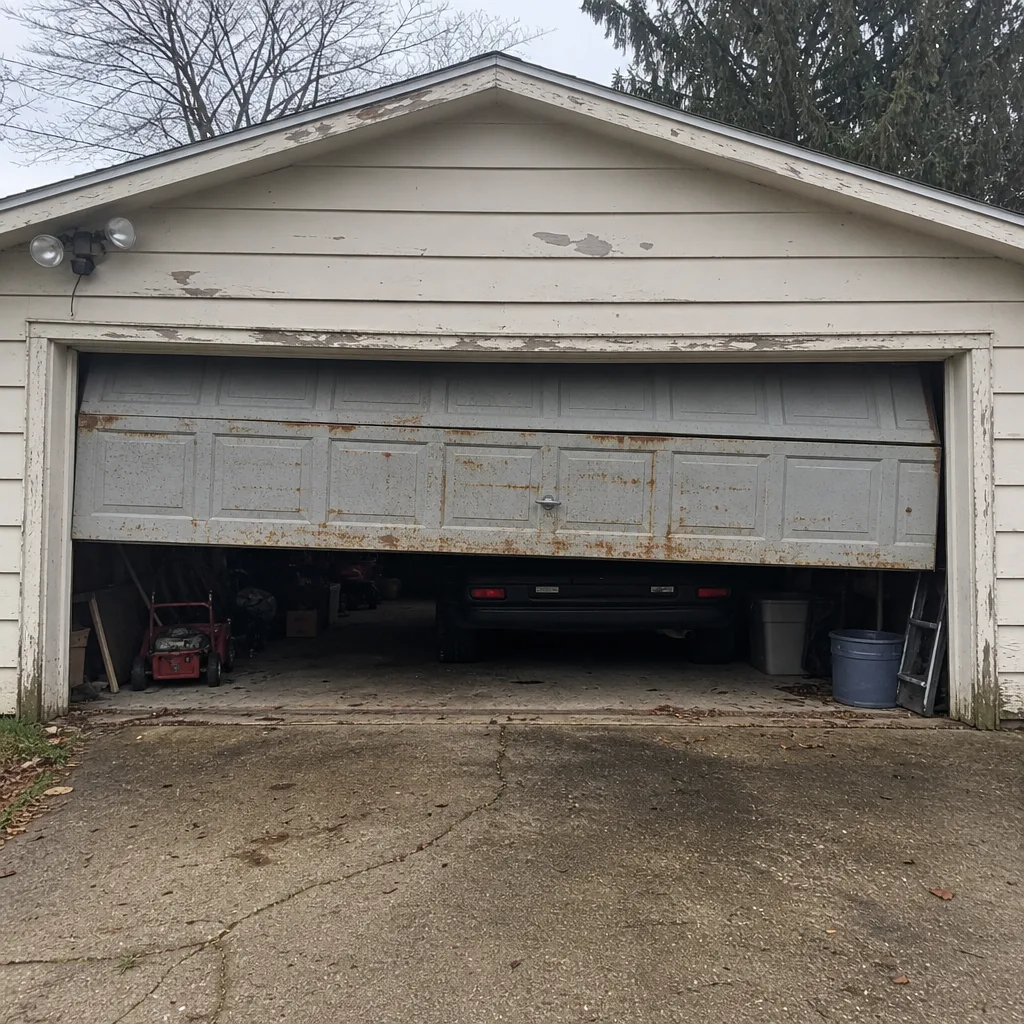 Before
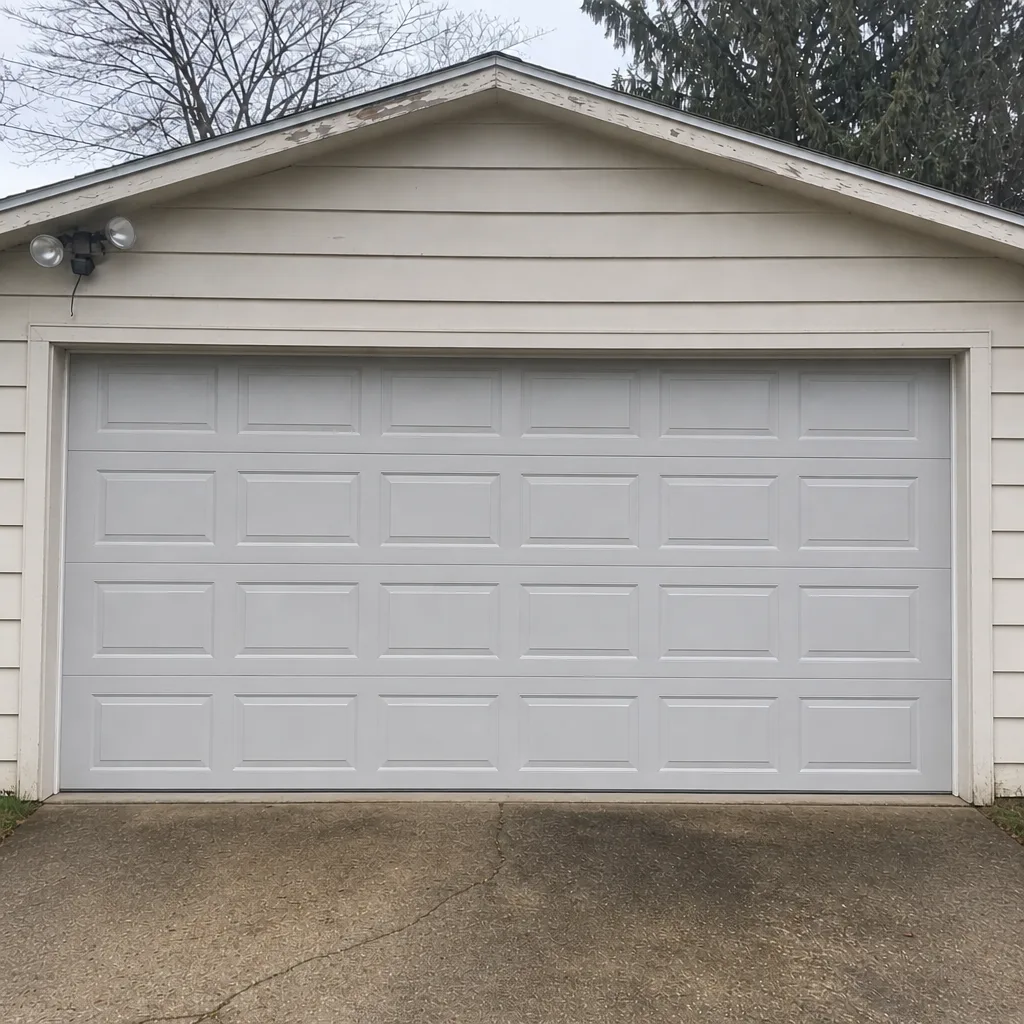 After
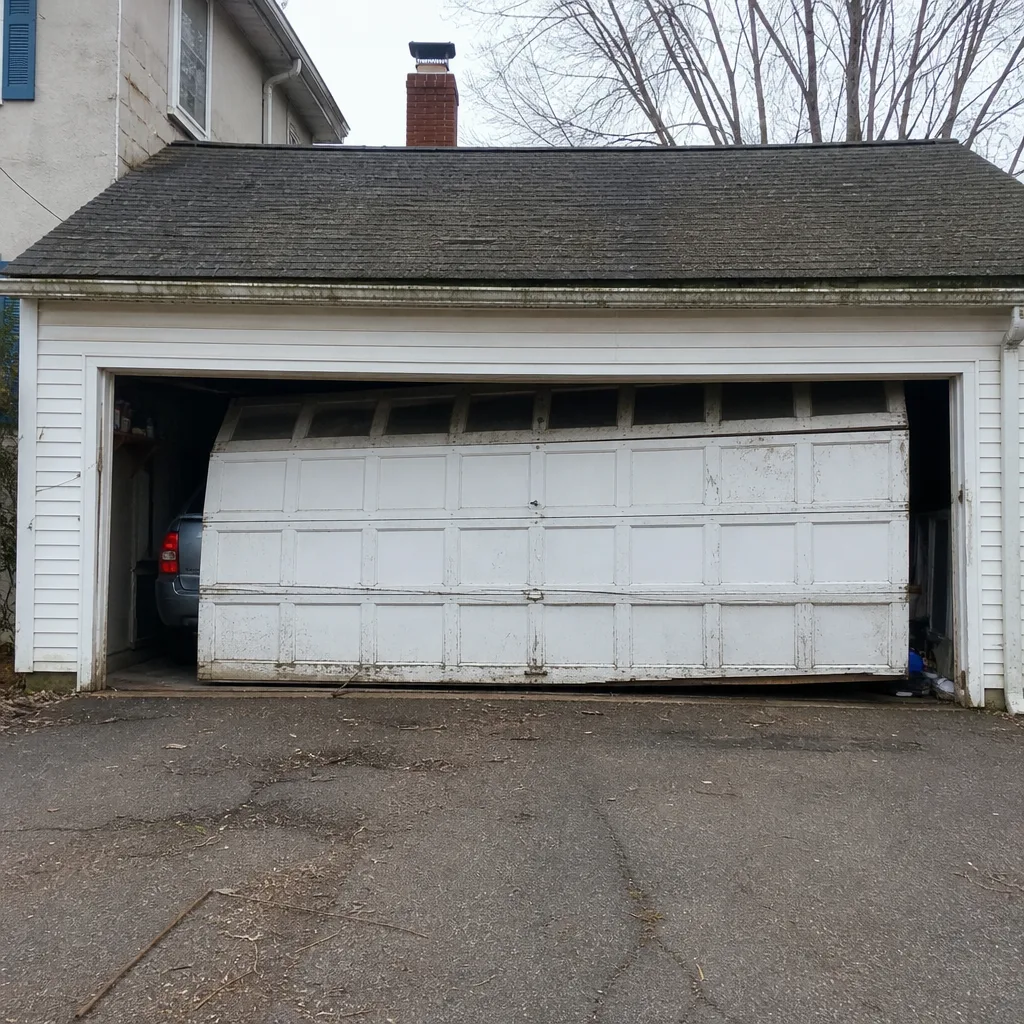 Before
 After
 Before
 After
When to Call a Professional
Call a professional the moment you see any of the following: a broken torsion spring, a visible gap in the spring coil, a door that won’t lift by hand, a frayed or snapped cable, a door that has come off its tracks, or a door that drops suddenly when you try to lift it. Those are the cases where the danger is real and the cost of getting it wrong is more than money.
Call us sooner if you’re not sure. Waterbury Garage Door Repair offers free estimates in Waterbury – call (833) 513-8667. We answer 24/7. Fast dispatch from 7am to 7pm, Sunday through Friday. Every price is quoted and agreed before any work starts, so you’ll know exactly what the repair costs before we pick up a tool. Our technicians have up to 8 years of experience on LiftMaster, Chamberlain, Genie, Clopay, Amarr, Wayne Dalton, Craftsman, and Raynor equipment, and we handle spring repair, opener repair, and new installation under one roof – no handoffs.
Frequently Asked Questions
Run the manual disconnect test: pull the release cord and lift the door by hand. If it lifts easily and holds near halfway, the opener is the problem. If it’s heavy, drops hard, or won’t stay up, the spring or cables are the problem. Call (833) 513-8667 if you’re unsure – estimates are free.
Usually it’s a limit switch setting that has drifted or a door that has gone out of balance, not a bad sensor. Check the safety sensor LEDs first – if both are solid, the limit or balance is the next suspect. Replacing sensors won’t fix this. We answer 24/7 – call (833) 513-8667 for a same-day diagnosis.
No. A torsion spring holds the full weight of the door and stores enough energy to cause serious injury. Winding bars slip, and there’s no safe way to work on a spring under tension without training and the right tools. This is the repair we most often recommend against doing yourself. Call us for garage door spring repair instead.
The bottom seal has absorbed moisture and frozen to the slab, or the seal has stiffened and lost its flexibility. It’s a common Waterbury winter problem caused by freeze-thaw cycles. The seal should be replaced before the moisture reaches the bottom brackets and starts rusting them. Call (833) 513-8667 to schedule a replacement.
A worn motor capacitor is the most common cause, followed by a slack drive belt or a misadjusted force setting. The door and springs are actually fine – the opener has lost the power to lift them. Our technicians check the capacitor first on any opener that runs but feels weak, and a capacitor replacement is usually the fix.
Sometimes. Most spring, opener, and repair jobs can be done with the door accessible from outside, so if you can leave us a code or be reachable by phone, that works. Installation and any work that needs an interior garage check usually benefits from someone being home. Call (833) 513-8667 and we’ll tell you what the specific job needs before we schedule.
The Bottom Line
Most garage door repairs fail because the diagnosis was wrong, not because the parts were cheap. Read the door before you call: the manual disconnect test tells you whether the problem is the opener or the mechanical side, and the three symptom clusters – spring failure, opener failure, and track misalignment – cover the vast majority of what actually goes wrong in Waterbury. Freeze-thaw cycles wear out the bottom seal, humidity swings shift the tracks, and cold snaps snap springs that were already near the end of their cycle. Stay out of the spring and cable, and you’ll avoid the repair that sends people to urgent care. When you’re ready for a professional diagnosis, Waterbury Garage Door Repair is a call away.
Ready to get it fixed? Call (833) 513-8667 for a free estimate. We answer 24/7. Fast dispatch from 7am to 7pm, Sunday through Friday.
Written by the team at Waterbury Garage Door Repair.