
Last updated November 23, 2026
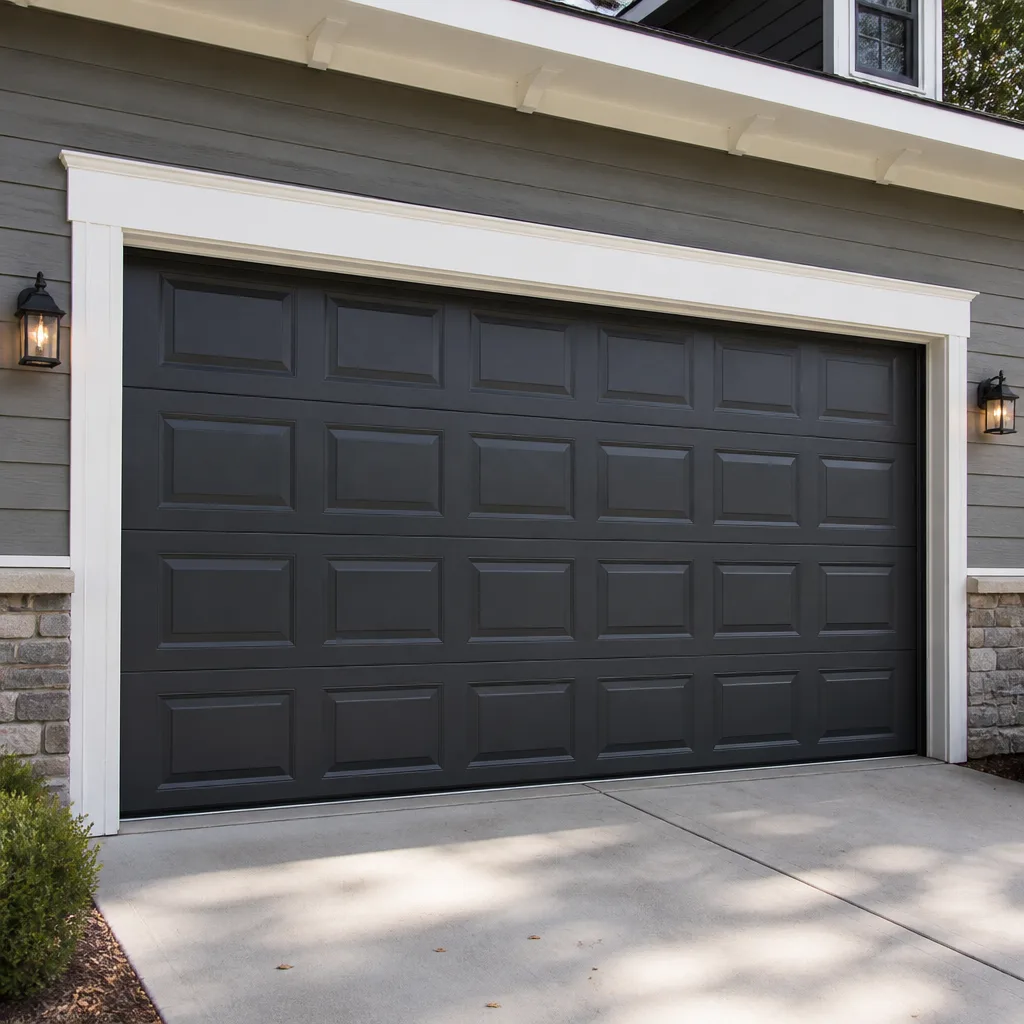 Raised-panel steel
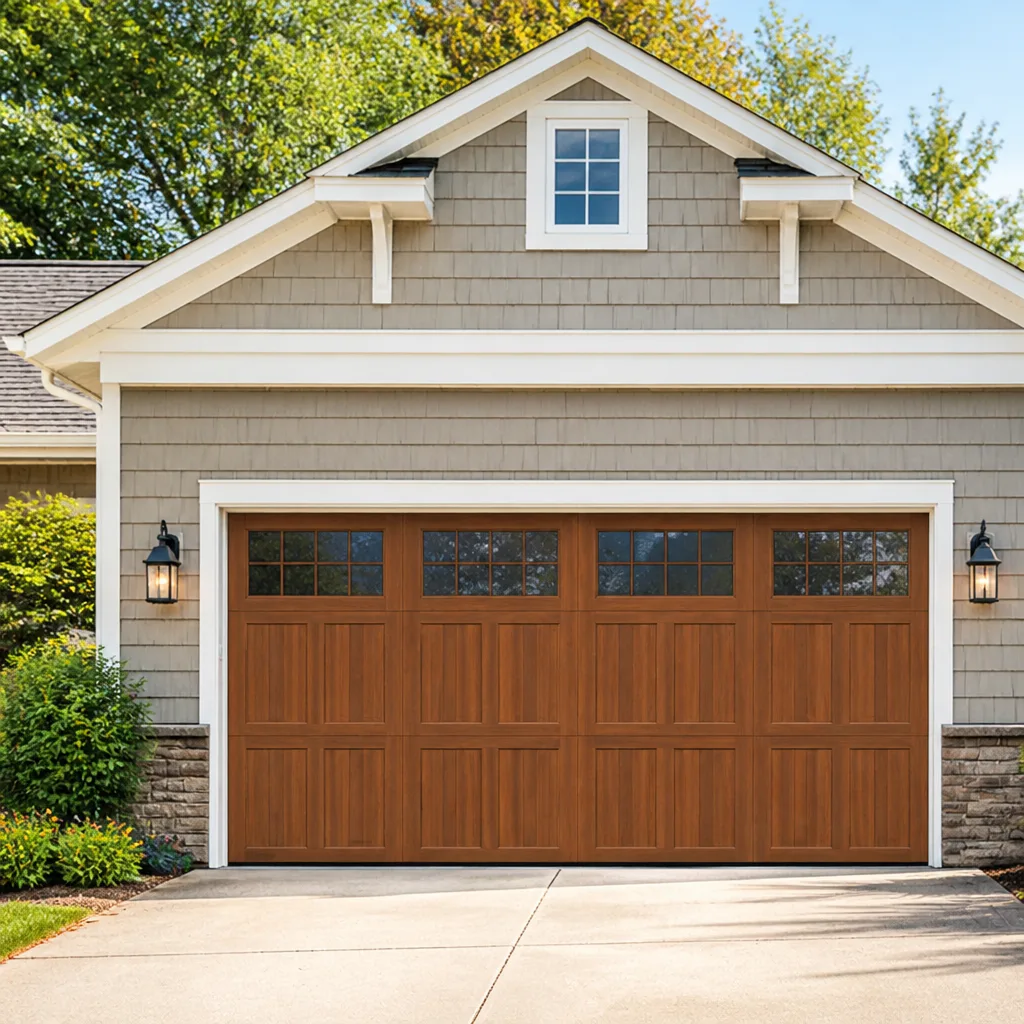
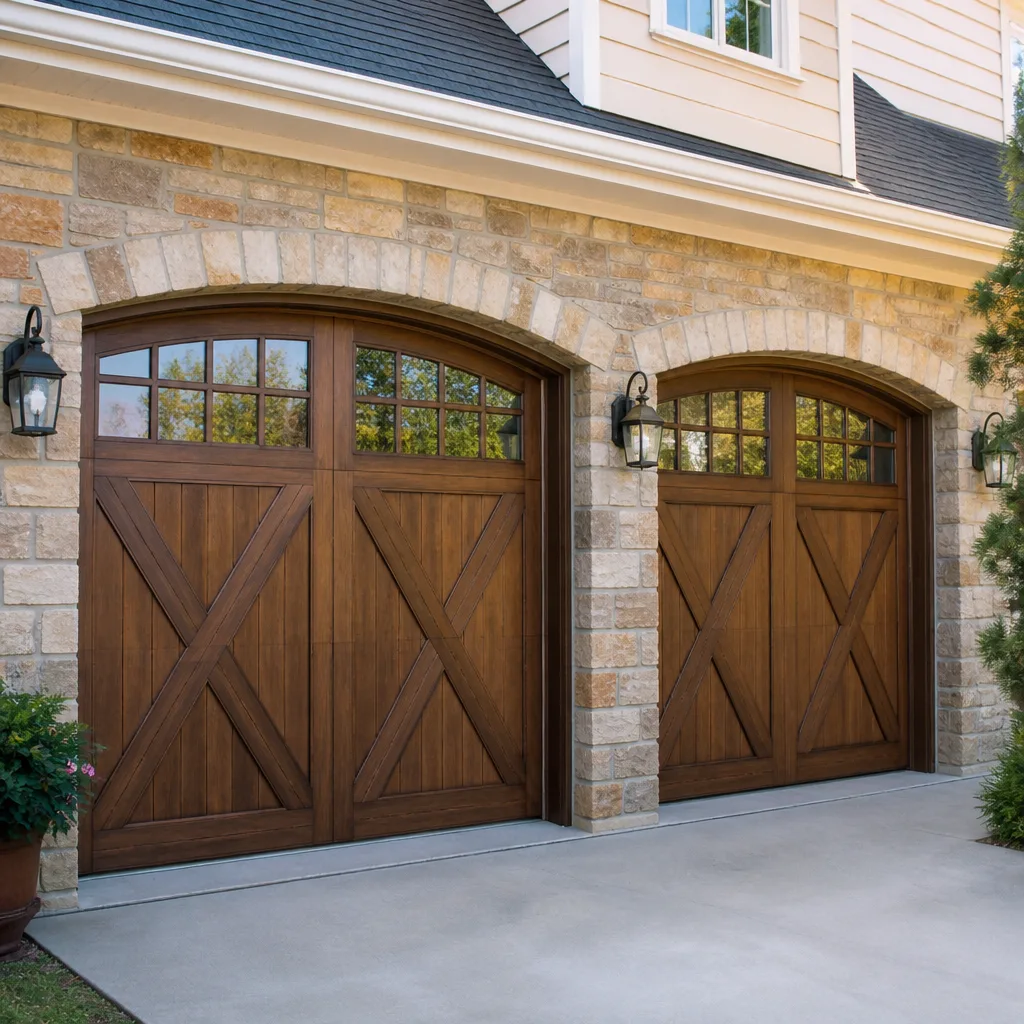 Carriage house
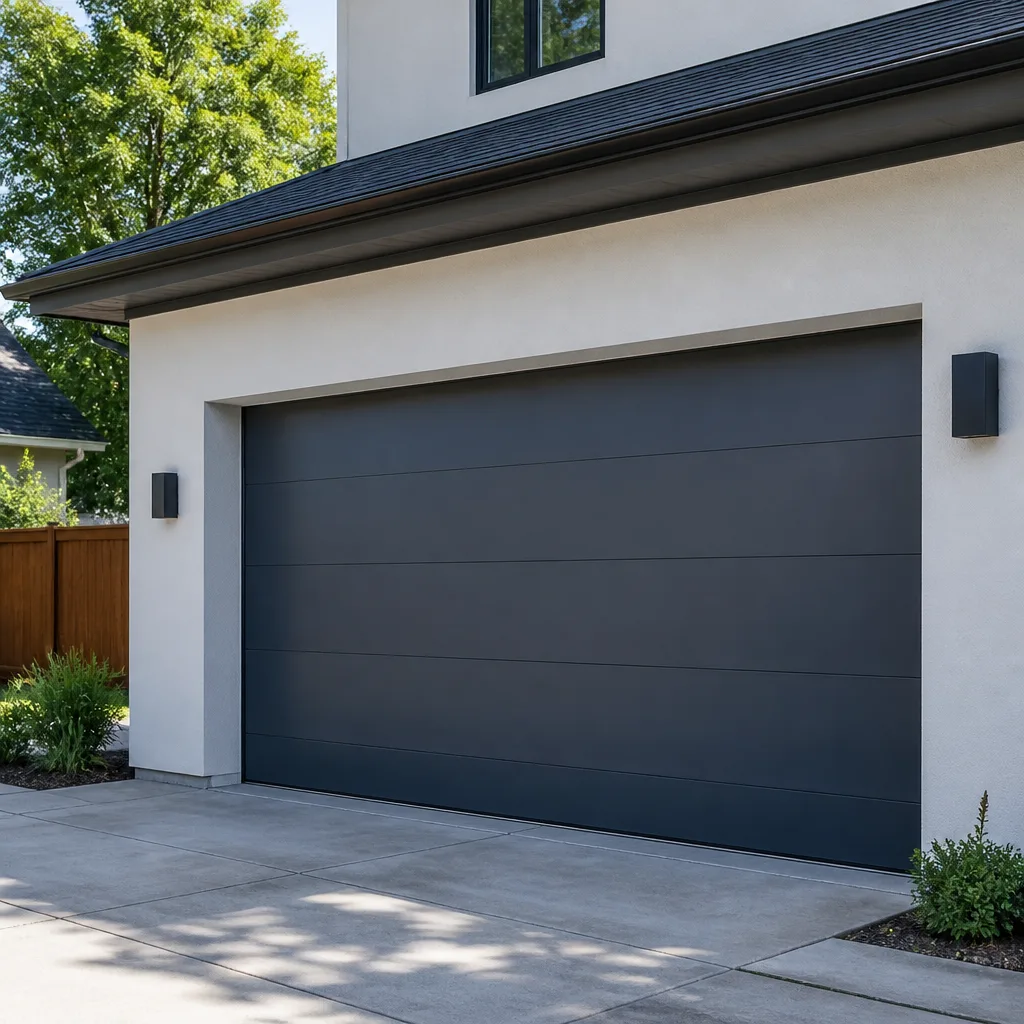 Modern flush
 Full-view glass
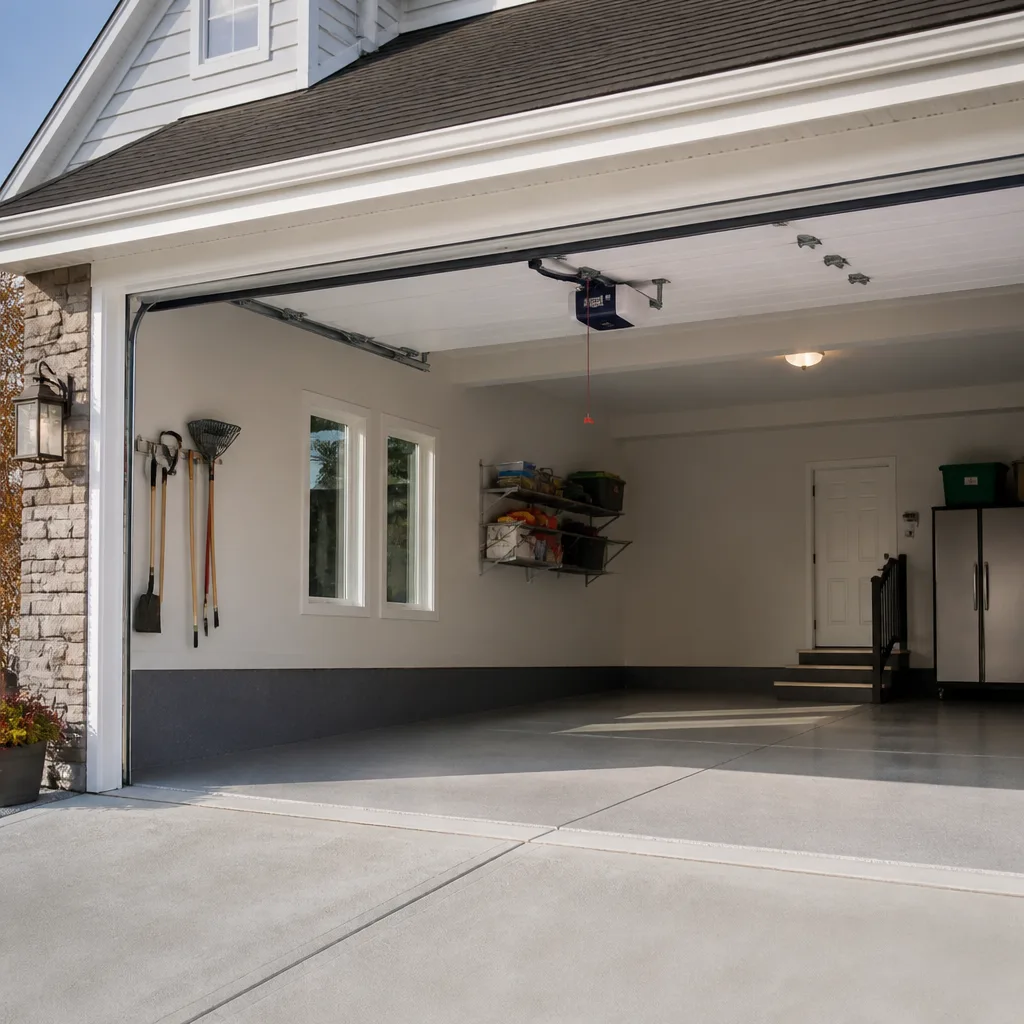 LiftMaster openers
 Chamberlain openers
Full 25-point door and opener safety check with every visit - springs, cables, rollers, tracks, and your LiftMaster or Chamberlain opener included
You get a price before we start. It does not change when the pro arrives.
Get your free estimateHow to Hire a Garage Door Contractor in Waterbury: A Step-by-Step Guide
Most homeowners hire a garage door contractor the same way they’d hire a painter: call the first name they find, ask what it costs, and book the job. That’s the mistake. A garage door is a balanced mechanical system with springs under tension, cables under load, and an opener sized to a specific door weight, and the most common callback complaints in Waterbury come from contractors who installed the right part on the wrong door – a mismatched spring wind count, a cable drum with the wrong diameter, an opener with too little horsepower for a heavy carriage door. This guide walks through the five technical questions to ask before anyone quotes you, how to read a written estimate line by line, and how to verify a company’s reputation beyond its star rating. It’s written from Waterbury, for Waterbury doors.
Quick Answer
To hire a garage door contractor in Waterbury, verify three things before you sign: that the company specializes in garage doors rather than general handyman work, that it can name the exact brand and model of your door and opener and explain how it will service them, and that it gives you a written, itemized estimate with parts, labor, and warranty terms spelled out. A Connecticut contractor registration proves the business is legally allowed to operate; it does not prove the technician knows your Clopay door from your Wayne Dalton one. Ask the technical questions first, then compare quotes.
Styles & brands we work with
- Raised-panel steel
- Carriage house
- Modern flush
- Full-view glass
- LiftMaster openers
- Chamberlain openers
Table of Contents
- The Five Technical Questions to Ask Before You Get a Quote
- Why Connecticut Licensing Doesn’t Mean Garage Door Specialization
- How to Read a Quote: Red Flags and Legitimate Value
- What a Legitimate Written Estimate Includes
- Checking Reputation Beyond Google Reviews
- Matching the Contractor to Your Brand
- What Waterbury Homes Ask of a Garage Door
- The Step-by-Step Hiring Process
The Five Technical Questions to Ask Before You Get a Quote
The fastest way to tell a specialist from a generalist is to ask questions a specialist answers without hesitation. A trained technician who works on garage doors every week knows these answers cold. A handyman who’s going to learn your door on your dime will hedge, change the subject, or promise to “take a look and figure it out.”
Ask these five questions in your first phone call. You don’t need to understand every technical term – you’re listening for whether the person on the other end does.
- “What brand and model is my door and opener?” If they ask you to read the label inside the door panel or on the opener housing, that’s fine. What matters is whether they recognize the brand and know its quirks. A LiftMaster opener and a Genie opener have different logic boards, different force settings, and different failure patterns. A company that services eight major brands – LiftMaster, Chamberlain, Genie, Clopay, Amarr, Wayne Dalton, Craftsman, and Raynor – can work on whatever system is already in your garage. A generalist will recommend replacing it with whatever brand they happen to know.
- “How do you determine the right spring for my door?” The answer should involve door weight and spring cycle life, not a guess. Springs come in different wire gauges and inside diameters, and the wrong one either sags within months or is dangerously over-tensioned. If the answer is “we just match the old one,” ask whether they check that the old one was correct in the first place. Mismatched spring wind counts are one of the most common problems we see on Waterbury doors that a previous contractor got wrong.
- “What horsepower is my opener, and is it adequate for this door?” A heavy carriage-style door on a builder-grade opener strains the motor and shortens its life. A specialist will check the door’s actual weight and balance before assuming the opener is fine.
- “What’s your warranty on the part and the labor separately?” Vague answers here are a red flag. A parts warranty from the manufacturer is standard; a labor warranty from the contractor is not universal, and it tells you how confident they are in the work.
- “Do you do the spring and cable work yourself, or send it to a subcontractor?” Spring work is the most dangerous and skill-dependent part of the trade. You want to hear that the same company handles it, not that it’s handed off to a third party.
If a contractor answers all five with specifics, you’re talking to someone who knows the job. If they answer two and pivot to a pitch on a new door, keep calling.
Why Connecticut Licensing Doesn’t Mean Garage Door Specialization
Connecticut requires home improvement contractors to register with the state, which means the business is allowed to operate, carry the required insurance, and take on residential work. It does not mean the person showing up at your Waterbury house has ever replaced a torsion spring or programmed a LiftMaster travel limit. Those are different qualifications entirely.
Specialization is verified through conversation, not paperwork. Here’s how to check it:
- Ask what share of their work is garage doors. A company that does garage doors as a side offering alongside decks and drywall doesn’t have the repetition to diagnose a door that’s off-balance but not obviously broken.
- Ask about brand-specific training or familiarity. Manufacturers like Clopay, Raynor, and Chamberlain publish installation and service specifications. A technician who’s worked on those systems knows the specs exist and knows where to find them. Ask whether they’ve worked on your door’s brand before and what they’d expect to find inside it.
- Listen for diagnostic language. Specialists talk about balance, spring cycle life, cable tension, track alignment, and opener force settings. Generalists talk about “replacing the motor” or “tightening things up.”
- Confirm insurance directly. Ask for a certificate of insurance for the company doing the work, not a subcontractor. This is standard and any legitimate contractor will provide it.
None of this is about catching anyone out. It’s about making sure the technician who takes your door apart has taken hundreds of them apart before. In our experience, the difference between a one-visit repair and three callbacks usually comes down to whether the technician understood the system or just replaced the noisy part.
How to Read a Quote: Red Flags and Legitimate Value
Garage door quotes are hard to compare because contractors bundle things differently. One quote says “$X for the repair.” Another says “$X plus a full tune-up included.” You need to know which additions are genuine value and which are padding.
Legitimate value in a quote
- Balance testing included. After any spring or cable work, the door should be tested for balance. A door that isn’t balanced wears out the opener fast. If it’s included, that’s real.
- New cables with a spring replacement. Springs and cables age together. Replacing a spring on tired cables is a callback waiting to happen. When a reputable company quotes a spring replacement, it often recommends the cables at the same time, and that’s not upselling.
- Safety reverse testing. The opener’s safety reverse should be tested after any opener work. It’s a two-minute check and it’s part of doing the job properly.
- Rollers and hinges inspected, not automatically replaced. A good tune-up checks them and tells you which ones actually need replacing. A quote that replaces all of them without looking is padding.
Red flags in a quote
- “Full tune-up included” as a line item with no detail. A tune-up is worth money only if you know what’s being checked and adjusted. Ask for the checklist.
- A spring price that covers “both springs” in one figure without saying so. Torsion doors often have two springs, and they’re usually replaced as a matched pair. A pair costs roughly twice what one spring costs. A quote that gives you one number without stating whether it’s for one or two is not a quote you can compare.
- Pressure to replace the door when a repair will do. If the door is structurally sound and the problem is a spring, an opener, or a cable, that’s a repair. A contractor who jumps to replacement without explaining why is selling, not diagnosing.
- No written estimate at all. Walk away. The price is set per job by the written estimate, and you should have it before any work starts.
For a baseline on what repairs actually run, our guide to garage door repair breaks down typical ranges by job type, and a written estimate from any contractor you’re considering is the number that matters for your specific door.
What a Legitimate Written Estimate Includes
A written estimate is your protection against the invoice that arrives bigger than the quote. It should be itemized enough that you can compare it line by line against another contractor’s quote and see exactly where the differences are. If a contractor can’t put it in writing, that’s the answer to whether you should hire them.
Here’s what a complete estimate for a garage door job in Waterbury should contain:
- Parts listed by name and specification. Not “springs” but the spring type, wire gauge, and inside diameter. Not “opener” but the model. If they can’t name the part, they may not have sized it correctly.
- Labor as a separate line. You want to see what you’re paying for the work versus the parts. This also makes warranty claims clearer later.
- Number of springs. One or two. This matters, because the price difference is roughly double.
- Any additional recommended work, listed separately and marked optional. Cables, rollers, hinges, and weather seal should be itemized so you can decide what to include, not folded into a single lump sum.
- Warranty terms in writing. How long the parts are covered, how long the labor is covered, and what voids the warranty.
- The total, stated as the agreed price. The estimate should say clearly that the price quoted is the price you pay for the work described. If something unexpected turns up once the door is apart, a good contractor stops and tells you before doing anything that changes the price.
Ask for the estimate in writing and take a day to read it. Any contractor who pressures you to sign on the spot is telling you something about how they handle the rest of the job.
Checking Reputation Beyond Google Reviews
Star ratings are a starting point, not a verdict. A company can have a strong rating and still have a pattern of callbacks, or a modest rating and a spotless record. Here’s how to check the parts of a reputation that reviews don’t show.
- BBB standing. The Better Business Bureau tracks complaints and how a business responds to them. A company with an accredited standing and a clean complaint history is more reliable than one with a perfect Google score and no independent record.
- Warranty terms. A contractor who stands behind the work offers a written labor warranty. Ask what it covers and how claims are handled. If the answer is vague, the warranty may not mean much.
- Parts sourcing. Ask where the parts come from. A specialist sources springs, cables, and openers from established manufacturers and can tell you the brand. A generalist may use whatever’s cheapest at the supply house, which is how mismatched drums and undersized openers end up on doors.
- How they handle a callback. Ask directly: “If something isn’t right after the repair, what happens?” A company that answers with a clear process and no defensiveness is a company that expects its work to hold.
- Consistency of the answers. Call twice, or check that the person who answers the phone and the technician who shows up tell you the same thing about your door. Inconsistency is a warning sign.
The goal isn’t to find a company with zero complaints. It’s to find one whose record shows the work holds and whose answers show they know the system. That’s a more useful test than a five-star average, and it’s the one we’d use on any Waterbury contractor, including ourselves.
Matching the Contractor to Your Brand
Garage doors and openers aren’t interchangeable, and the technician you hire should know the difference. Door manufacturers like Clopay, Amarr, Wayne Dalton, and Raynor build panels, tracks, and hardware to their own specifications. Opener makers like LiftMaster, Chamberlain, Genie, and Craftsman build drive systems with their own logic boards, force settings, and safety reverse behavior. A technician who works on all of them regularly can diagnose your system without guessing.
Why this matters in practice:
- Openers. A Chamberlain and a Genie have different diagnostic codes and different force-setting procedures. A technician unfamiliar with your opener may replace a logic board when the real problem is a misaligned safety sensor or a worn drive gear.
- Doors. A heavy carriage-style door and a standard raised-panel door call for different spring and opener sizing. A contractor who knows the door brand knows what to expect when they open the torsion tube.
- Craftsman and Raynor systems. These are common in older homes, and parts availability and service procedures differ from newer models. A specialist knows where to source the right parts rather than suggesting a full replacement because the brand is unfamiliar.
Ask your contractor which brands they work on regularly. If they list three or four confidently and know the service specs, you’re in good hands. If they say “we work on all of them” without being able to tell you anything specific about yours, that’s a generalist answer to a specialist question. For opener-specific work, our garage door opener repair page explains what a proper diagnosis involves.
What Waterbury Homes Ask of a Garage Door
Waterbury’s housing stock shapes what a garage door contractor needs to know. The city has a large share of older homes, three-deckers, and mid-century construction alongside newer builds, and that mix means technicians see a wider range of door systems than they would in a newer suburb. A door that’s been in place for decades may have had springs replaced with mismatched parts, an opener swapped for whatever was on sale, and tracks that have drifted out of alignment over years of settling.
Connecticut’s seasons add their own pressure. Cold winters stiffen springs and grease, and the freeze-thaw cycle works on concrete and door hardware. A door that runs smoothly in July can start binding in January. That’s not damage – it’s the door telling you it needs adjustment, and a contractor who understands the local climate will know to check balance and lubrication before assuming a major repair. We see this pattern often enough in Waterbury that it’s part of how we approach a diagnostic visit.
The practical takeaway: when you’re comparing contractors, ask how they handle older doors and seasonal issues. A company that works in Waterbury regularly will have a feel for the housing stock and the weather. One that doesn’t may quote you for a replacement when a balance adjustment and a fresh set of rollers would do the job.
The Step-by-Step Hiring Process
Here’s the sequence that gets you from “the door won’t close” to “the right person is on the way” without wasting a week. Follow these steps in order.
- Identify your door and opener. Find the label inside the door panel and on the opener housing. Write down the brand and model. This one step speeds up every conversation that follows.
- Describe the problem in specifics. “The door goes up six inches and stops” tells a technician more than “it’s broken.” Note any noise, any uneven movement, and whether the opener light flashes.
- Call two or three contractors and ask the five technical questions. Listen for specifics. A specialist will ask you questions back before quoting.
- Ask for a written estimate. Review it line by line against the checklist above. Confirm whether the spring price covers one spring or a pair.
- Verify insurance and check the company’s record. BBB standing, warranty terms, and parts sourcing. Ask how callbacks are handled.
- Confirm the price is agreed before work starts. Any change should be discussed and approved before the technician proceeds.
- Keep the estimate and warranty documents. If you need service later, you’ll want the record of what was done and by whom.
For a spring that’s visibly broken or a door that won’t close, don’t wait for a full comparison. Spring repair is a safety matter, and our guide to garage door spring repair explains why a trained professional should handle it. If the door is stuck, call for emergency service and sort out the paperwork afterward.
Common Mistakes to Avoid
- Choosing the lowest quote without reading it. A low quote often means a single spring quoted where a pair is needed, or a parts line that doesn’t specify the brand. The number looks better because something’s missing.
- Assuming a Connecticut registration means garage door specialization. The registration proves the business is allowed to operate. It says nothing about whether the technician has replaced a torsion spring before.
- Not asking whether the spring price covers one or two springs. This is the single most common source of quote confusion. A pair costs roughly twice what one spring does. Get it in writing.
- Accepting a verbal estimate. Without a written estimate, you have no protection against an invoice that comes in higher than the quote.
- Letting a contractor replace the door when a repair will do. A worn spring, a failing opener, or a misaligned track is a repair. If the door itself is sound, ask why replacement is being recommended.
- Skipping the warranty question. Labor warranties vary widely. A parts warranty from the manufacturer doesn’t cover the labor to install the replacement part a second time.
- Ignoring reputation signals outside Google reviews. BBB standing, warranty terms, and parts sourcing tell you more about how a company handles a callback than its star average does.
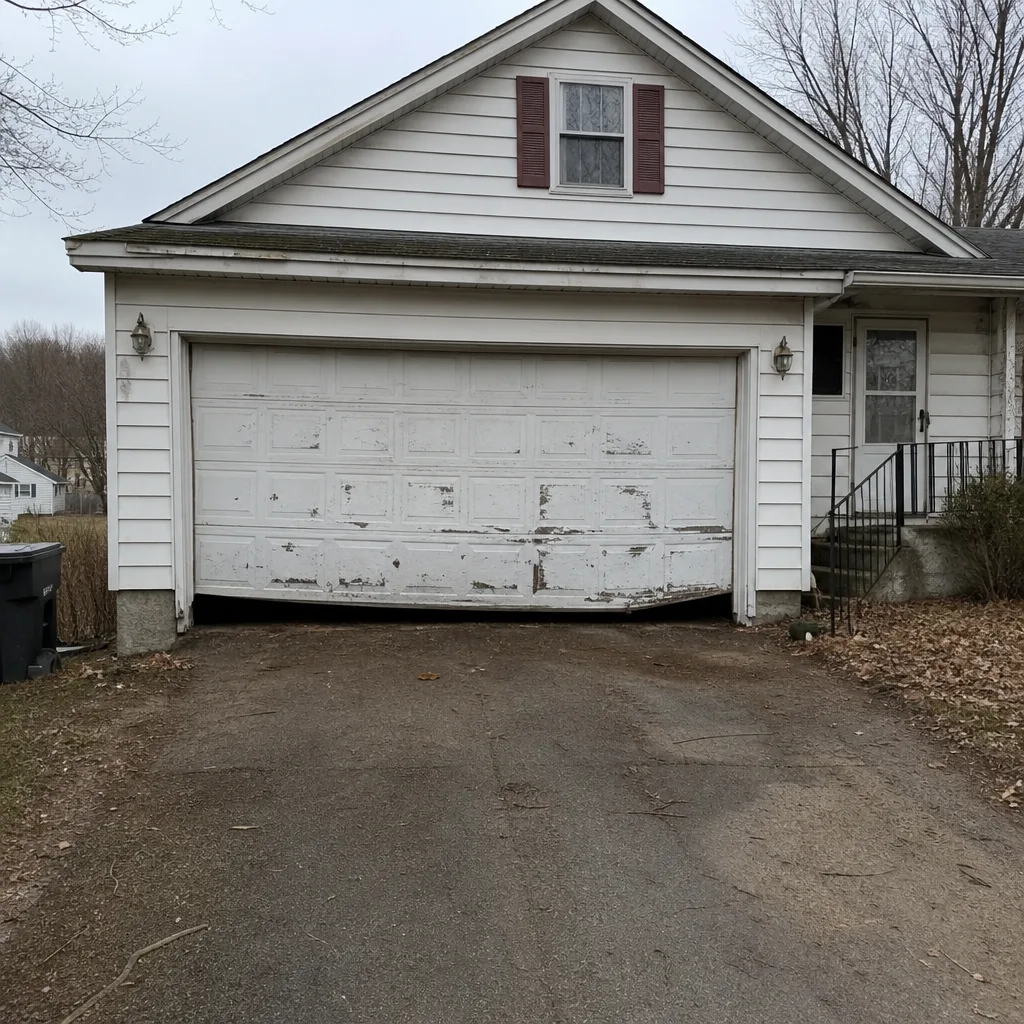
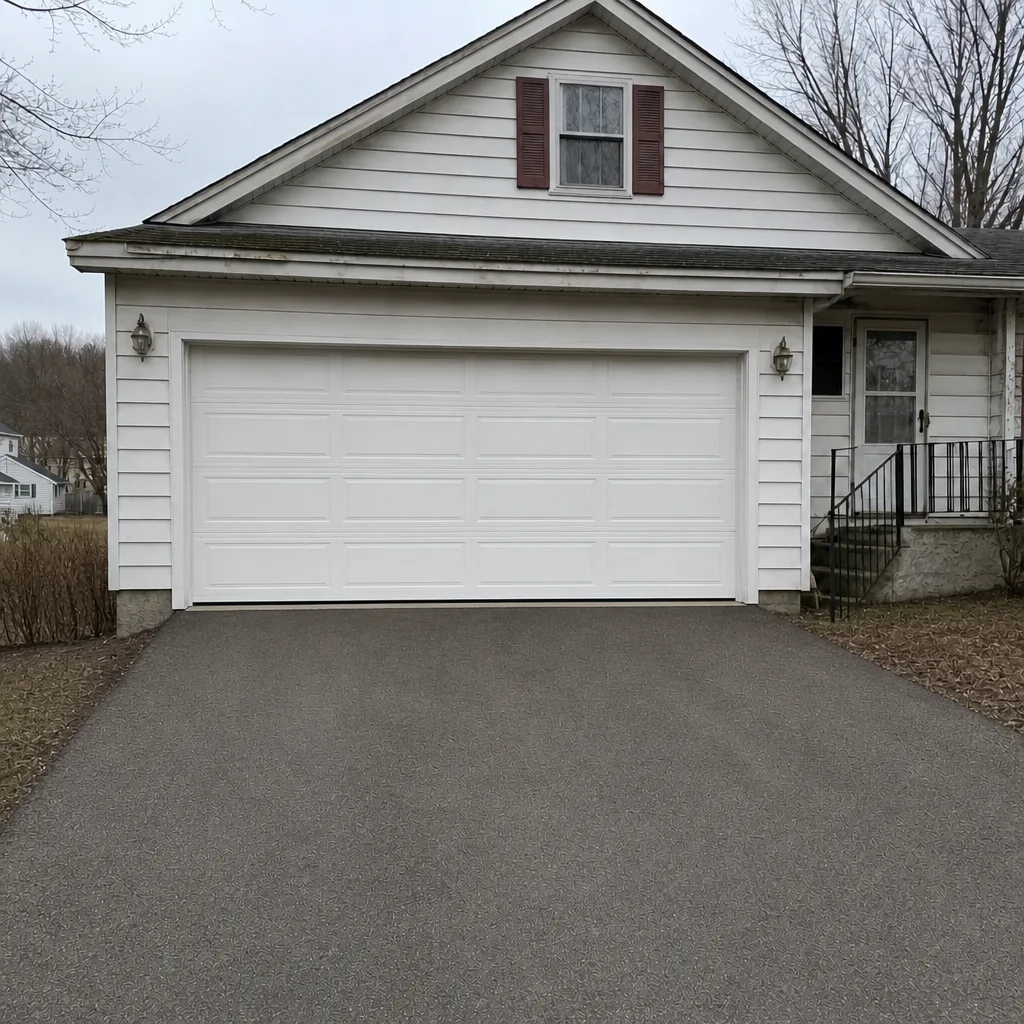
See the difference
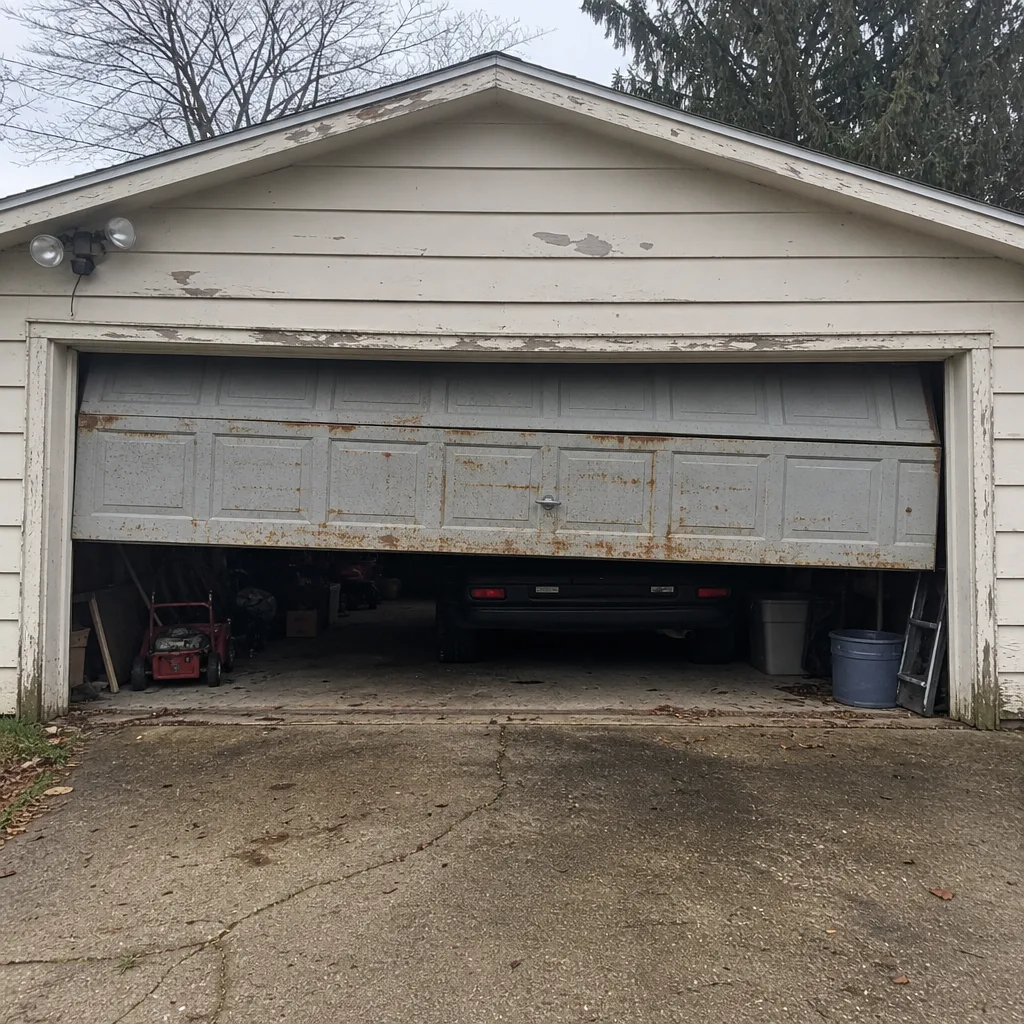 Before
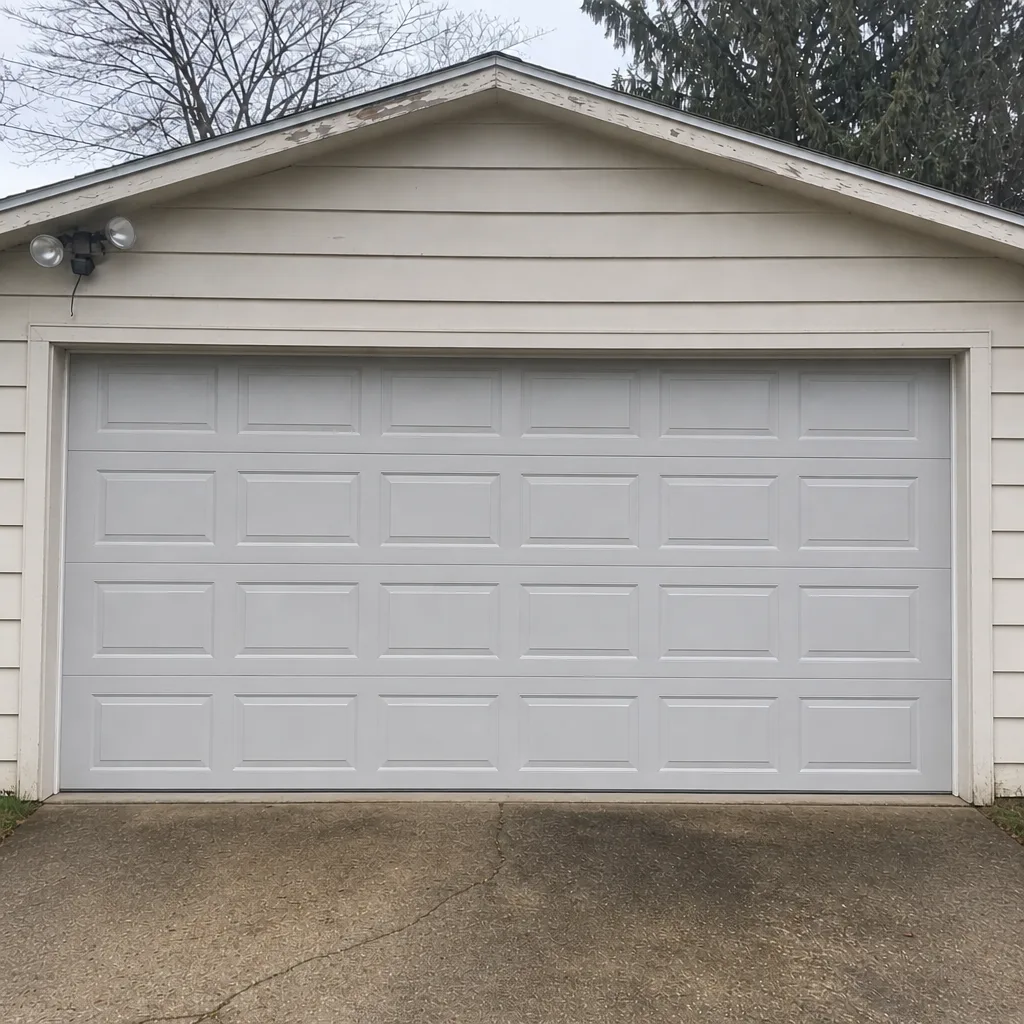 After
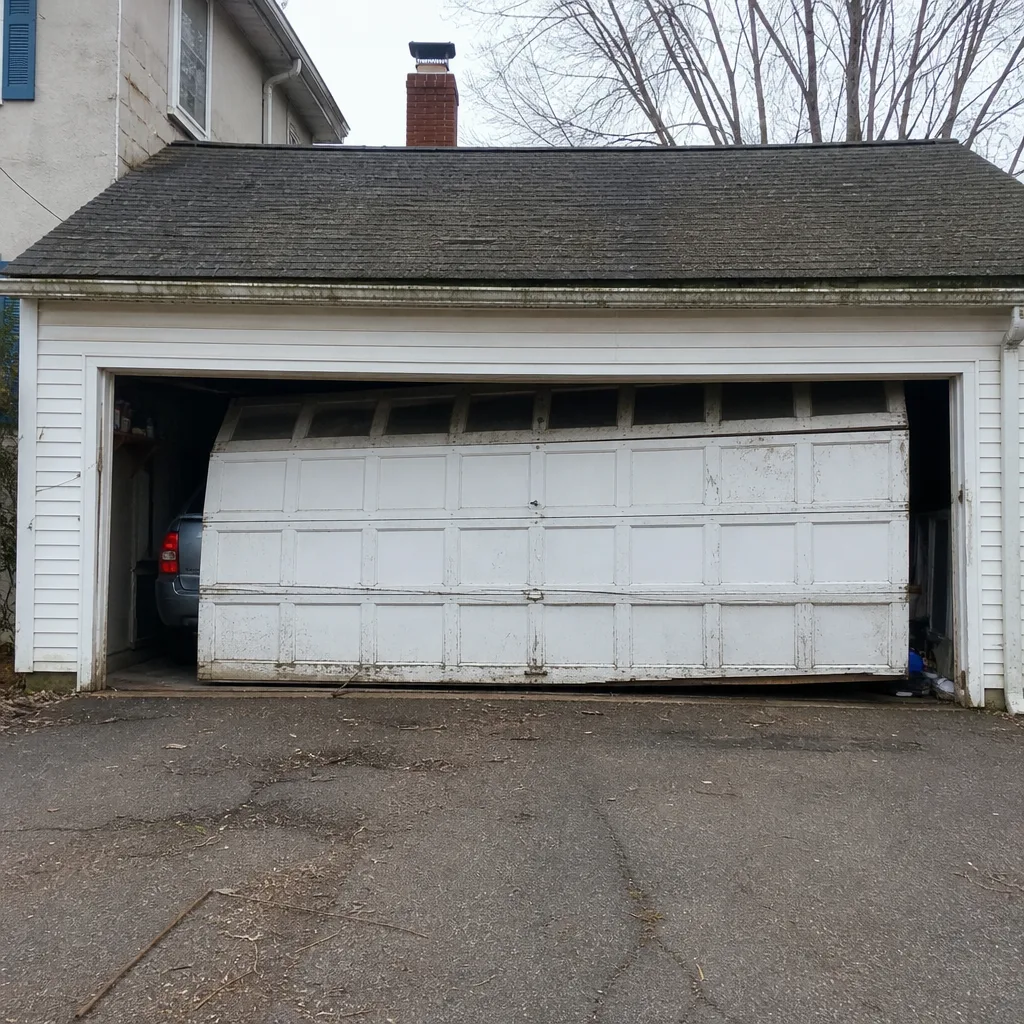 Before
 After
 Before
 After
When to Call a Professional
Some garage door problems are worth waiting for a scheduled visit. Others shouldn’t wait at all. Call a professional if a torsion spring has visibly broken, if a cable is frayed or hanging loose, if the door binds or comes off its track, if the opener runs but the door doesn’t move, or if the door won’t close and the safety reverse is failing. These are safety issues, not inconveniences – a door that drops unexpectedly is heavy enough to cause serious injury.
Springs and cables are under high tension, and adjusting them without the right tools and training is genuinely dangerous. That’s not a job to learn on your own door. For an opener that’s failing, or a door that’s noisy or uneven, a scheduled diagnostic will usually find the cause quickly, and it’s worth doing before the problem gets worse.
Waterbury Garage Door Repair offers free estimates in Waterbury – call (833) 513-8667. We answer 24/7. Fast dispatch from 7am to 7pm, Sunday through Friday.
Frequently Asked Questions
Garage door repair in Waterbury typically runs from about $150 for a minor adjustment to several hundred dollars for a spring or opener replacement, and the exact price depends on your door and the parts needed. A single torsion spring replacement is usually less than a matched pair, which costs roughly twice as much. The written estimate sets the final price, and the price is agreed before any work starts. Call (833) 513-8667 for an exact quote – estimates are free.
Yes, we offer same-day service for many repairs, including broken springs, failed openers, and doors that won’t close. We answer 24/7 and schedule fast dispatch from 7am to 7pm, Sunday through Friday. A call outside dispatch hours is booked into the next opening. Call (833) 513-8667 and we’ll tell you when we can be there.
No, the price quoted in the written estimate is the price you pay for the work described. If we find something unexpected once the door is apart, we stop and tell you before doing anything that changes the price. You approve any additional work before it happens. Call (833) 513-8667 to schedule a free estimate.
We service eight major brands: LiftMaster, Chamberlain, Genie, Clopay, Amarr, Wayne Dalton, Craftsman, and Raynor. That means we work on whatever system is already in your garage rather than steering you toward a brand we prefer. If you’re not sure what you have, the label inside the door panel or on the opener housing will tell you. Call (833) 513-8667 for a free estimate.
Ask five things: what brand and model your door and opener are, how they determine the right spring for your door, what opener horsepower your door needs, what the parts and labor warranties are separately, and whether they handle spring and cable work themselves. A specialist answers these without hesitation. A generalist will hedge or pivot to a sales pitch. Call (833) 513-8667 for a free estimate.
No. A door with a broken torsion spring is unbalanced and can drop suddenly, and the opener may strain or fail trying to lift it. Stop using the door and call a professional. Springs and cables are under high tension and should only be serviced by a trained technician with the right tools. Call (833) 513-8667 for same-day service.
The Bottom Line
Hiring a garage door contractor in Waterbury comes down to three things: asking technical questions that separate specialists from generalists, reading the written estimate line by line so you can compare it accurately, and verifying reputation beyond the star rating. A Connecticut registration doesn’t guarantee brand-specific knowledge, and a “full tune-up included” line doesn’t guarantee value. Insist on a written estimate that names the parts, states whether the spring price covers one or a pair, and spells out the warranty. The price is agreed before any work starts, and the technician should be able to tell you what brand your door is before they touch it. That’s the standard worth holding any contractor to.
If your door is broken now, don’t wait to sort through the details – for immediate help, our Waterbury Garage Door Repair team handles everything from a single spring to a full new installation, so you’re never handed off to a third party at any stage. Call (833) 513-8667 for a free estimate. We answer 24/7. Fast dispatch from 7am to 7pm, Sunday through Friday.
Written by the team at Waterbury Garage Door Repair.