
Last updated November 23, 2026
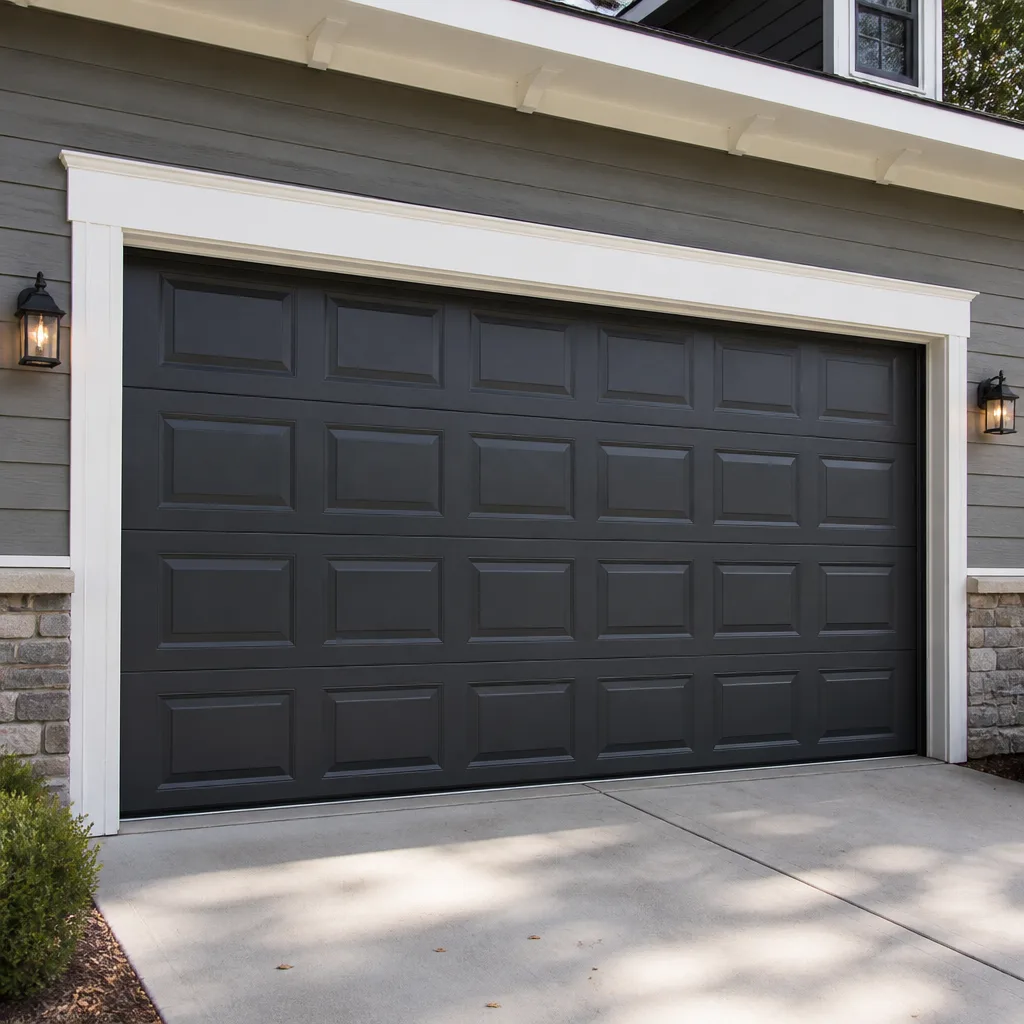 Raised-panel steel
 Carriage house
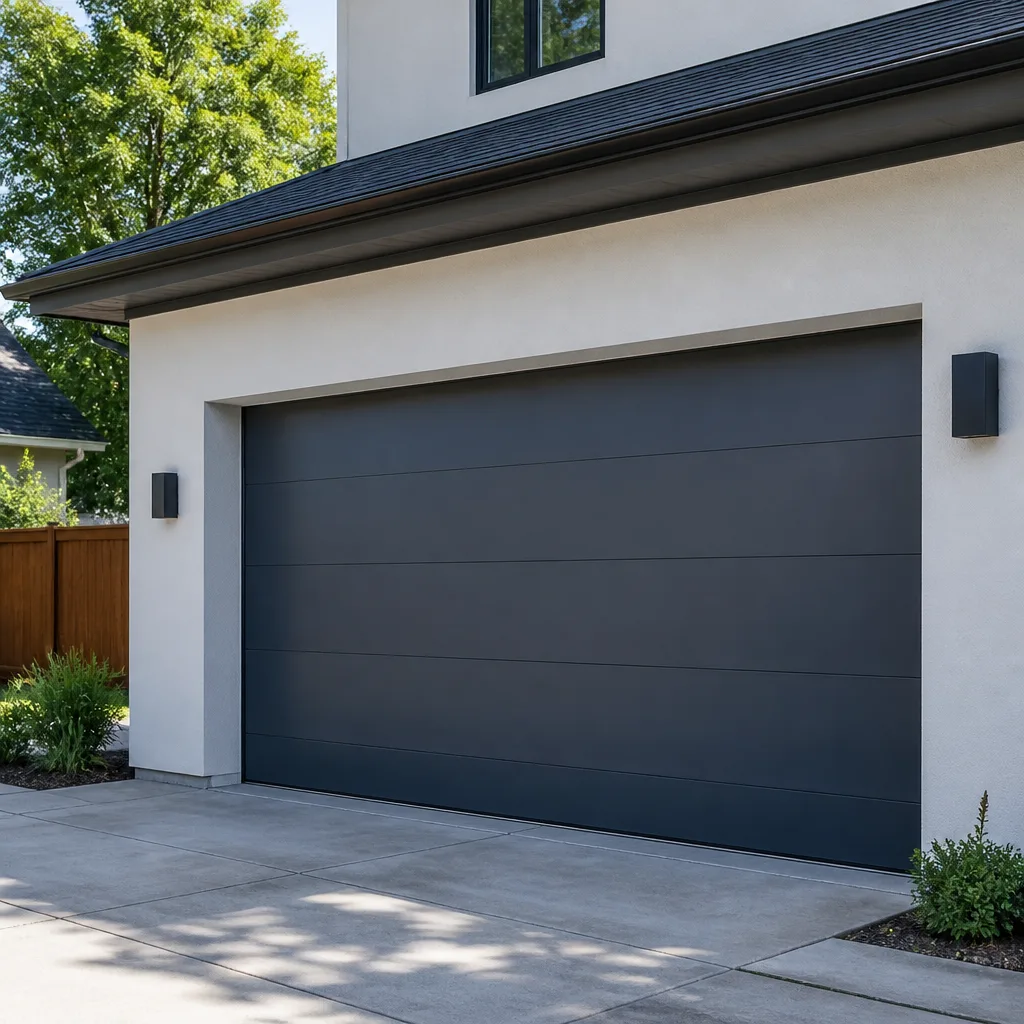 Modern flush
 Full-view glass
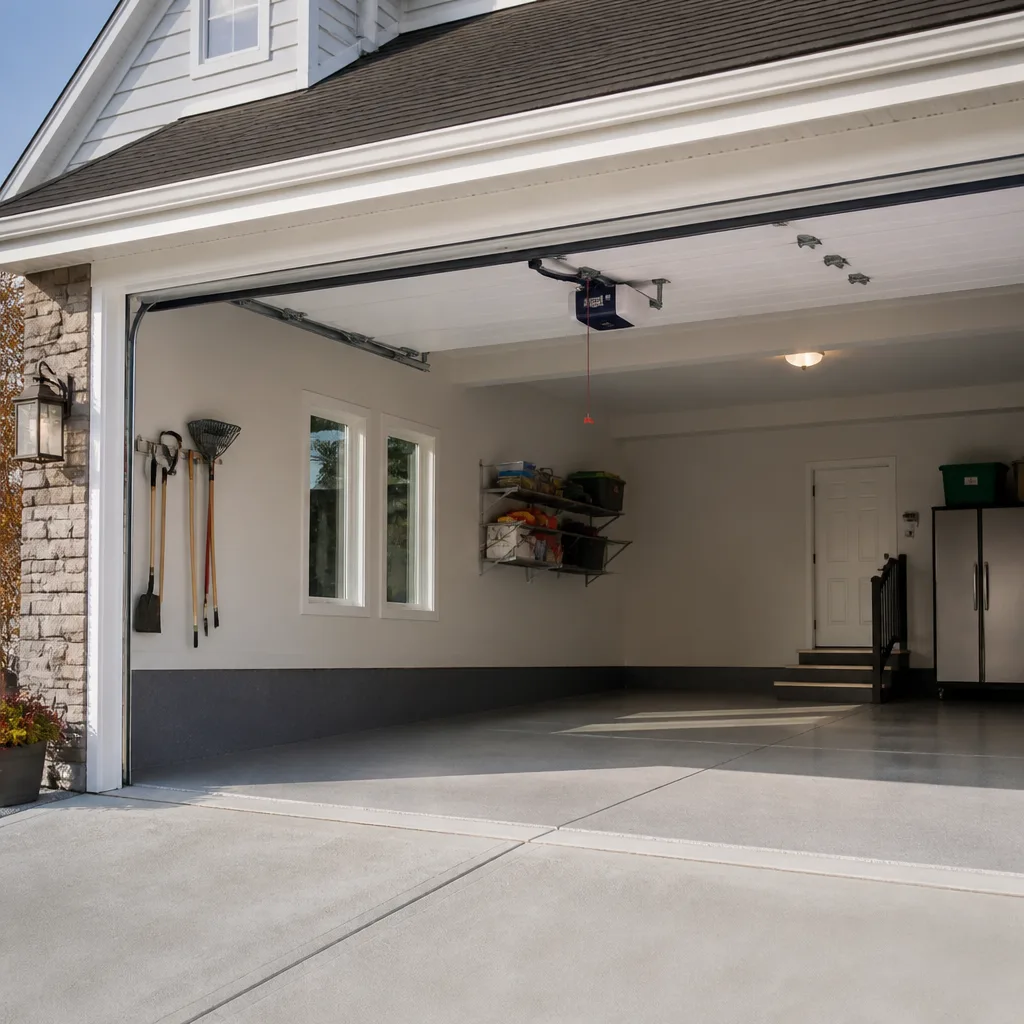 LiftMaster openers
 Chamberlain openers
Full 25-point door and opener safety check with every visit - springs, cables, rollers, tracks, and your LiftMaster or Chamberlain opener included
You get a price before we start. It does not change when the pro arrives.
Get your free estimateGarage Door Repair Maintenance Checklist for Waterbury Homeowners
Most maintenance checklists tell you to lubricate the springs. Some lists say it plainly and move on, as if any lubricant will do. But applying the wrong product to a torsion spring in a Connecticut winter can speed up corrosion instead of preventing it, and that’s the difference between a checklist that helps and one that gives you false confidence. Humidity, road salt tracked onto the driveway, and freeze-thaw cycles all work on your door in ways a generic checklist never mentions. This guide maps every maintenance item to the actual component failure it prevents, so you know what you’re buying yourself in time and what you’re quietly avoiding. You’ll also see which tasks are safe to do yourself and which ones belong in the hands of a trained technician. And we’ll get into all of it from the perspective of people who work on Waterbury doors every week.
Quick Answer
A garage door maintenance checklist for Waterbury homes should cover four things: lubrication with the right product for each component, a balance test that reveals spring wear before it snaps, visual inspection of cable drums and bottom brackets, and twice-yearly weather seal checks because of road salt and humidity. About half of the items on a typical checklist are safe for a homeowner to do. The other half, including anything involving springs, cables, and bottom brackets under tension, needs a trained technician because those parts can release stored energy without warning.
Styles & brands we work with
- Raised-panel steel
- Carriage house
- Modern flush
- Full-view glass
- LiftMaster openers
- Chamberlain openers
Table of Contents
- Lubrication: the right product for each garage door component
- How to run a valid balance test
- Cable drums and bottom brackets: what most homeowners walk past
- Why Waterbury weather seals need twice-yearly inspection
- Rollers, hinges, and track wear
- Opener and safety-reverse checks
- What’s safe to do yourself and what isn’t
- A seasonal checklist for Waterbury
Lubrication: the right product for each garage door component
Not all garage door parts take the same lubricant, and the wrong one causes more harm than skipping the job. The general rule is that torsion springs, hinges, and rollers want a lithium- or silicone-based grease or a purpose-made garage door spray. Tracks want almost nothing, and the door’s finish wants nothing at all. Applying the right thing to the wrong part is how homeowners end up with a sticky track that grabs the rollers or a spring that collects grit and corrodes faster.
Here’s how we break it down by component:
- Torsion and extension springs: a light coating of garage door lubricant or a lithium grease. In cold climates, avoid heavy petroleum jelly or WD-40 as a stand-alone product; the first thickens and attracts grit, the second is a solvent, not a long-term lubricant, and it strips whatever protection is already there.
- Rollers: a drop of lubricant on the bearing of each steel roller, or replace rollers with nylon ones that don’t need oil as often. Don’t spray the roller wheel itself; the bearing is what needs the lube.
- Hinges: a small amount at each hinge pivot. Too much attracts dust, and in a garage that doubles as a workshop, dust is everywhere.
- Tracks: clean with a damp cloth, no grease. Lubricant in the track mixes with dust and turns into a paste that slows the door.
- Weather seals: a silicone spray keeps rubber pliable through a Connecticut freeze, but grease will degrade the rubber over time.
One more cold-climate point: any lubricant you apply in late fall should be rated for low temperatures. A product that’s fine in July can turn tacky by January, and that changes how the door rolls on a 20-degree morning. If you’re unsure what’s already on the springs, a technician can tell you in a minute and a garage door spring repair call is also the right moment to have the springs inspected properly. That inspection is quick and it’s part of any real maintenance visit.
How to run a valid balance test
The balance test tells you whether your springs are still carrying their share of the door’s weight. If they’re not, the opener is doing work it wasn’t designed for, and a spring is closer to snapping than it looks. Here’s how to do it right:
- Close the door and disconnect the opener using the manual release cord. This is the red handle hanging from the trolley.
- Lift the door by hand to about waist height, then let go. A healthy door stays roughly where you put it. A door that drops is losing spring tension. A door that rises on its own is over-tensioned, which is also a problem.
- Test at two more positions: knee height and just above shoulder height. What you’re checking is consistency. A door that holds at one height but not another is showing uneven spring wear.
- Reconnect the opener and listen on the next cycle. If the motor sounds like it’s straining, the balance test result explains why.
What the result actually tells you: a failing balance test doesn’t mean a spring will break tomorrow, but it does mean the spring has lost tension and it’s time to plan for replacement rather than wait. In Waterbury, doors that face west get more afternoon sun and more heat cycling on the springs, which means the balance test is worth running more than once a year on those doors. A failed test is exactly when to call for garage door spring repair; catching it here is far cheaper than catching it after the door won’t open at all.
Cable drums and bottom brackets: what most homeowners walk past
If you’re looking for the parts of a garage door most homeowners never notice, they’re at the very ends of the door: the cable drums at the top of each side and the bottom brackets at the base. The cable wraps around a grooved drum on each side, and the bracket at the bottom corner is what anchors the cable to the door. Together these handle the entire weight of the door panel below them, and they’re under live tension every second the door is on the tracks.
What to look for by eye, without touching anything:
- Cables that are frayed, kinked, or wrapped unevenly on the drum. Any frayed strand is a sign that the cable has already started to fail.
- Drum grooves with visible wear, cracking, or a cable sitting outside its groove.
- Bottom brackets with bent arms, loose bolts, or rust bleeding down the door panel.
- A gap between the door and the wall on one side, which can mean a drum has slipped or the door is out of alignment.
Here’s the part that matters most. You inspect these by looking, not by touching. Springs and cables hold enormous stored energy, and a cable or bracket under tension can release without warning. If anything on that list looks wrong, don’t try to adjust it. Call a technician. We handle spring and cable work on Clopay, Amarr, Wayne Dalton, and Raynor doors regularly, and the drums and brackets vary by manufacturer and door weight, so the correct replacement is specific to your system. That’s the kind of thing a visual inspection catches and a DIY repair makes worse.
Why Waterbury weather seals need twice-yearly inspection
Weather seals do more work in Waterbury than in most of the country, and that’s why our checklist calls for checking them twice a year instead of once. Two forces are at play. First, road salt. In winter, salt tracked onto the driveway and sprayed up under the car finds its way to the bottom seal, where it dries into a crust that stiffens the rubber and pulls at the ends. Second, humidity. Waterbury summers push moisture into the garage, and a rubber seal that’s already damaged by salt holds that moisture against the door and the frame.
The twice-yearly check is simple:
- Run your hand along the bottom seal and feel for hardened, cracked, or torn spots. Replace the seal when the rubber has lost its flexibility, not just when it’s visibly torn.
- Look at the side and top seals for gaps. A running light test (close the door, look for daylight around the edges) will show gaps you’d otherwise miss.
- Check the threshold or bottom bracket for rust. If salt is reaching metal, it’s reaching the seal too.
- Wipe the seal with a silicone-based protectant after cleaning. This is one of the few genuinely useful DIY maintenance steps; it buys you months before the rubber hardens.
A worn seal doesn’t just let in cold air and rain. It lets in mice, and it lets a door that was closing quietly turn into one that rattles against its frame. Twice a year, spring and fall, is the right schedule for Waterbury homes.
Rollers, hinges, and track wear
Rollers and hinges are the door’s moving parts, and when they wear, the door tells you. The common signs are a rattle at certain heights, a door that comes down at an angle, or a grinding sound that goes away when the door is fully open. Recognizing them early is the point of adding this to the checklist.
What to check and how:
- Rollers: look for cracks in nylon wheels, flat spots on steel ones, and loose stems. A roller that wobbles in its bracket is about to fail.
- Hinges: check the pins for play and the metal arms for wear at the pivot points. A squeak that doesn’t quiet after light lubrication usually means the hinge has worn.
- Tracks: the vertical and horizontal tracks should be straight and parallel. A dented track will catch a roller, and a track that’s pulling away from the wall at a bracket is a sign the door has been out of alignment longer than you thought.
- Panel condition: look for splits, dents, and rust streaks. On steel doors, rust at the bottom panel is common near the edges, and it’s a good reason to inspect the bottom bracket at the same time.
If the track itself is bent, don’t try to bend it back. The door’s alignment is set by those tracks, and a home rebend is one of the most common ways a small problem becomes a full garage door repair job. A technician can tell you in about five minutes whether the track needs realignment or replacement, and the estimate is free.
Opener and safety-reverse checks
Your opener is the most-tested part of the system and the one most likely to be replaced before it needs to be. A few checks will tell you whether yours is healthy. They also cover the safety features every homeowner should verify at least twice a year.
The safety-reverse test:
- Place a roll of paper towels or a piece of wood roughly two inches tall under the center of the closed door.
- Press the close button. The door should reverse within a second of touching the object and begin traveling back up.
- If it doesn’t reverse, the opener needs adjustment or repair before you use the door again. The same object-detection feature is what protects a child or pet who runs under a closing door.
The other opener checks:
- Balance and force: if the door runs fine by hand but struggles with the opener, the issue is the springs, not the motor. A failed balance test is the reason to look at the springs before calling about the opener.
- Light and battery: a flashing opener light can indicate a problem the opener is reporting. Check the wall control for a code, and change any remote batteries at the same time so you don’t test a healthy opener against a dead battery.
- Smart platforms: if you have a Wi-Fi opener, verify the app connection once a season. The app also usually reports when the door opened and closed, which is handy for confirming the door ran its full cycle after a repair.
We work on LiftMaster, Chamberlain, Genie, and Craftsman openers on Waterbury doors and see plenty of openers replaced because of an out-of-balance door. If your opener is the problem, garage door opener repair handles the motor and controls. If the balance test is the thing that failed, start with the springs.
What’s safe to do yourself and what isn’t
Half of a garage door checklist is genuinely yours to do. The other half needs a technician. Here’s the line, and more importantly, the reason behind it.
- Lubrication: yours. It’s safe, it’s quick, and doing it yourself keeps the door running quietly between visits. Use the right product per component, as covered above.
- Balance test: yours. Pulling the release cord and lifting the door to waist height is safe when the door is balanced. If it isn’t, stop there and don’t force it.
- Weather seal cleaning and protectant: yours. Wipe, spray, done. This is the checklist item that pays you back the most for the least effort.
- Roller and hinge inspection: yours to look at and listen to. Replacing a roller is sometimes safe; tightening a worn hinge is sometimes safe. If you’re not sure, leave it to the technician.
- The safety-reverse test: yours. It takes thirty seconds and it’s the most important check on the whole list.
- Spring replacement, adjustment, or repair: not yours. Torsion springs hold the full weight of the door, and releasing that energy suddenly is how serious injuries happen. This is the single reason our spring work is a named service; it’s the most dangerous repair on a garage door and it needs the right technique and the right size spring.
- Cable, drum, and bottom bracket work: not yours. These are under live tension, and a slipped cable is just as dangerous as a snapped spring.
- Track realignment: not yours. A track out of alignment is a door alignment problem, and getting it wrong can distort the door panels.
- Opener electrical work and panel wiring: not yours. Wiring adds risk on top of the mechanical risk, and an opener installation has to match the opener’s rated lift.
Nothing on the “not yours” list is a judgment on the homeowner. It’s just physics. Our technicians have up to 8 years of experience with these systems, and the parts we work with are the same parts you’d find if you removed the tension yourself. The difference is doing it safely.
A seasonal checklist for Waterbury
Waterbury’s four clearly defined seasons give you a natural maintenance calendar. Run this one twice: once in late fall before the cold settles in, and once in early spring after winter has done whatever it was going to do.
- Late fall: lubricate springs, rollers, and hinges with a cold-rated product. Check weather seals and protectant them. Run the balance test and note the result. Test the safety reverse.
- Before the first cold snap: make sure the door runs smoothly by hand and by opener. Any slowing or straining now will only worsen in January.
- Midwinter: do the quick visual checks only. Look at cables and bottom brackets for rust or wear and stop there. Call a technician if you see anything.
- Early spring: clean the bottom seal of salt and grit, inspect the tracks for any movement from frost, and re-run the balance test. Replace any seal that’s hardened through the winter.
- Before summer heat: check the opener’s app connection if you use one, inspect rollers for cracking, and clear the garage of anything piled against the tracks.
Owners of Clopay and Wayne Dalton doors often ask whether the door brand changes the schedule. Mostly no, but the door’s finish and the weight of the panel do change what you look for. A heavier door wears its springs faster, and a steel door’s bottom panel is where rust shows first. If a spring or cable not on your list does fail, emergency service is available, and for the small repairs, same-day service covers most of them.
Common Mistakes to Avoid
- Lubricating the tracks. Grease in the track collects dust and grit and turns into a sticky paste. Clean the tracks with a dry or damp cloth and leave them alone.
- Using WD-40 as a spring lubricant. It’s a solvent, not a long-term lubricant, and it strips existing protection. Use a purpose-made garage door lubricant.
- Skipping the balance test. The balance test is the one item that tells you a spring is failing before it snaps, and skipping it because the door “feels fine” defeats the purpose of the checklist.
- Not testing the safety reverse. An opener that won’t reverse is the most serious safety issue in the garage. It should be tested at least twice a year.
- Forcing the door down. If the door doesn’t close easily, stop and call. Forcing it can damage panels and cables in a way that turns a small repair into a large one.
- Ignoring the weather seal because it’s “just rubber.” A failed seal lets water and mice into the garage and rusts the door’s bottom edge, which is expensive to undo. It’s a twice-yearly job in Waterbury for a reason.
- Adjusting the springs yourself. This is the mistake that leads to injury and to a door that no longer closes correctly. Spring adjustment is not a homeowner task.
See the difference
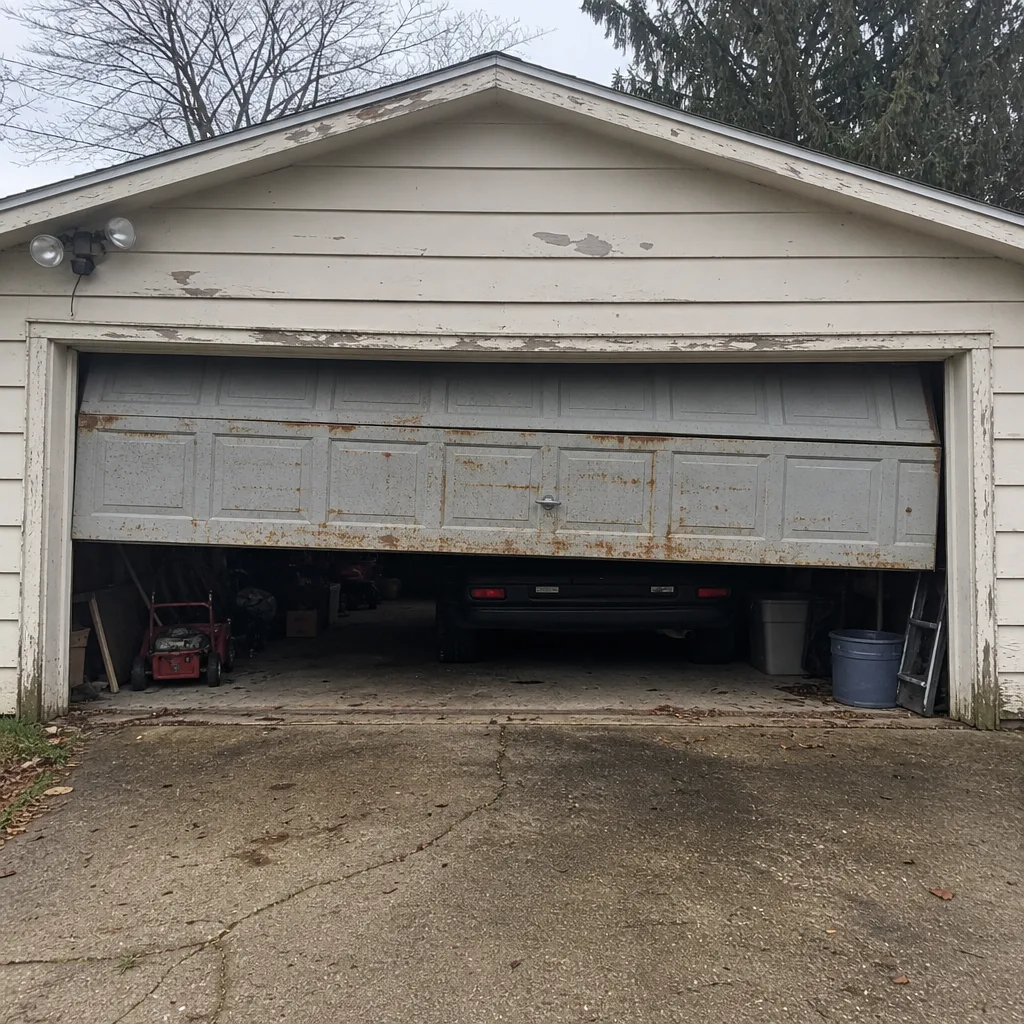 Before
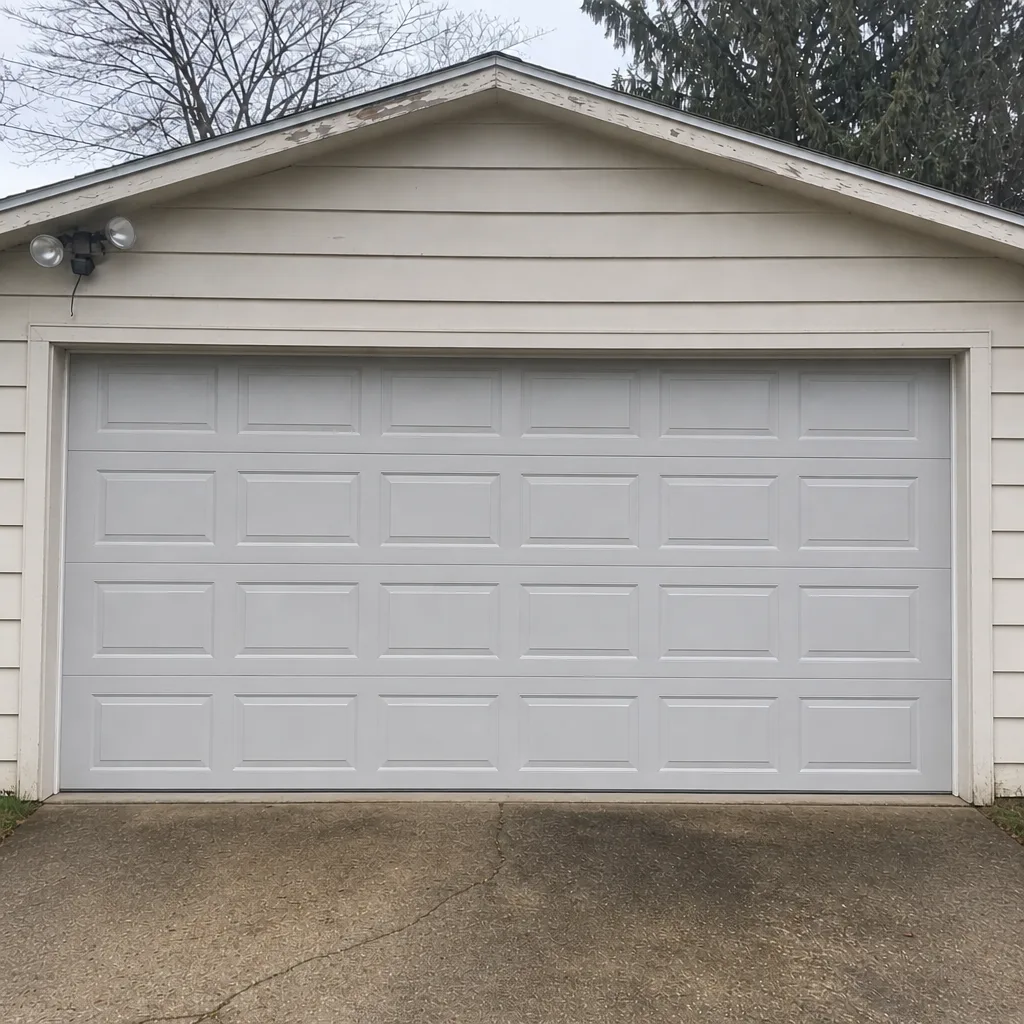 After
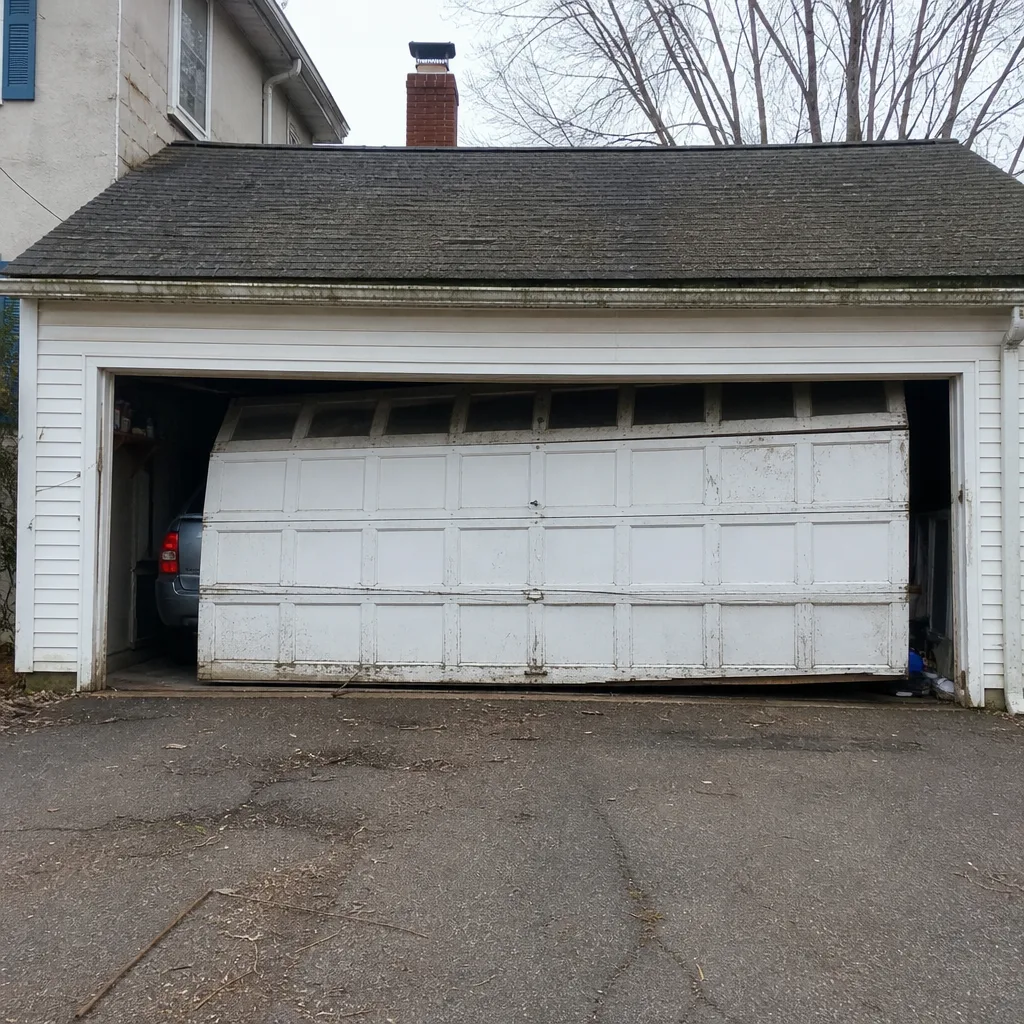 Before
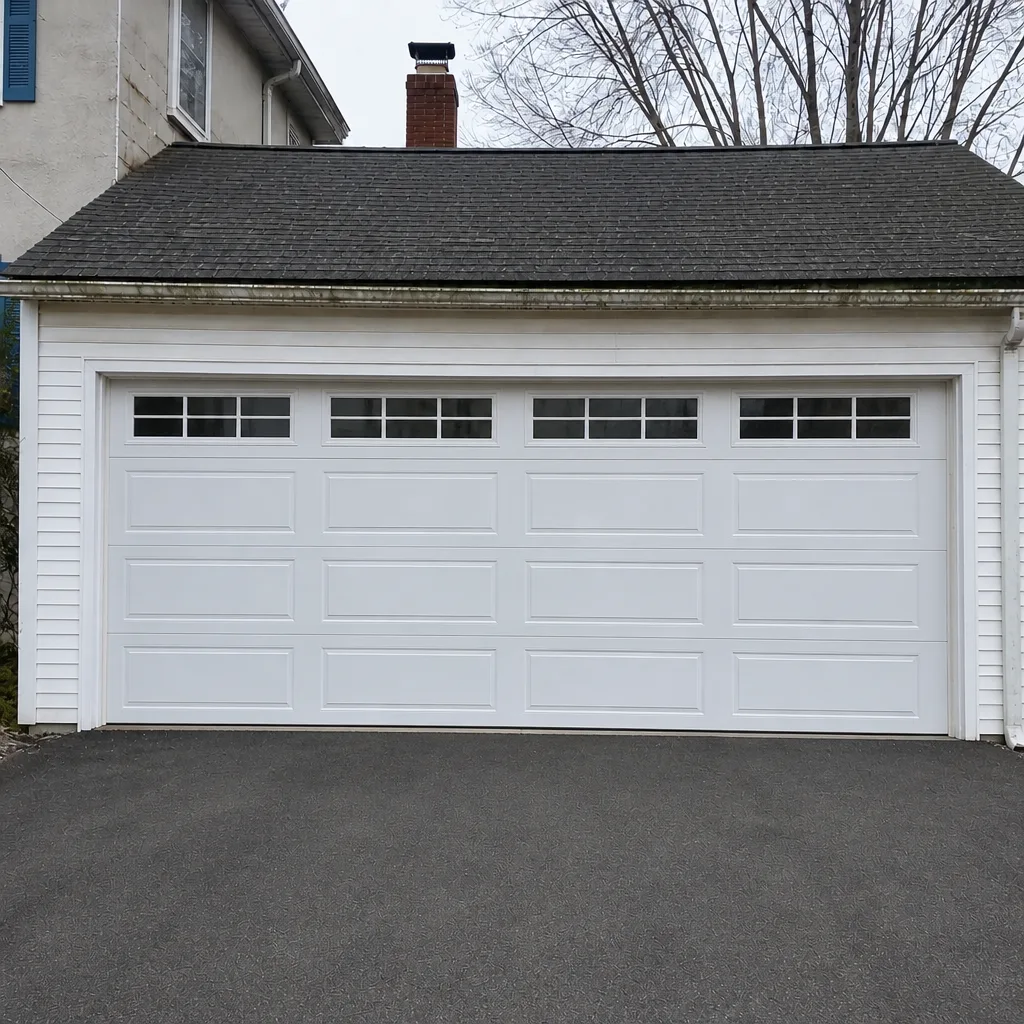 After
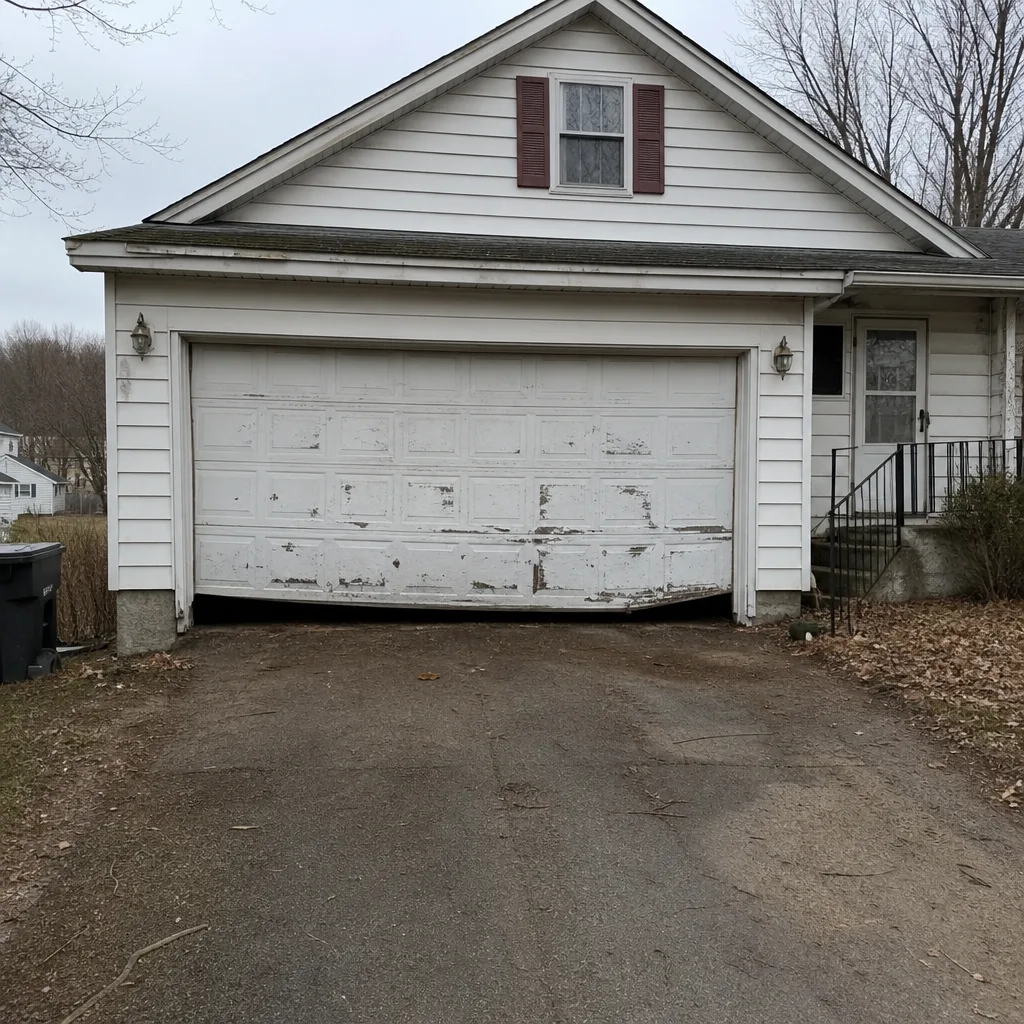 Before
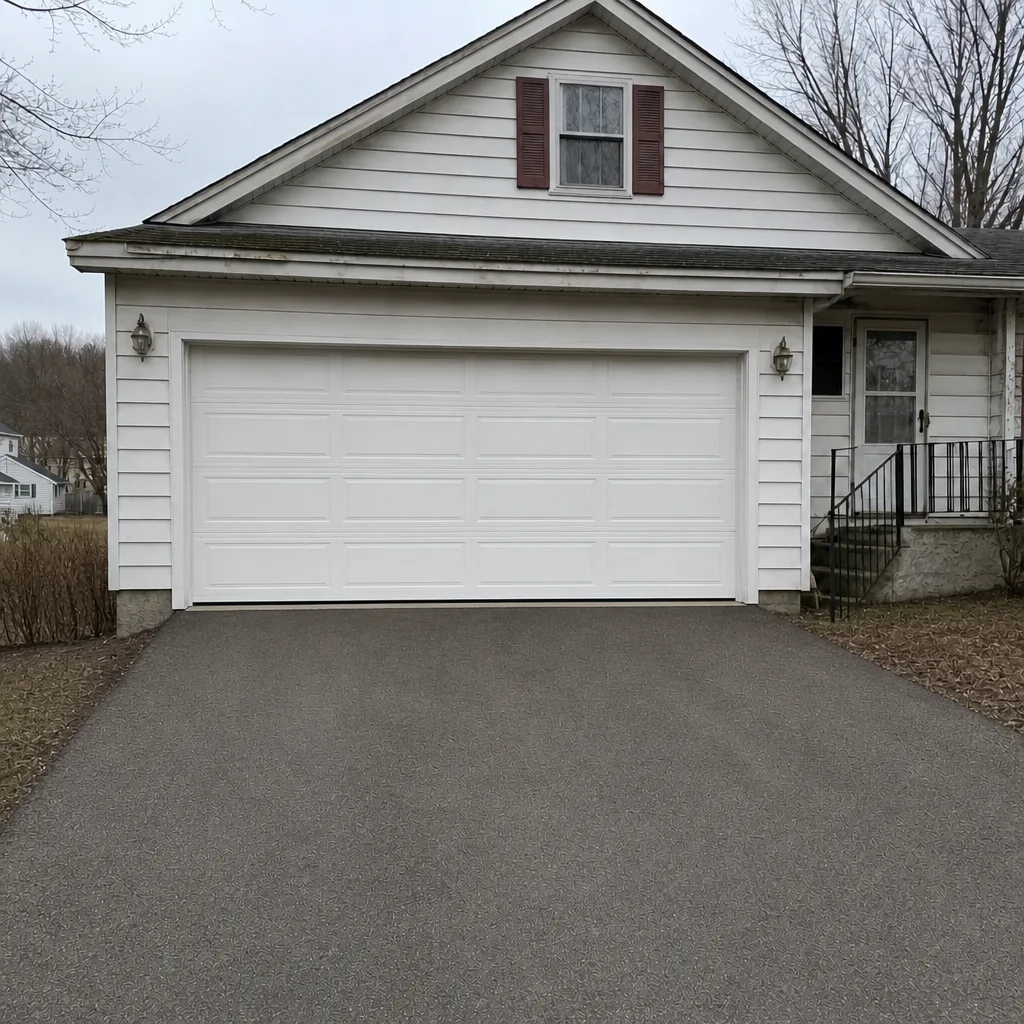 After
When to Call a Professional
You should call a professional when a spring looks stretched or feels slack, when the balance test fails, when a cable is frayed or a drum is wrapped unevenly, when the door comes down unevenly or off its tracks, when the opener reverses incorrectly or refuses to reverse, or when you see rust bleeding from a bottom bracket. These are the cases where continuing to cycle the door is the risk.
There’s a second category: the door is fine but the checklist is beyond what you want on a ladder. That’s fine too. Waterbury Garage Door Repair offers free estimates in Waterbury. Call (833) 513-8667 and we’ll take a look and tell you plainly what needs doing and what doesn’t. We answer 24/7. Fast dispatch from 7am to 7pm, Sunday through Friday. From a broken spring to a full new door, we work on your brand: Clopay, Amarr, Wayne Dalton, Raynor, LiftMaster, Chamberlain, Genie, and Craftsman. If a door fails on a Saturday, the phone is still answered; we’ll book the visit for the next opening, Sunday through Friday.
Frequently Asked Questions
Twice a year is a sound schedule in Waterbury, once in late fall and once in early spring. The fall pass matters most, because the lubricant needs to hold through the freeze and thaw. Use a garage door lubricant rated for cold temperatures, and skip it entirely on the tracks.
A purpose-made garage door lubricant or a lithium-based grease is the right choice for torsion springs, and in a Connecticut winter, that matters. Don’t use WD-40 as a lubricant, because it’s a solvent that strips protection rather than adding it. Whatever you use, make sure it’s rated for low temperatures so it doesn’t turn tacky by January.
No. Torsion and extension springs hold the entire weight of the door, and releasing that stored energy suddenly is how serious injuries happen. That’s why spring work is a trained-technician job, and it’s why we do it as a named service. Call (833) 513-8667 for a free spring estimate.
It’s usually a repair, and grinding is almost always worth diagnosing before it gets worse. The common causes are a worn roller, a bent track, or a failing drum. Lubrication won’t fix grinding, so this is one of the cases where you call before you do anything else.
Put a two-inch object under the closed door and press close. The door should reverse within a second of touching the object. If it doesn’t, the opener needs repair before the door is used again. This is the most important check on the entire checklist and it’s easy to do yourself.
You can handle lubrication, the balance test, weather seal cleaning, and the safety-reverse test. Springs, cables, cable drums, bottom brackets, and track realignment need a technician because they’re under live tension and a mistake can injure. The dividing line is whether the part stores energy you can’t see.
The Bottom Line
A good garage door maintenance checklist doesn’t just list tasks; it connects them to the failures they prevent. In Waterbury, that means cold-rated lubricants on the springs, a serious balance test each season, eyes on the cable drums and bottom brackets, and twice-yearly weather seal checks because of road salt and humidity. The items you can do yourself are worth doing carefully; the items that involve springs, cables, and bottom brackets are worth handing to a technician. Done this way, the checklist buys you quiet cycles and more years from the door. Waterbury Garage Door Repair is here when something needs a closer look. Call (833) 513-8667 for a free estimate.
Written by the team at Waterbury Garage Door Repair.