
Last updated November 23, 2026
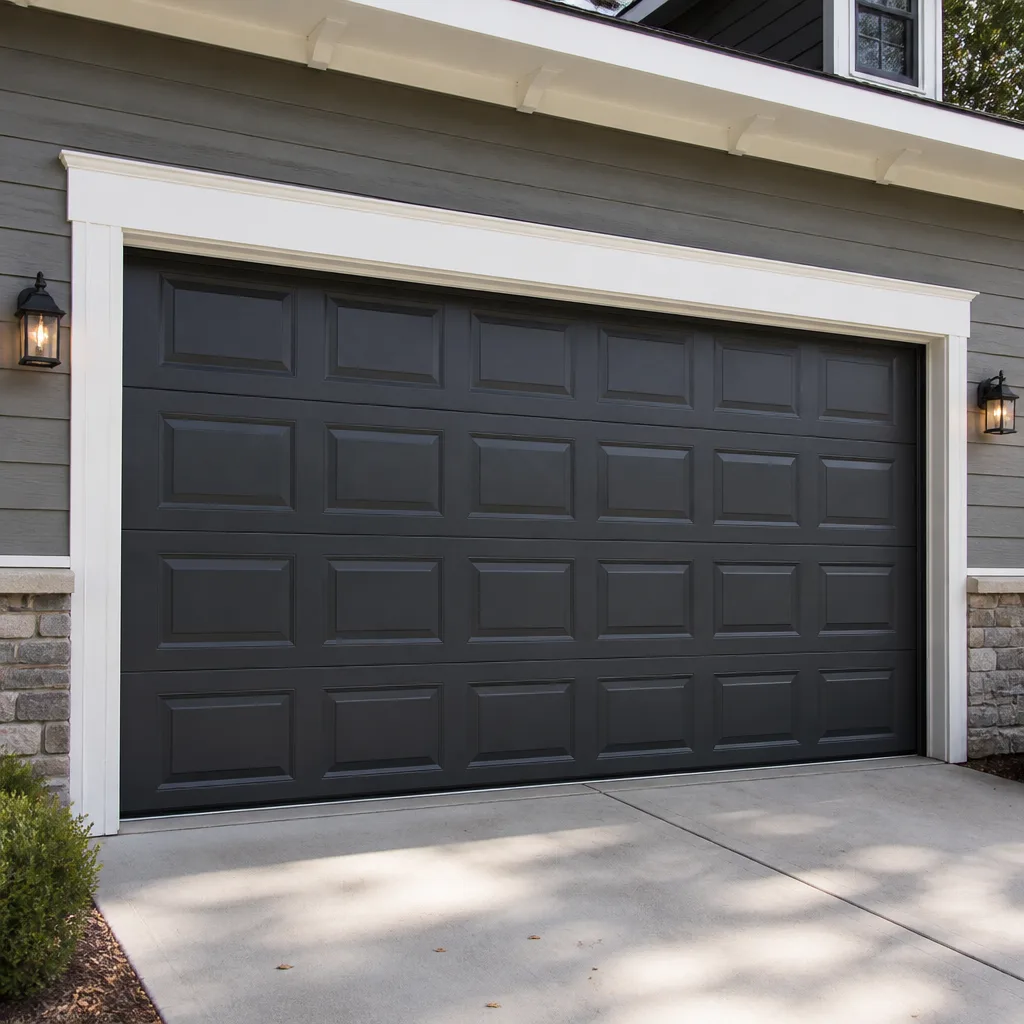 Raised-panel steel
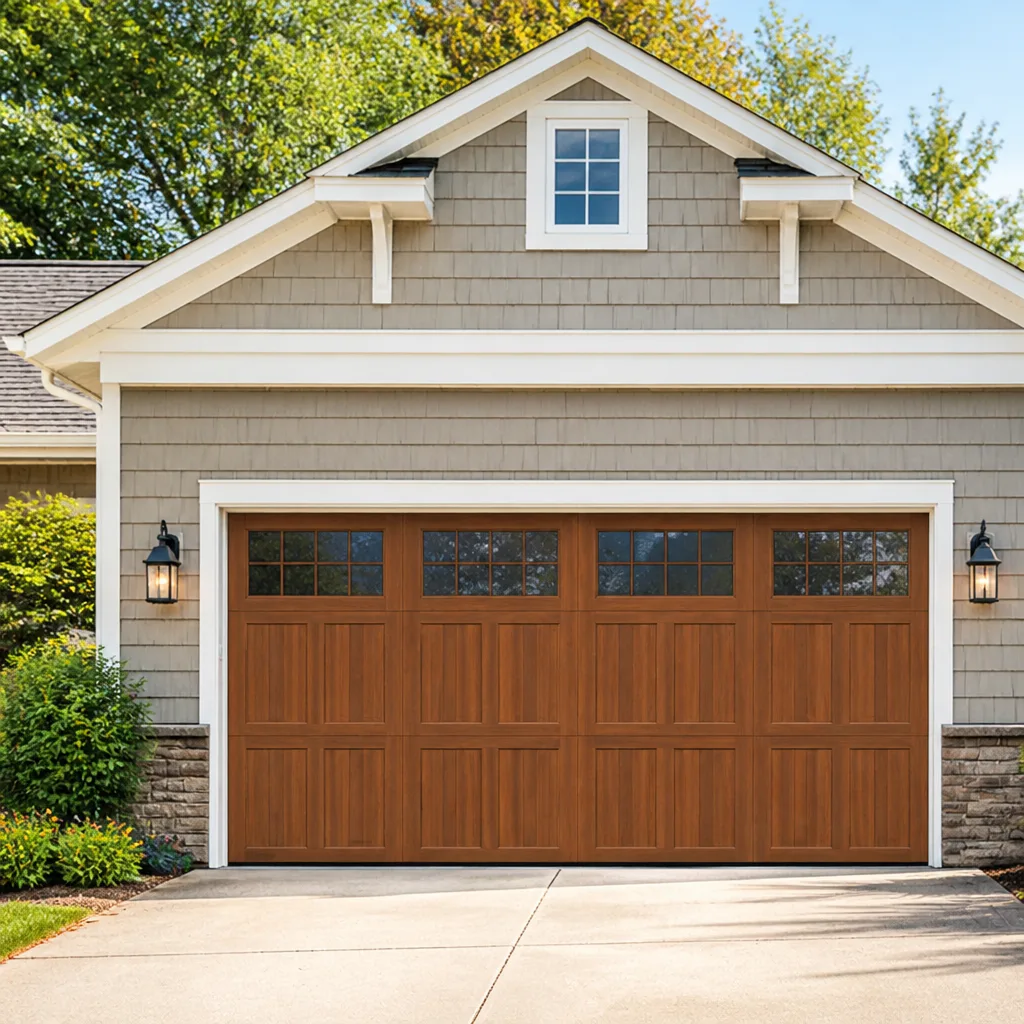
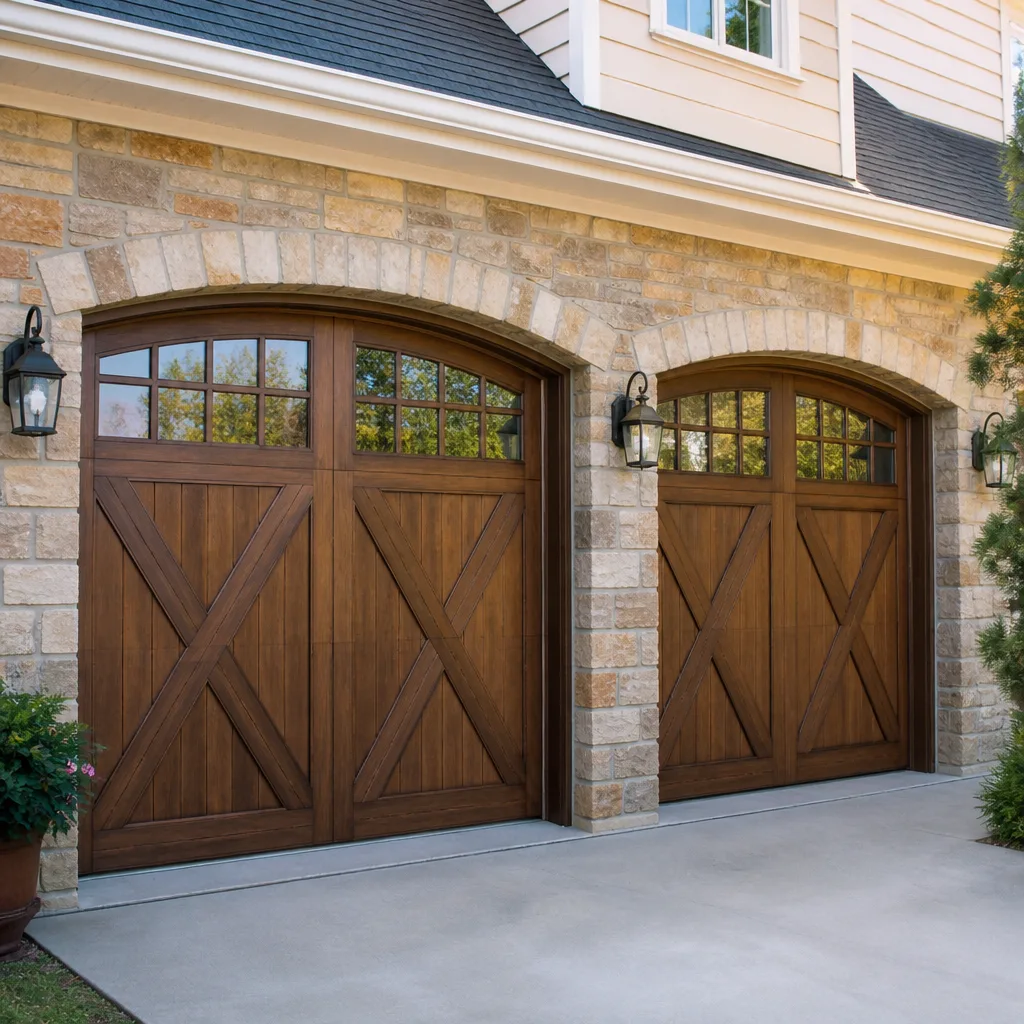 Carriage house
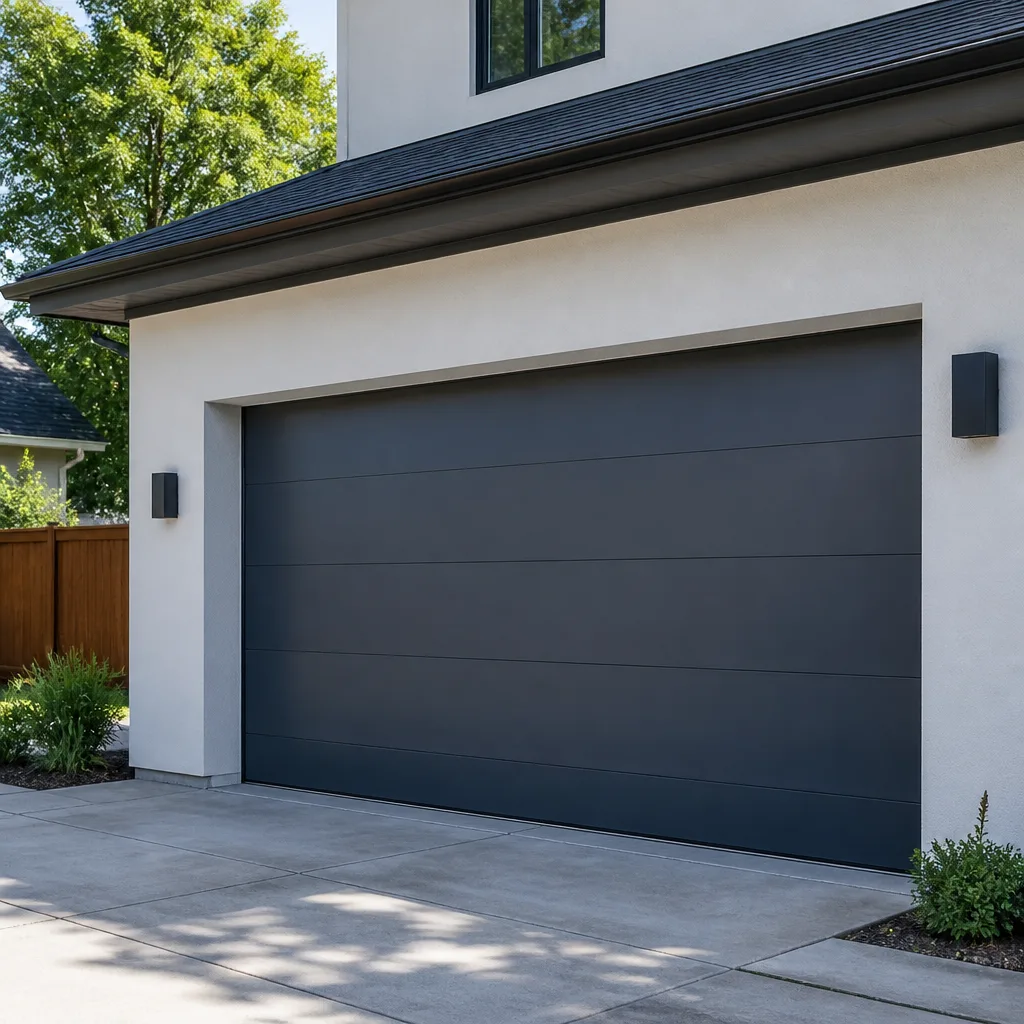 Modern flush
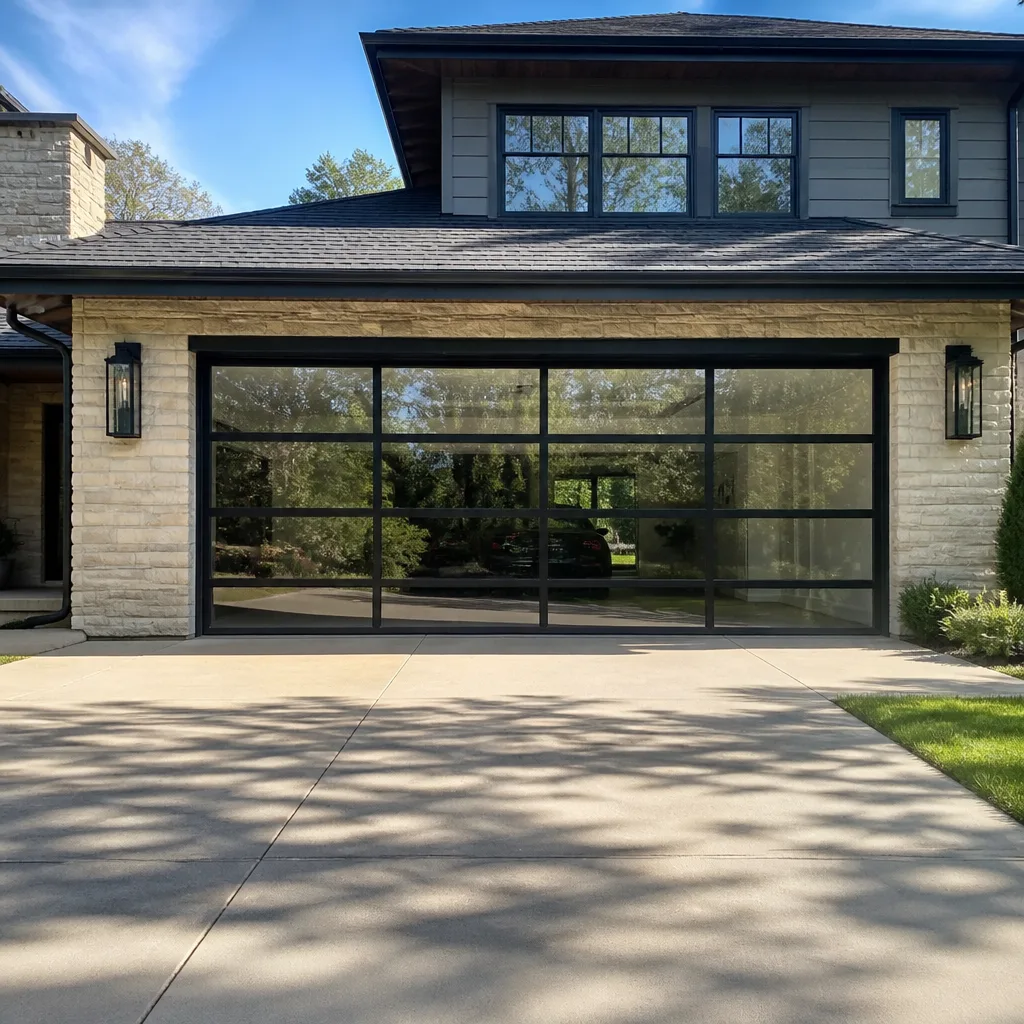 Full-view glass
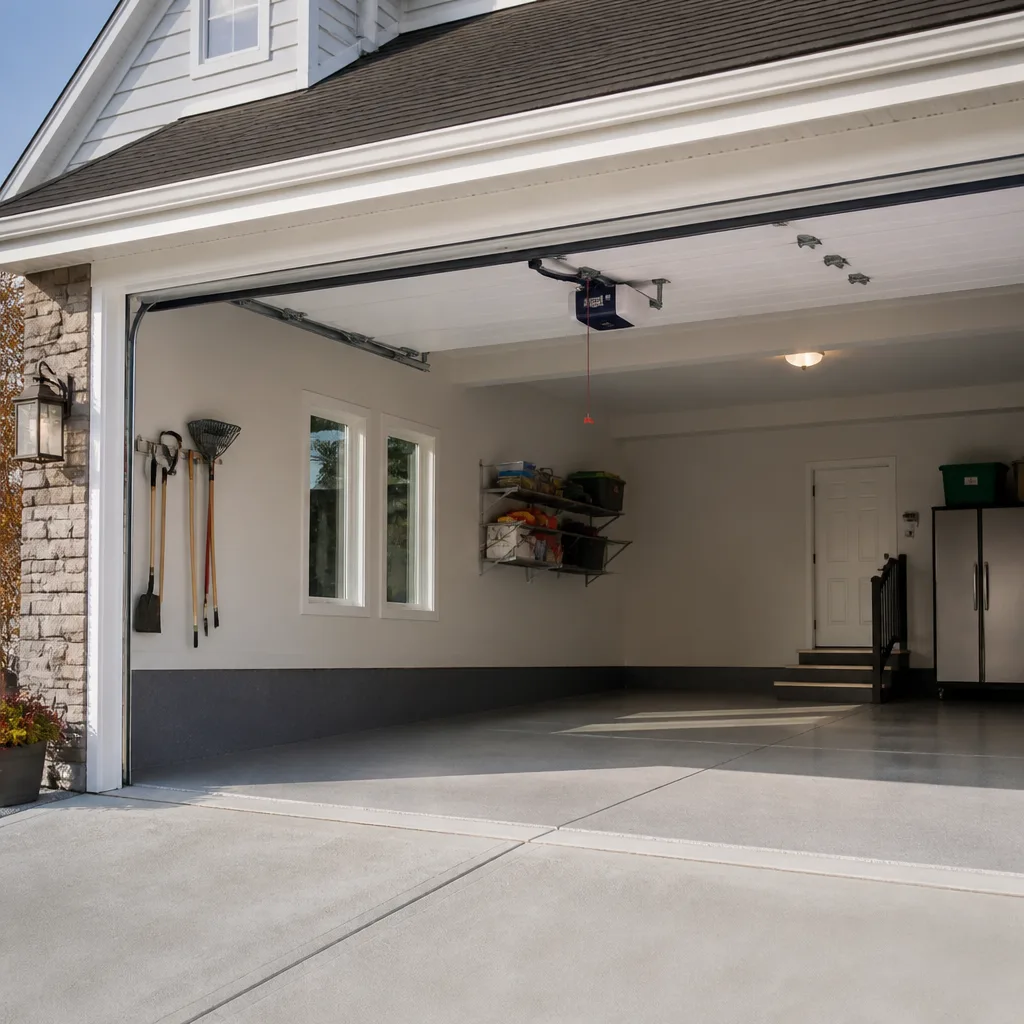 LiftMaster openers
 Chamberlain openers
Full 25-point door and opener safety check with every visit - springs, cables, rollers, tracks, and your LiftMaster or Chamberlain opener included
You get a price before we start. It does not change when the pro arrives.
Get your free estimateGarage Door Emergency Preparedness Guide for Waterbury Homes
Most Waterbury homeowners assume a garage door emergency means calling a technician. In practice, the first thirty minutes are yours. When a Nor’easter takes the power out or a spring lets go with a bang, the door that won’t open or won’t close becomes a real problem fast, and how you handle those minutes decides whether it’s a same-day repair or a three-day headache with a trapped car and a door catching wind. The one thing almost nobody has practiced since moving in is the manual release. This guide covers that release, how to temporarily secure a door that won’t close, what to do when a spring traps a vehicle, and how to call for help with the right information so the technician arrives prepared. Waterbury weather does not give much warning, so the time to learn this is now.
Quick Answer
Every two-car garage in Waterbury that relies on an automatic door should have three things ready before an emergency: a practiced manual-release pull for your opener brand, a way to secure the door if it won’t close, and the door’s make and model written down where you can find it fast. A garage door emergency in Waterbury falls into two patterns – sudden mechanical failure that traps a car inside, and storm damage that leaves the door unsecured – and a plan for each turns a days-long problem into a one-hour repair. When you need help, call (833) 513-8667. We answer 24/7. Fast dispatch from 7am to 7pm, Sunday through Friday.
Styles & brands we work with
- Raised-panel steel
- Carriage house
- Modern flush
- Full-view glass
- LiftMaster openers
- Chamberlain openers
Table of Contents
- The Two Kinds of Garage Door Emergencies in Waterbury
- How Do You Manually Release a Garage Door?
- What Do You Do When Your Garage Door Won’t Close?
- What to Do in the First 30 Minutes of a Spring Failure
- The Power Outage Protocol for Doors With and Without Battery Backup
- What to Have Ready Before You Call for Emergency Service
- Getting Your Door Ready for a Nor’easter
- When to Call a Professional
- Frequently Asked Questions
The Two Kinds of Garage Door Emergencies in Waterbury
Garage door emergencies in Waterbury tend to sort into two buckets, and mixing them up is where people get stuck. The first is a mechanical failure: a spring snaps, a cable jumps a drum, an opener dies mid-cycle. Nothing is broken by the weather. The door simply stops doing what it was doing a second ago, and if a car is inside, that car isn’t going anywhere until the door moves. The second kind is wind and storm damage. Waterbury sits in a part of Connecticut that gets serious Nor’easters, and a door that’s held for years can be pushed into a bind or off its track when a storm rolls through. Sometimes the door still works, sometimes it doesn’t, and sometimes it works fine until you try to close it and it comes back up.
Why the distinction matters: the first kind needs a technician and often a part, while the second kind sometimes just needs the door secured until a professional can get out and assess it. The response is different. A trapped-car situation has a ticking clock because people need to get to work, school, and appointments. A storm-secured door has more room but needs a genuinely wind-resistant temporary fix, not a chair propped against it.
Here’s the practical split we think about:
- Mechanical failure – broken spring, snapped cable, dead opener motor, door stuck half-open, door off its track. The fix involves parts and a trained technician. A blown spring on a Wayne Dalton or Raynor door is the most common version of this in Waterbury.
- Storm and wind – the door is intact but won’t stay closed, has been pushed off its track, or is bowing when wind hits it. Some of these you can temporarily reinforce; some need a real repair before the next storm.
Knowing which one you’re in changes everything about your next thirty minutes. Don’t guess. Walk out and look. A spring with a visible gap in the coil is a mechanical failure. A door that looks straight with power going into the opener and no response is probably a mechanical failure too. A door that moved fine yesterday and bows with a gust today is a wind problem.
How Do You Manually Release a Garage Door?
The manual release on a residential garage door is a red pull cord, usually hanging from the trolley that rides the rail above the door. Pulling it disconnects the door from the opener so you can lift it by hand. That’s the theory. In practice, most homeowners have never pulled it, and the release doesn’t work the same way on every opener in a Waterbury garage. That’s why we walk through the model differences below – the same action on a LiftMaster, a Craftsman, or a Chamberlain doesn’t feel the same, and knowing which you have cuts the panic.
Before you pull anything, understand the danger: if a spring is broken, the door is heavier than it should be and can come down on you. Never pull the manual release with a broken spring and try to lift the door yourself. That’s a call-the-tech situation, not a DIY one. For the doors where the spring is intact, here is the general sequence:
- Make sure the door is fully closed. Never pull the release with the door open above your head. If it’s stuck open, don’t pull the cord – call a technician.
- Find the release cord. It hangs from the trolley above the door, near the center of the rail. Red handle, on almost every model.
- Pull straight down firmly. Not a yank away from the rail. Down, in the direction the cord hangs.
- Lift the door slowly by hand. If it’s very heavy or you feel resistance, stop. Confirm the spring is intact before lifting further. Lift with your legs, not your back.
- Lift the door to full open and let it rest. A properly balanced door stays up. On a door with a working spring, it will feel light and controllable.
- Move the car out before you do anything else. Get the vehicle clear. Then leave the door in the open position unless you can secure it safely.
Brand differences that matter in Waterbury homes:
- LiftMaster and Chamberlain (sister brands, same platform) use a standard trolley release that hangs down and pulls cleanly. On some newer belt-drive models the cord is short and the trolley is tucked tighter under the rail – reach up rather than out.
- Craftsman openers follow the same basic pattern but older chain-drive units often have a stiffer trolley release. You may need a firm, steady pull rather than a quick one.
- Wayne Dalton doors often pair with a brand of their own opener or a universal aftermarket unit. The release cord position can sit slightly off-center, so trace it back to the trolley before pulling.
If the cord pulls but the door still feels locked to the opener, the trolley may not have disengaged. Don’t force it. That’s a sign of a mechanical problem the door needs a professional to look at. This is one of the most common issues behind a call for garage door opener repair, and it’s why practicing the release once, in calm weather, is worth the two minutes.
What Do You Do When Your Garage Door Won’t Close?
A door that won’t close is the most frustrating kind of failure because the house is open to the weather and to anyone walking by. The instinct is to prop something against it or wedge a bar under the bottom seal. Some of those methods hold, and some only look like they will. A chair against the door, a brick under the bottom rubber, a bungee from the handle to the track – these feel reassuring but give way the moment real wind pushes the panel, and in a Waterbury Nor’easter, wind will push.
Start with the cheap fix first. Many “won’t close” problems are actually sensor problems:
- Check the safety sensors. The two small lenses near the floor on each side of the door. If either is out of alignment or blocked by a cobweb, a leaf, or something leaning against it, the door will go down a few inches and reverse. Wipe both lenses and confirm the small indicator light on each is steady.
- Look at the track and the bottom seal. A bent track or a piece of debris under the door can trip the safety reverse. Clear the path.
- Test the wall button versus the remote. If the wall button closes the door but the remote won’t, the issue is with the remote’s signal, not the door. If neither closes it, the door mechanism itself is the problem.
If the door is truly stuck open, the goal is to hold it closed against wind – not to make it operable. Here is what actually holds:
- A proper door brace or clamp – not a chair. A bar clamp or a purpose-made door brace that fits horizontally across the inside face of the door, pressing against the frame or floor, holds far better than anything propped from outside. Two clamps are better than one.
- Vice grips on the track right at a roller – used with caution. Locking the door mechanically on the track above the roller prevents the panel from sliding up. Only on a door you can reach safely with the spring intact.
- Secure the bottom of the door to the floor with a heavy strap or rope. A ratchet strap between the bottom bracket and a floor anchor point holds in wind gusts better than a wedge.
What does not hold: a folding chair, a garbage can, a broom handle wedged under the bottom seal. All three are what we see most often and all three fail in real wind. If the door won’t close and you can’t secure it safely, call us. We can help you decide whether it’s safe to leave until a technician comes out.
What to Do in the First 30 Minutes of a Spring Failure
A broken garage door spring announces itself with a bang that sounds like a gunshot inside the garage. The door stops halfway, or won’t come down, or comes down hard. Both torsion springs (the horizontal coil above the door) and extension springs (running along the tracks on each side) can break, and the response in the first half hour is the same: get the car clear if you can, don’t try to fix anything yourself, and call a professional. A spring under tension is the single most dangerous component in a garage door, and this is the repair that gets botched most often by DIY attempts. Our garage door spring repair is the most common emergency call we handle, and it always starts with a safety assessment.
What you can safely do in the first thirty minutes:
- Look, don’t touch. From a safe distance, look at the spring. A torsion spring with a visible gap between two coils has broken. If it has a single spring (common on some older single-car doors) you know exactly what broke. If it has two springs side by side, one may be broken and the other intact. The door will be heavy but slightly liftable on the intact spring.
- Check for one-cable vs two-cable. This is the item most people miss. Peel back the tape or plastic cover on each side of the door and look at the cables running from the bottom bracket to the drum. If a spring broke and a cable is loose or dangling off its drum, you have a two-cable break – which means the door is even more likely to come down unevenly. Do not try to lift it. If both cables are still tight on their drums and only the spring broke, the door is more stable but still unworkable.
- Move the car if you can. With a two-spring setup and one broken, you can sometimes manually release the opener and lift the door enough to walk the car out with two adults helping – but only if both cables are intact and you feel no binding. Otherwise, don’t.
- If the car is trapped and you can’t release it, call us. Tell us right away that a vehicle is trapped. That changes what we bring and how we plan the visit.
- Block the door open if it’s stuck overhead. If the door is stuck in the open position, don’t let anyone stand or park under it. A door held up by a partial spring can drop without warning.
One more thing: don’t be tempted to cut the second spring, pop the remaining cable, or start loosening bolts to “help” the door down. Those are the calls where a broken spring turns into a door wrapped around the tracks, or worse, an injury. If a spring breaks in a Waterbury home, the correct move is to stop, assess, and call a specialist who works with Clopay, Amarr, Wayne Dalton, and Raynor spring setups regularly.
The Power Outage Protocol for Doors With and Without Battery Backup
When the power goes out in a Waterbury storm, the garage door’s response depends entirely on whether your opener has a battery backup. A battery backup unit can cycle the door a handful of times during an outage – enough to get a car in or out – but it does not fix a door that was already misaligned, off its track, or dragging. That’s the part people miss. Battery backup gives you power. It does not give you a working door. If the door was binding before the outage, the backup will cycle it into the same bind.
Here is the protocol, sorted by what you have:
- Opener with battery backup – the opener manufacturer (LiftMaster, Chamberlain, and Genie all make battery backup units) will usually have an indicator light showing the battery state. Confirm the battery is charged and the door cycles. If the door works, use it sparingly. If the door binds, stop and switch to the manual release procedure. If the battery has never been replaced since the opener was installed, don’t count on it in an outage.
- Opener without battery backup – the opener is dead until power returns. Pull the manual release, lift the door by hand (spring intact only), move the car, then re-engage the trolley. This is the exact moment you need to have practiced the release at least once. If you haven’t, the release will feel strange and you’ll be tempted to force it.
- Door already misaligned when power went out – this is where a battery backup gives a false sense of security. If the door was off its track, had a bent panel, or was cycling unevenly before the outage, don’t try to make the opener muscle through it. Call a professional. Running a misaligned door on backup power can damage the opener and the door both.
A few practical notes for Waterbury storms:
- Test the door on backup power before you need it – at the first storm warning, not after the power’s out.
- Keep a flashlight in the garage, not in the house. You’ll want it inside the garage during an outage.
- If a spring broke during the same event, treat the spring as the primary problem, not the power. A dead opener plus a broken spring is a two-problem emergency; get the door secured and call for a specialist.
If you’re not sure whether your opener has backup, or your unit’s battery has gone flat and you’re waiting for a storm, the team can advise on garage door opener repair and battery questions over the phone while you decide whether a visit is needed.
What to Have Ready Before You Call for Emergency Service
The difference between a one-call fix and a three-call fix usually comes down to the information the first call carries. Nobody enjoys being asked ten questions in the middle of a crisis, so we keep it short, but a few facts genuinely help us arrive with the right parts and the right plan. Having these ready takes two minutes and cuts the whole repair time down.
What to have on hand when you call:
- The door brand and model. Clopay, Amarr, Wayne Dalton, Raynor – the brand tells us the panel construction, the spring type, and often the track dimensions. Model is often on a sticker inside the door or on the end stile.
- The opener brand and model. LiftMaster, Chamberlain, Genie, Craftsman, Raynor. Model is usually on a label on the back or top of the motor housing.
- A clear description of what the door is doing. “It went up halfway and stopped with a bang” is more useful than “it’s broken.” Same for “won’t close – reverses a few inches off the floor” versus “won’t close – nothing happens at all.”
- Whether a car is trapped inside. Say this in the first sentence if so.
- Whether the door is currently open, closed, or stuck partway. “Open and I can’t secure it” is a different call from “closed and won’t open.”
- Whether you’ve seen a broken spring, a loose cable, or neither. Say which. Don’t try to diagnose further.
- Your address and whether there’s a steep driveway or access constraint. Useful for planning the visit, especially in older Waterbury neighborhoods where driveways can be tight.
If you don’t know the door and opener brands, don’t stress. Send a photo of the inside of the door and the motor housing. That’s often faster than tracking down the stickers. We work on your brand across all eight major lines we service, so there’s no risk we’ll pull the wrong part or tell you we don’t handle your system. Call (833) 513-8667. We answer 24/7. A call outside dispatch hours is booked into the next opening, Sunday through Friday, 7am to 7pm. The estimate is free, and the price is quoted and agreed before any work starts.
Getting Your Door Ready for a Nor’easter
Weather in this part of Connecticut gives you a warning window before most serious storms. Use it. An hour of preparation before a Nor’easter beats a day of recovery after one, and the work is mostly about reducing what the wind has to push against.
A pre-storm checklist for a Waterbury garage:
- Cycle the door once while the power is on. Run it fully up and fully down and listen. Any grinding, popping, or hesitation is a sign something is already wearing. Get it looked at before the wind arrives.
- Check the bottom seal and weatherstripping. A gap at the bottom lets wind under the door and turns the whole panel into a sail. Replace worn seals before storm season.
- Look at the springs. A spring with visible rust, gaps, or uneven wear is on borrowed time. Not a call for immediate replacement necessarily – but worth having a professional look.
- Test the manual release in calm weather. This is the single most overlooked item. When the storm is here, you won’t have time to figure out where the cord is.
- Confirm your battery backup is charged. If you have one, check it. If you don’t, plan for no power at the door.
- Clear the area under the door. Nothing stored near the door can jam it during a power failure if you need to release and lift by hand.
- Check the door balance. Release the opener and lift the door halfway by hand. It should stay in place. If it drifts down or up, the spring tension is off – get it adjusted before storm season.
If a Nor’easter is on the way and your door already has a known problem – a binding spot, a slow spring, a remote that only works from certain angles – the right time to fix it is now. The day of a storm is when everyone calls at once, and the doors that had an obvious issue before the storm are the ones that come down hard. We’d rather see the door in calm weather than assess it with the wind already pushing.
See the difference
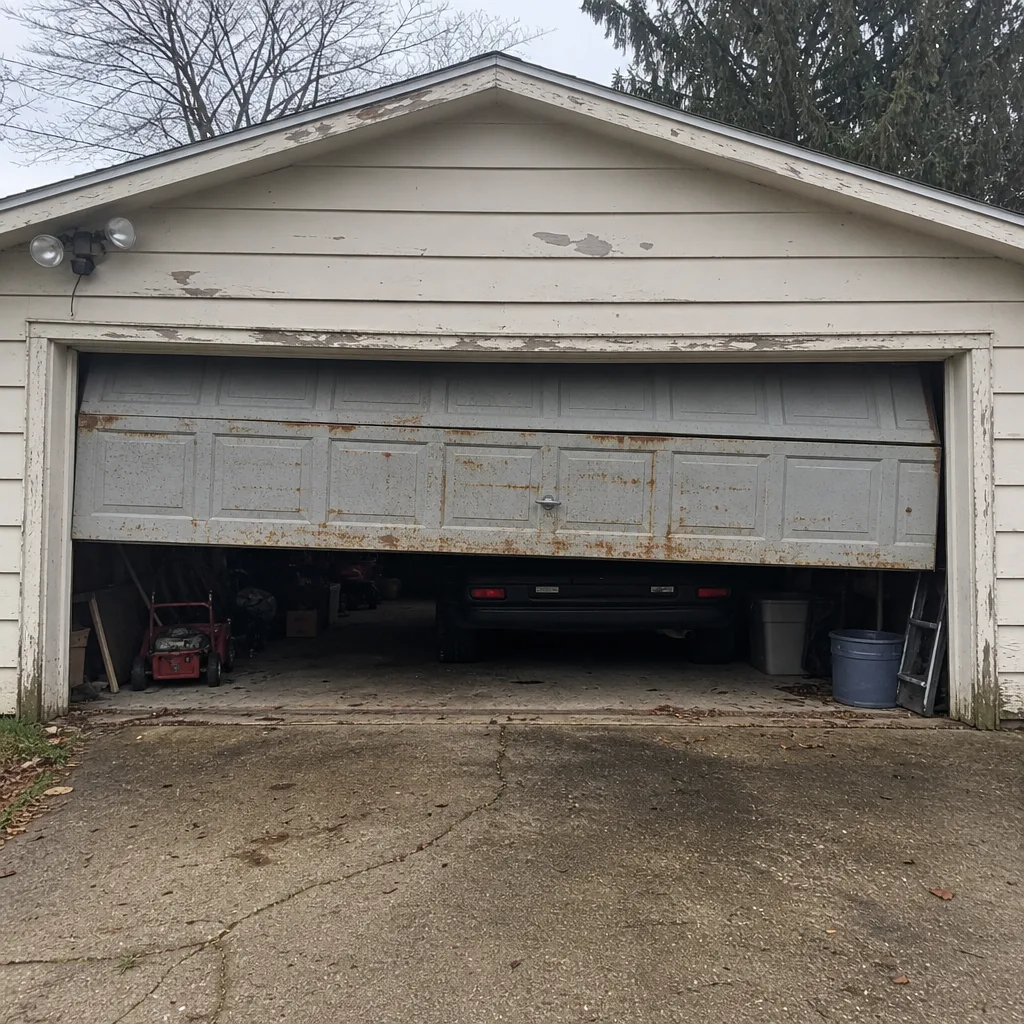 Before
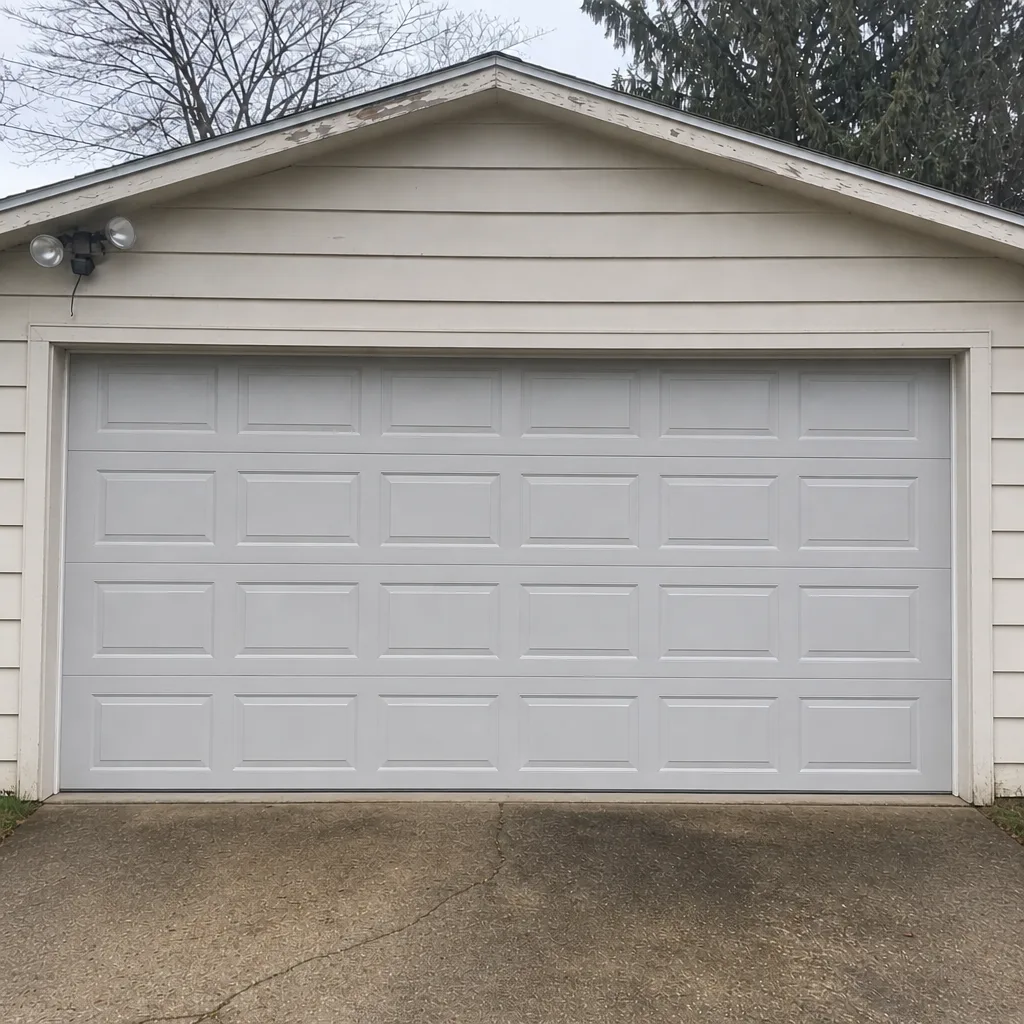 After
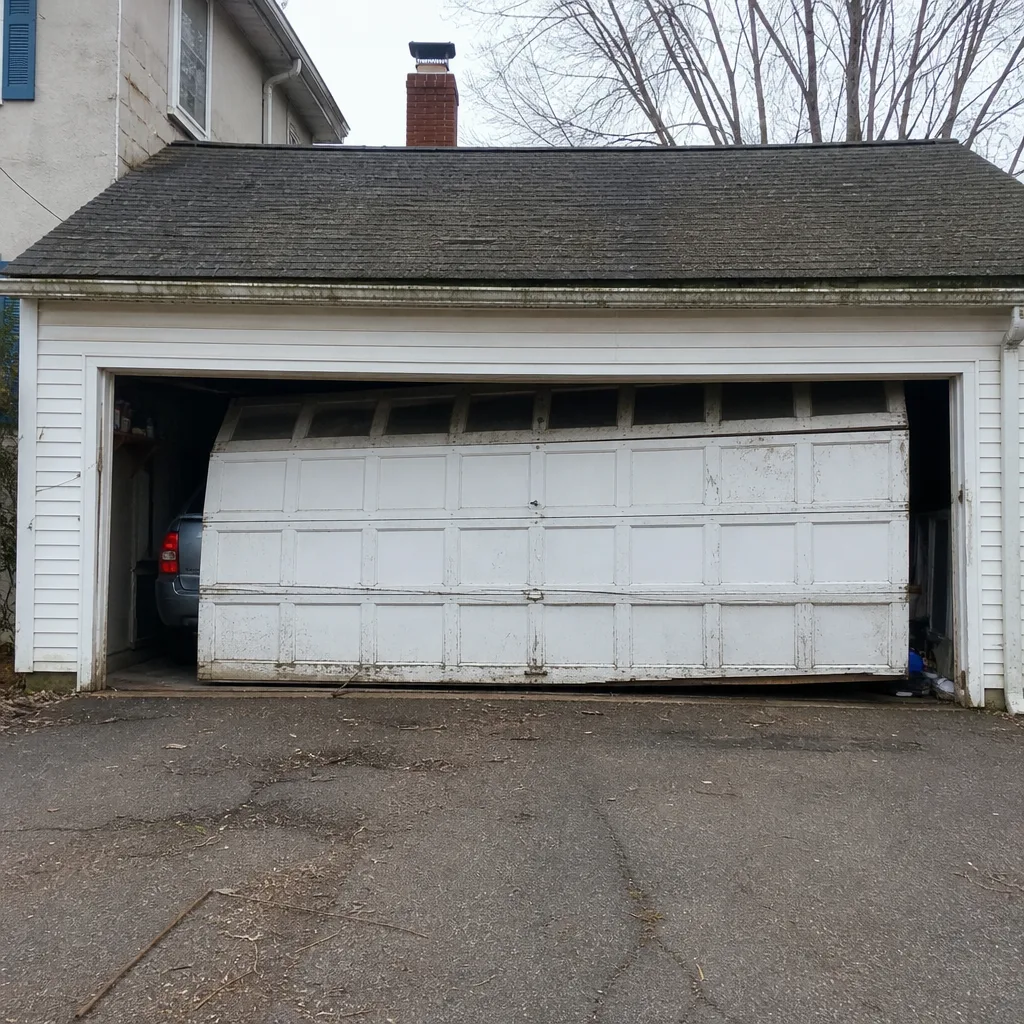 Before
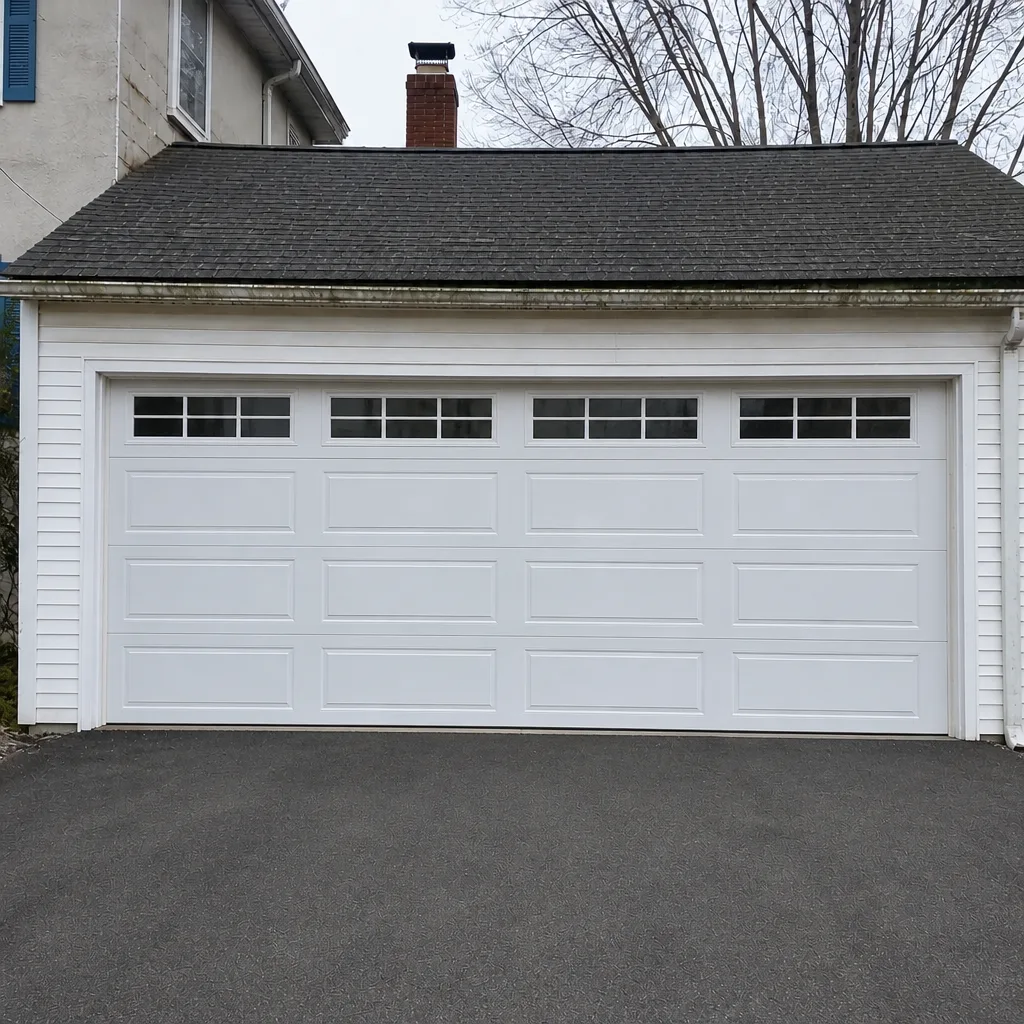 After
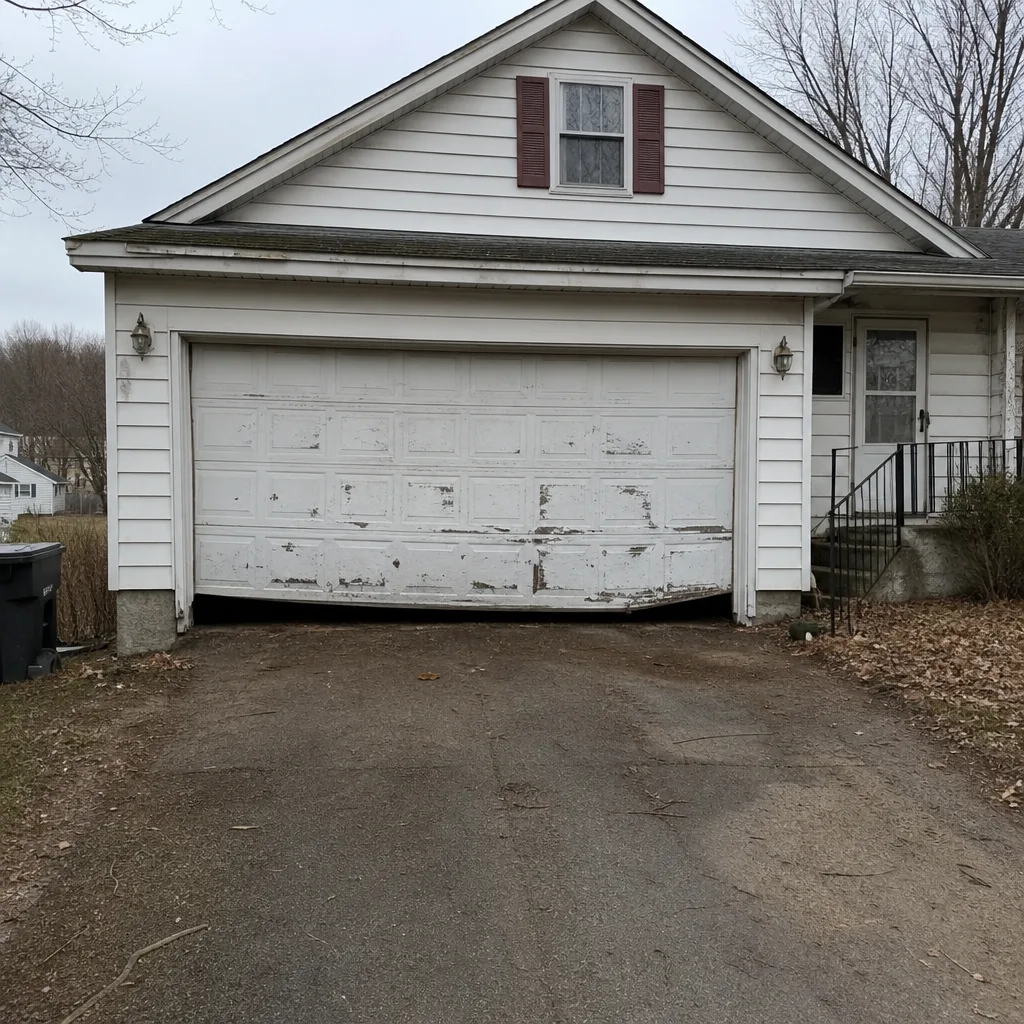 Before
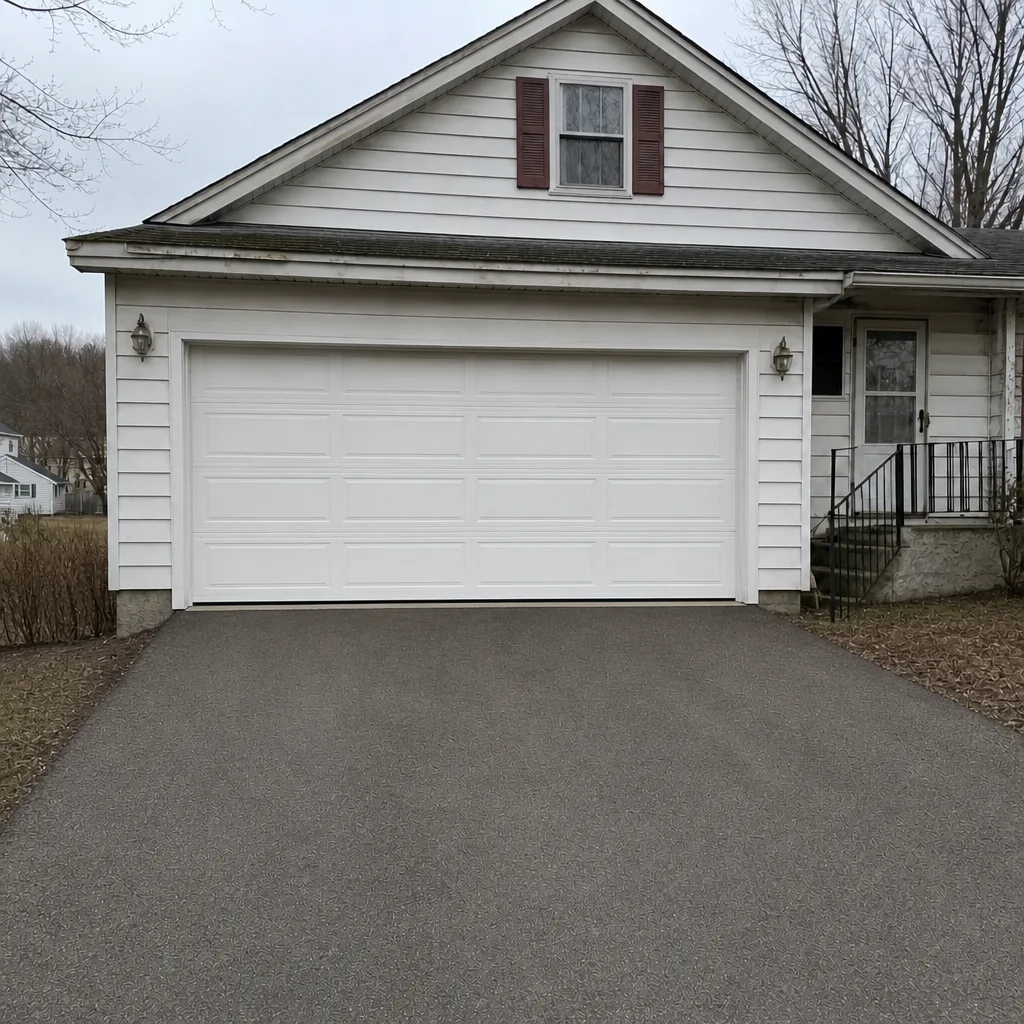 After
Common Mistakes to Avoid
- Never pull the manual release with the door open above you. A door that drops from chest height or higher is a serious injury. Confirm the door is fully closed before pulling the cord.
- Never lift a door with a broken spring by hand. The spring is what makes the door light. Without it, the full weight of the door is on you. Walk away and call a technician.
- Don’t prop a chair, brick, or broom under a door that won’t close and call it secure. In a real Nor’easter gust, none of those hold. Use a clamp, strap, or door brace, or call for help securing it.
- Don’t force a stiff manual release. If the trolley won’t disengage, there’s a mechanical problem. Forcing the cord can damage the trolley and trap the door worse than before.
- Don’t cycle a misaligned door on battery backup “just to check.” Battery backup runs the opener; it doesn’t align the door. Cycling a binding door can bend a panel or pull the door off the track.
- Don’t wait for the storm to schedule a repair on a door you already know has a problem. A binding door or a slow spring is exactly the door that fails in the wind. In Waterbury, the volume of calls during a Nor’easter is why the pre-storm fix is always the better bet.
- Don’t assume brand-specific parts are universal. A Wayne Dalton spring and a Raynor spring are not interchangeable. If you end up needing a part, having the brand and model ready is what keeps a one-hour repair a one-hour repair.
When to Call a Professional
Call a professional for any door that’s currently trapping a car, any door with a broken spring, any door stuck off its track, and any door that won’t close and can’t be safely secured. These are the situations where DIY attempts are most likely to make things worse, and where a trained technician with the right parts finishes the job correctly the first time. A door that still works but at the very edge of its cycle, a spring showing wear, an opener that hesitates, or a remote that only works from certain spots – these are softer calls, but they’re still worth having looked at before a real failure happens. Waterbury Garage Door Repair offers free estimates in Waterbury. Call (833) 513-8667. We answer 24/7. Fast dispatch from 7am to 7pm, Sunday through Friday. Our technicians have up to 8 years of experience working on LiftMaster, Chamberlain, Genie, Clopay, Amarr, Wayne Dalton, Craftsman, and Raynor systems, so you don’t get handed off to someone else mid-job whether it’s a repair, an opener fix, spring work, or a full new door.
Frequently Asked Questions
There’s no single emergency number because the price depends on what broke. A door that won’t close because of a misaligned safety sensor is a small repair. A broken spring is a specific, specialist job. A door off its track is a different scope. Every quote from us is per job and set by a written estimate. The price is quoted and agreed before any work starts, so you know what you’re paying before we pick up a tool. Call (833) 513-8667 for an exact quote – estimates are free.
Yes, for most stuck-door situations we can. Call (833) 513-8667. We answer 24/7. Fast dispatch from 7am to 7pm, Sunday through Friday. Same-day service is common when a car is trapped or a door is open to the weather. We’re closed on Saturday; a call that comes in on Saturday is booked into the next opening on Sunday. When you call, say whether a car is trapped – it changes how we plan the visit.
No. The price is set by the written estimate you agree to before work starts. If we open a door and find a second issue – say a spring that broke and a cable that was also damaged – we’ll tell you what we found and quote the full repair. You approve the written price before we do the work. If you say no, we don’t do it, and you’re not on the hook for the work we didn’t agree to do. Call (833) 513-8667 to set up a free estimate.
The local professionals we connect you with are licensed and insured as their state requires. Our technicians have up to 8 years of experience and work on all eight major door and opener brands: LiftMaster, Chamberlain, Genie, Clopay, Amarr, Wayne Dalton, Craftsman, and Raynor. You’re not sending work to a generalist handyman who’s figuring it out on the fly. Call (833) 513-8667 to get a vetted technician out for a free estimate.
Yes, if the door’s spring is intact and the door is fully closed. Pull the red release cord straight down from the trolley above the door, then lift the door by hand slowly – it should feel light and controllable. If the door feels very heavy or the spring looks broken, don’t pull the release. Call us at (833) 513-8667 first. We answer 24/7 and can walk you through whether it’s safe. Practice this once in calm weather so you know your door in the middle of a storm.
Secure it with something that actually holds in wind: a proper door brace or clamp across the inside face of the door, a ratchet strap from the bottom bracket to a floor anchor, or locking vice grips on the track above a roller. A chair, a brick, or a broom handle won’t hold in a Nor’easter. If you can’t safely secure it, call (833) 513-8667. We can dispatch a technician quickly to help you get the door shut and diagnose what’s keeping it open. The full repair gets quoted and agreed before any work starts.
The Bottom Line
Garage door emergencies in Waterbury sort into mechanical failures and storm damage, and the plan for each is different. Practice the manual release on your specific opener – LiftMaster, Chamberlain, Craftsman, and Wayne Dalton units all feel slightly different – before you need it. Learn to secure a door that won’t close with a brace, clamp, or strap, not a chair. Know that a broken spring with one broken and one intact spring still means the door is dangerous, and never lift it yourself. Keep your door and opener brands written down so the call for help carries the right information. When something goes wrong, call (833) 513-8667 for a free estimate. We answer 24/7. Fast dispatch from 7am to 7pm, Sunday through Friday. Same-day service on most emergencies, and a written price before any work starts. Prep the door, know your brand, and be ready for the next storm.
Written by the team at Waterbury Garage Door Repair.