
Last updated November 23, 2026
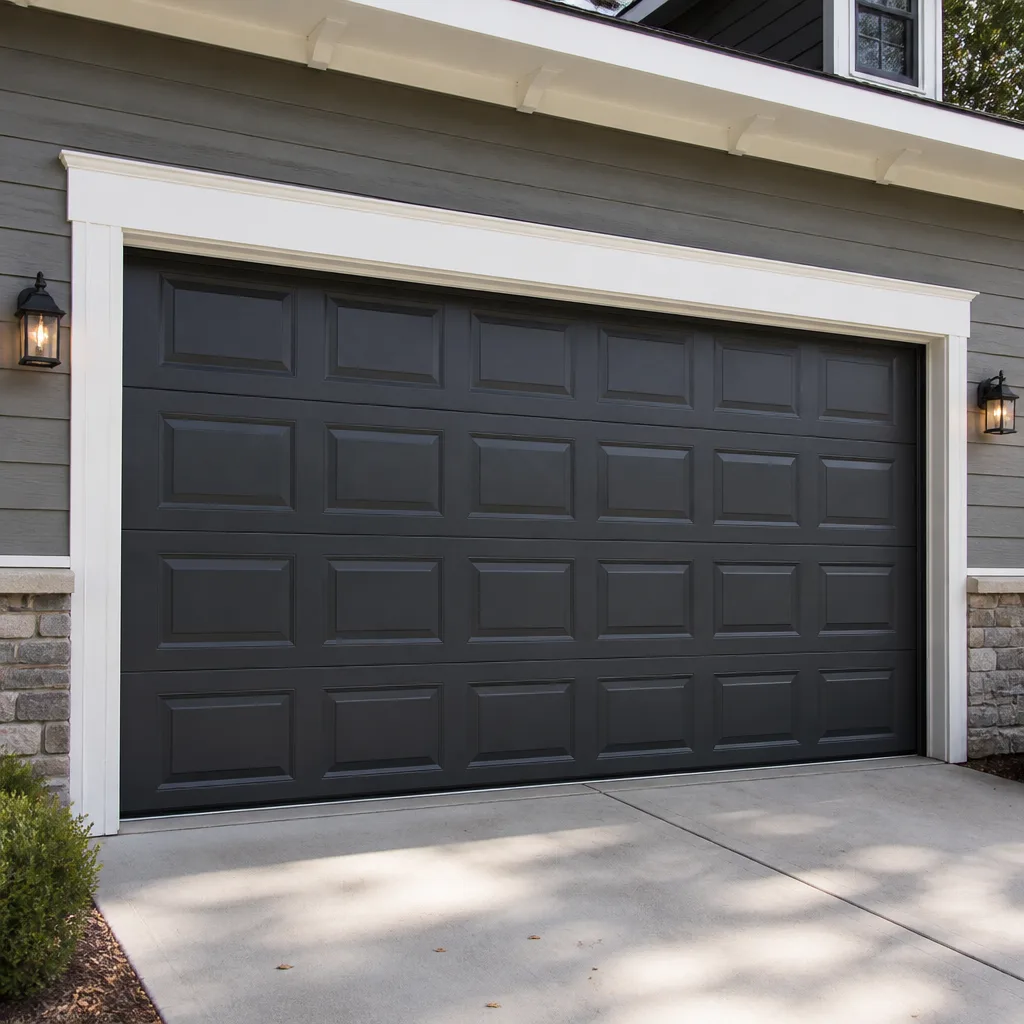 Raised-panel steel
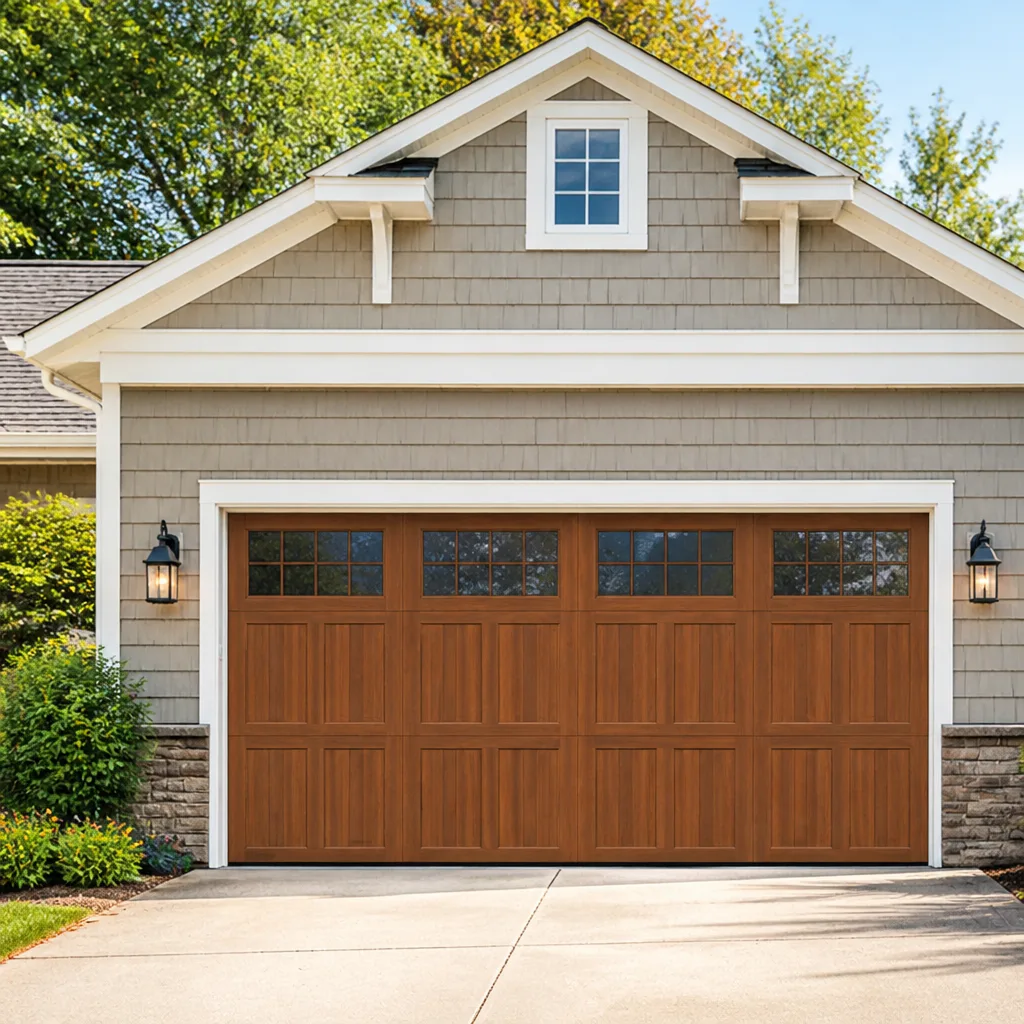
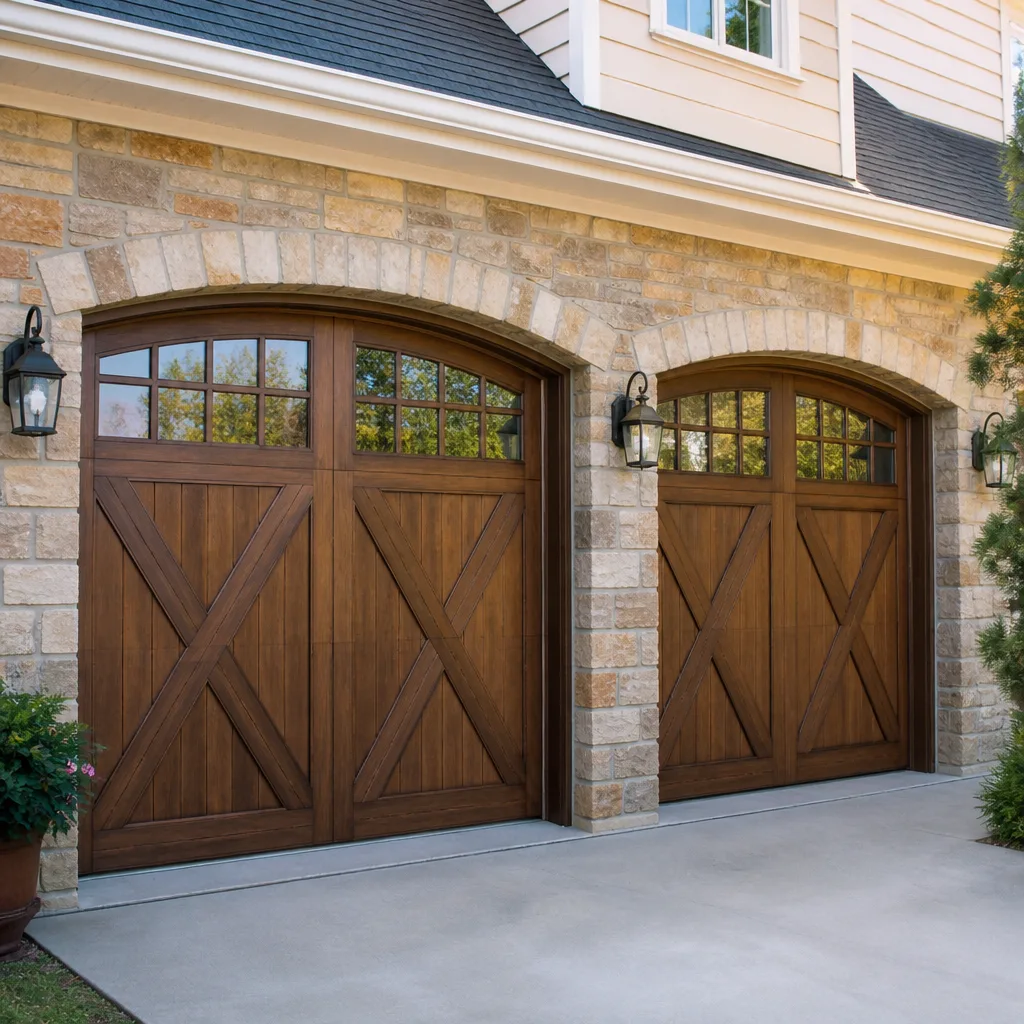 Carriage house
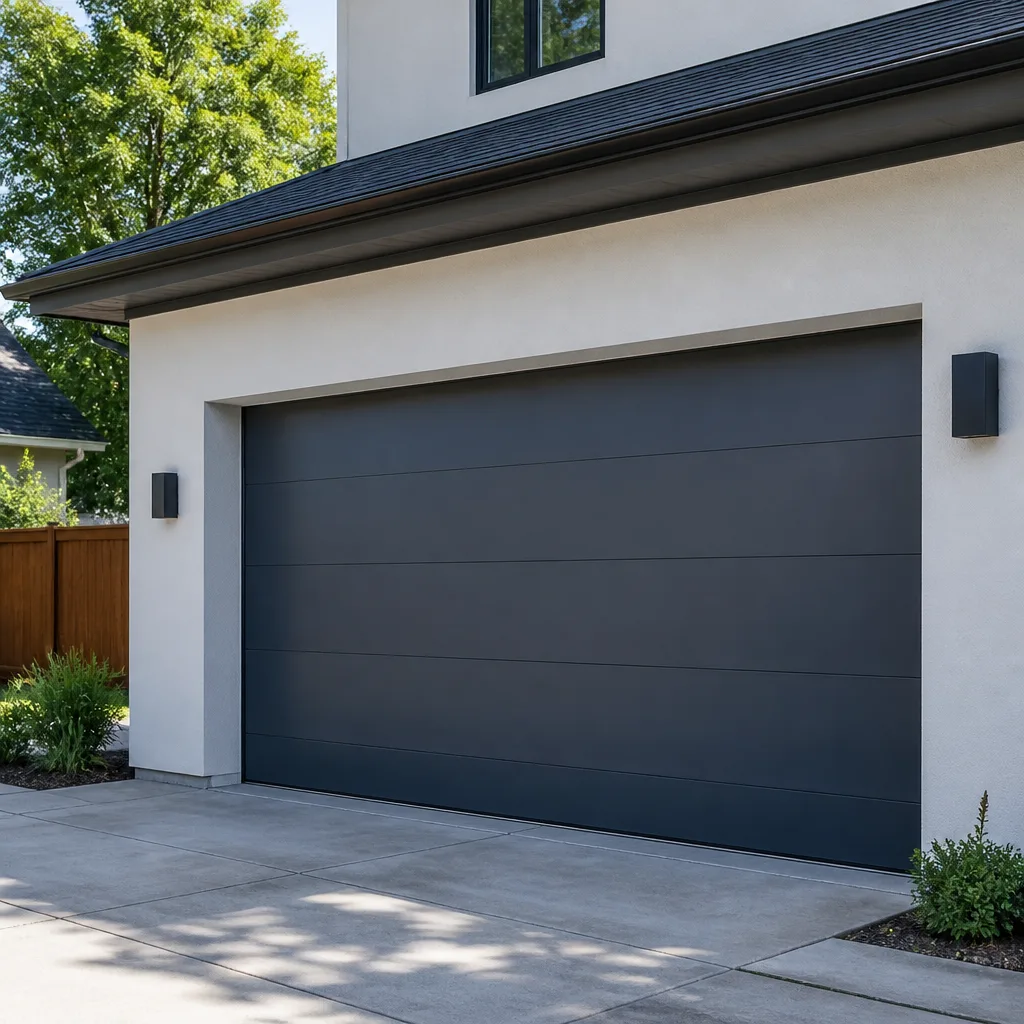 Modern flush
 Full-view glass
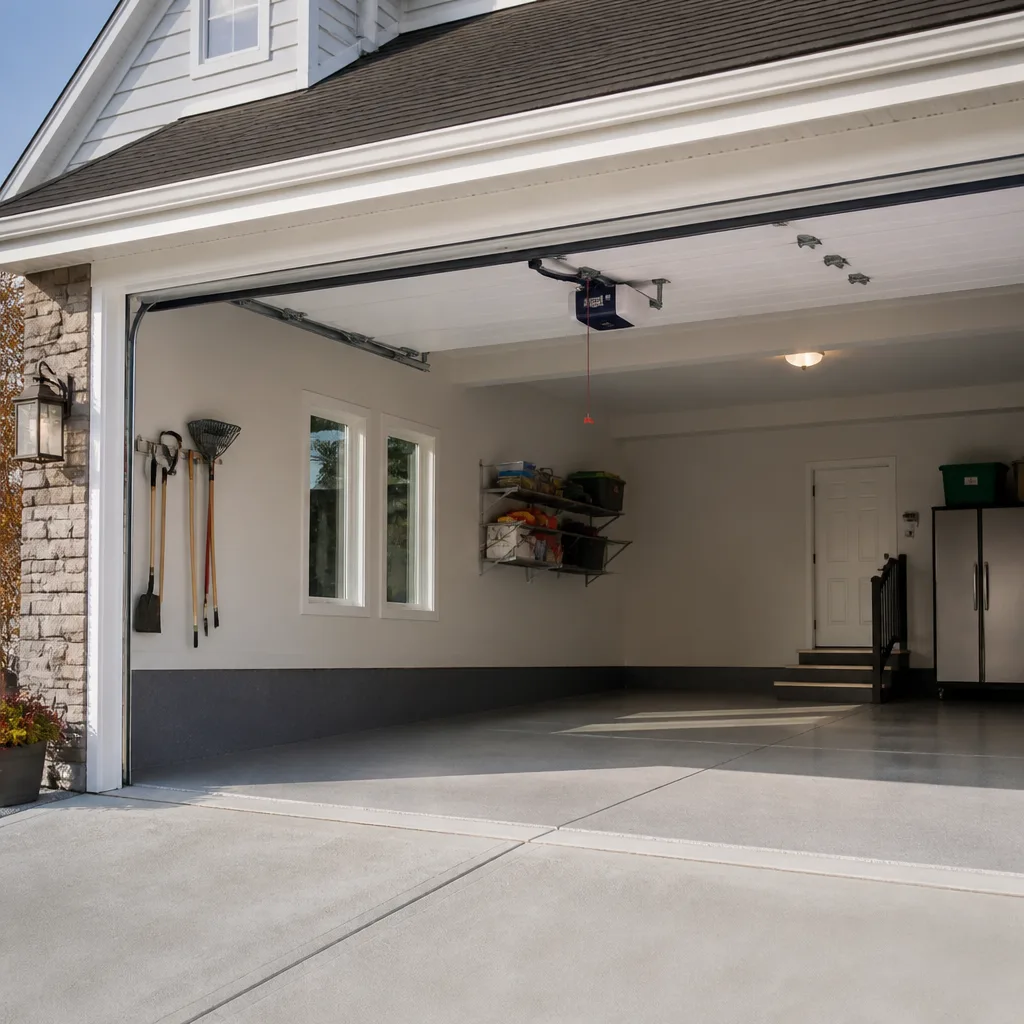 LiftMaster openers
 Chamberlain openers
Full 25-point door and opener safety check with every visit - springs, cables, rollers, tracks, and your LiftMaster or Chamberlain opener included
You get a price before we start. It does not change when the pro arrives.
Get your free estimateDIY vs Professional Garage Door: The Waterbury Homeowner’s Decision Guide
Most online guides to garage door repair get the DIY question backwards. They frame it as a confidence test, as if the only thing standing between you and a working door is nerve. That’s not the line that matters. The line that matters is stored mechanical energy. A torsion spring under load holds enough force to break a bone or worse, and it stores that force silently with no warning before it releases. This guide draws the line where it actually belongs. You’ll learn which garage door tasks are genuinely reasonable for a prepared Waterbury homeowner, which ones are not, and how to tell the difference before you pick up a tool.
Quick Answer
The safe DIY zone for a garage door is maintenance and observation: lubricating hinges and rollers, tightening accessible bolts, clearing the photo-eye lenses, testing the balance and reversal features, and replacing the light bulbs or battery in your opener. Spring work, cable work, panel replacement, and anything involving the torsion system belong with a trained technician. The risk-to-reward math simply doesn’t work in your favor once stored energy is in play.
Styles & brands we work with
- Raised-panel steel
- Carriage house
- Modern flush
- Full-view glass
- LiftMaster openers
- Chamberlain openers
Table of Contents
- The Real Line: Where Stored Energy Makes DIY a Bad Bet
- What a Waterbury Homeowner Can Safely Do Themselves
- Tools and Knowledge Gaps That Separate a Competent DIY Job From a Second Problem
- The Jobs Waterbury Homeowners Attempt That Most Often Lead to a Bigger Repair
- How to Read Online Garage Door Tutorials Without Getting Misled
- The Hybrid Approach: What to Prep and Document Before the Technician Arrives
- Why Waterbury Doors and Weather Shape the Decision
- What a Professional Visit Actually Buys You
The Real Line: Where Stored Energy Makes DIY a Bad Bet
Most garage door parts are simple. Hinges, rollers, tracks, and weather seals are mechanical and forgiving. They give you feedback. If something is wrong, it feels wrong, and you can usually stop and reassess. Springs and cables don’t work that way. A torsion spring is wound under tension every time the door closes, and it holds that tension across thousands of cycles. When a torsion spring fails, it releases that stored force instantly and without warning. There is no creak, no looseness, no gradual sign that says “stop here.” That’s the honest reason this particular repair sits in a different category than the rest.
This is exactly why our spring repair work is a named specialty rather than an add-on. The technicians we connect you with have up to 8 years of experience, and a large share of that time goes into learning the safe procedures for handling wound springs: the right tools, the right bracing, the correct sequence for releasing tension before a spring is removed. If you’re wondering whether we’re exaggerating the danger, consider that the mechanics who do this daily treat it as the most hazardous job in the trade. That should tell you something about the risk profile.
There’s one more reason this matters locally. Waterbury gets real winter, with freeze-thaw cycles that stiffen seals and stress opener motors, plus road salt tracked into garages that corrodes hinges and bottom brackets. That wear-and-tear ceiling means older doors here often reach the point where springs, cables, and brackets are all aged at once. When several stressed components are tired together, the risk of working on one of them goes up, not down.
- Springs (torsion or extension): not a DIY job. High stored energy, no warning, serious injury risk.
- Cables: not a DIY job. They’re under tension and can snap back violently.
- Bottom brackets and drums: not a DIY job. These ride on the same tension system as the cables.
- Hinges, rollers, and weather seals: reasonable for careful DIY.
- Photo-eye alignment and opener settings: reasonable for careful DIY.
- Panel replacement and installation: depends on the panel and the door’s age, but usually a professional call.
What a Waterbury Homeowner Can Safely Do Themselves
Plenty of garage door upkeep is safe, rewarding, and genuinely worth your afternoon. This is the short list we’d give our own neighbors. None of these tasks involve stored tension, and each one lets you catch problems before they turn into a service call.
- Lubricate the moving parts. Use a garage-door-specific lubricant on hinges, rollers, and the spring coil surface (not the cables). Dry, gritty hinges are one of the most common causes of a noisy door in a New England winter.
- Tighten visible bolts and brackets. Hand-tighten with a wrench, never overtighten. A loose hinge plate is easy to spot and easy to fix.
- Clear and align the photo-eye lenses. If your door refuses to close, the safety sensors are the first thing to check. Wipe the lenses, check that both lights are on, and confirm the alignment.
- Test the balance. Close the door, pull the manual release, and lift the door about halfway. It should hold its position with little effort. If it drops or flies up, note it for a technician.
- Test the auto-reverse. Place a roll of paper towels under the closing door’s path and confirm the door reverses on contact. This is the single most important safety feature on your opener.
- Replace opener light bulbs and batteries. Simple, safe, and often the answer to a remote that won’t work.
- Wash the door and inspect the paint. In Waterbury’s climate, a split in the finish lets moisture into the wood or steel, so touch-ups matter more than they seem.
If you handle these tasks a couple of times a year, you’ll catch most problems while they’re still small. That’s the quiet advantage of DIY: it keeps you familiar with your own door.
Tools and Knowledge Gaps That Separate a Competent DIY Job From a Second Problem
Two gaps show up when well-intentioned homeowners take on more than they should. The first is tools. Garage door work calls for winding bars and spring-specific bracing tools that you almost certainly don’t have, and improvising with a screwdriver or a wrench is how people get hurt. The second gap is diagnosis. A door that won’t close looks like one problem but can be three: a misaligned sensor, a failing opener board, or a door that’s out of balance because of a tired spring. Fix the wrong one and you’ve spent money without fixing anything.
Our experience with brand-specific systems shows how much this second gap matters. If your home has a LiftMaster opener, its diagnostic blinking pattern tells a technician something specific. A Craftsman from a different era sends a different-code message. A Wayne Dalton door with a unique hardware profile fails in ways that a generic repair guide won’t account for. A generalist handyman “figuring it out on the fly” is at a disadvantage on exactly the doors that are most common in Waterbury. This is what “we work on your brand” actually means in practice. It means accurate diagnosis the first time.
Start with the manufacturer’s manual for your door and opener. It’s specific to your system, and it’s the only guide that’s calibrated to what’s actually on your tracks. If you can’t find it, most manufacturers publish manuals by model number, and that’s the right place to begin.
The Jobs Waterbury Homeowners Attempt That Most Often Lead to a Bigger Repair
We’ve watched the same handful of jobs go sideways repeatedly. These are the ones where a “quick fix” tends to turn into a bigger, pricier job. That’s the pattern to avoid, and it’s usually less about the difficulty of the repair and more about the domino effect.
- Replacing a torsion spring without releasing the tension properly. The most dangerous one, obviously, but also the most expensive when it goes wrong. A slipping winding bar can damage the drum, the cable, or the door shaft. You’re now looking at a multi-part repair plus whatever the injury costs.
- Adjusting the opener force settings to force a stuck door closed. This “fixes” the symptom and masks the real cause. It’s usually a door out of balance from a tired spring or a bent track. You’ll wear out the opener motor faster, and the door still has to be repaired.
- Straightening a bent track with a hammer. Track alignment is a precision job. A slightly kinked track causes rollers to bind, binds cause springs to work harder, and now you’ve accelerated the wear on the most expensive part of the system.
- Replacing a single cable. Cables work in matched pairs. Replacing one and not the other leaves your door at risk of failing on the other side, usually at the worst possible moment.
- Cutting or shortening a spring to “make it fit.” Spring wire gauge and length are matched to the door weight. A shortened spring changes the balance, which means the opener now has to work much harder, which shortens the opener’s life.
- Pulling the emergency release on a door with a broken spring. The door can come down suddenly. Never pull the release cord on a door you know is compromised.
Notice the pattern. Every one of these attempts is a cheap fix for a symptom, and each creates a secondary problem in a related part. The risk-reward math is bad, and the second repair is always worse than the original.
How to Read Online Garage Door Tutorials Without Getting Misled
Most online garage door tutorials are filmed on a clean, newer door in a controlled setting. That’s a real limitation for a Waterbury homeowner with a door that’s 20 or 25 years old. The video shows an ideal job; you’re living with a weathered one. Read every tutorial with that gap in mind, and you’ll avoid the most common trap.
- Check the door’s age and condition in the video. If the door being worked on looks new and straight, assume the fit and hardware aren’t like yours.
- Look for the model or brand. A guide for a specific Wayne Dalton or Raynor model is far more useful than a generic one. Watch for the brand on the door itself in the video.
- Check whether the tutorial shows the tension release steps. If a spring or cable video skips the safe tension release, stop reading it. That’s the tell that the tutorial was made for clicks, not for safety.
- Compare the tools. If the video uses tools you don’t own, ask whether you can realistically source them before you begin.
- Read the comments. Homeowners who tried the tutorial on an older door will usually say so, and that’s often more valuable than the tutorial itself.
- Distrust any tutorial that skips the safety caveat. A credible guide to spring work will always flag the danger and recommend professional help.
We aren’t against the internet as a resource. We’re pointing out that the strongest tutorials were made on someone else’s door, and yours has a different history.
The Hybrid Approach: What to Prep and Document Before the Technician Arrives
The best answer for most homeowners isn’t all-DIY or all-professional. It’s a hybrid: you do the safe observation and documentation work, and the technician steps in for the parts where stored energy makes it a bad bet. Done well, this can reduce the amount of discovery time on the job, and that’s a real advantage.
- Gather the door and opener model numbers. Look on the opener’s motor housing and on the door’s end panels. A technician who already knows the model can bring the right tools and parts. This is especially useful on a Craftsman or LiftMaster opener where the model tells you which boards and sensors fit.
- Write down the symptoms concretely. “Door reverses halfway down” is more useful than “the door is broken.” Note when the problem started and whether it changed after weather shifts.
- Test the balance and auto-reverse and note the results. If the door won’t hold position at half-height, that points to a spring issue before anyone arrives.
- Photograph the door and opener from a couple of angles. A photo of the hinges, the springs, and the opener’s diagnostic lights gives a technician genuine information.
- Clear the garage floor and the path to the door. It’s simple, but it makes the visit go faster and lets the technician work safely.
- Handle only what’s on the safe list above. Don’t touch the springs, cables, or bottom brackets. Leave the observation and the documentation to us.
When that work is done well, the technician’s time reads less “figuring out what’s wrong” and more “fixing it.” That’s what a hybrid approach should feel like.
Why Waterbury Doors and Weather Shape the Decision
A garage door in Waterbury faces a harder job than one in a milder climate. Winter brings freeze-thaw cycles that stiffen the rubber seal at the bottom of the door and force the opener to work harder to close it. Summer humidity swells wood panels and pushes against metal. The road salt tracked in on tires sits on hinges, bottom brackets, and the garage floor, and it corrodes metal over time. Garland, a section of Waterbury, sees the same pattern as the rest of the city, and the effect is to age every component at once.
That matters to the DIY decision. When springs, cables, rollers, and seals are all at a similar point of wear, the margin for a mistake tightens. A door that’s been quietly aging for years is not a good practice door for your first spring repair. The older the hardware, the more a specialist’s experience is worth. That’s the local context behind our “spring repair done safely” position; it’s not a slogan, it’s a call about what the local housing stock actually needs.
Our vetted local professionals are licensed and insured as their state requires, and they handle every stage from a broken spring to a full new door. Nothing is subcontracted. If you’re not sure whether your door needs a repair or a replacement, that decision is worth a conversation with a technician who can look at the door in person.
What a Professional Visit Actually Buys You
A professional visit buys you two things: the diagnosis and the safe execution. That’s the real value, and it explains why the price of a garage door repair reflects the parts plus the knowledge behind them. It also explains why the surprise invoice question is worth answering directly. The price is quoted and agreed before any work starts. The written estimate is the price.
The estimate itself is free. That’s deliberate: a specialist should be able to tell you what’s wrong before you’ve spent money, and if the honest answer is “this door needs replacement, not repair,” you should hear that before you commit. This is also why we focus on diagnosis-first repairs rather than pushing upgrades. A generalist or big-box installer is often selling you a new door; a specialist is fixing the one you have. That’s the difference the price reflects.
To get a specific number, call (833) 513-8667. You’ll reach us with a free estimate and a clear picture of what the repair involves. Fast dispatch from 7am to 7pm, Sunday through Friday.
Common Mistakes to Avoid
- Forcing a door with a broken spring. Never try to close a door with a snapped spring by hand. A door in that condition is unsupported and can come down faster than you can step back.
- Cutting a track short. If you’re installing a new door or repairing a damaged one, a cut track is a permanent problem. The track sets the roller path, and a short job means the rollers bind.
- Ignoring the opener’s diagnostic lights. Modern openers flash a code. Ignoring it and applying a generic fix wastes time and money. Get the brand and model right first.
- Mixing springs from a set. Matched springs are wound to work together. Replacing one and leaving the other means you’ll be back in a month.
- Overtightening bolts on a wood or steel door. And loose hinge plates aren’t fixed by cranking harder. If a bolt won’t hold, the hardware underneath is worn, not loose.
- Using the wrong lubricant on a garage door. Heavy grease collects grit, and grit wears down moving parts. A garage-door-specific lubricant does the job.
- Skipping an annual inspection. In a Waterbury winter, an annual look at the springs, cables, and seal catches most of the pricey failures early.
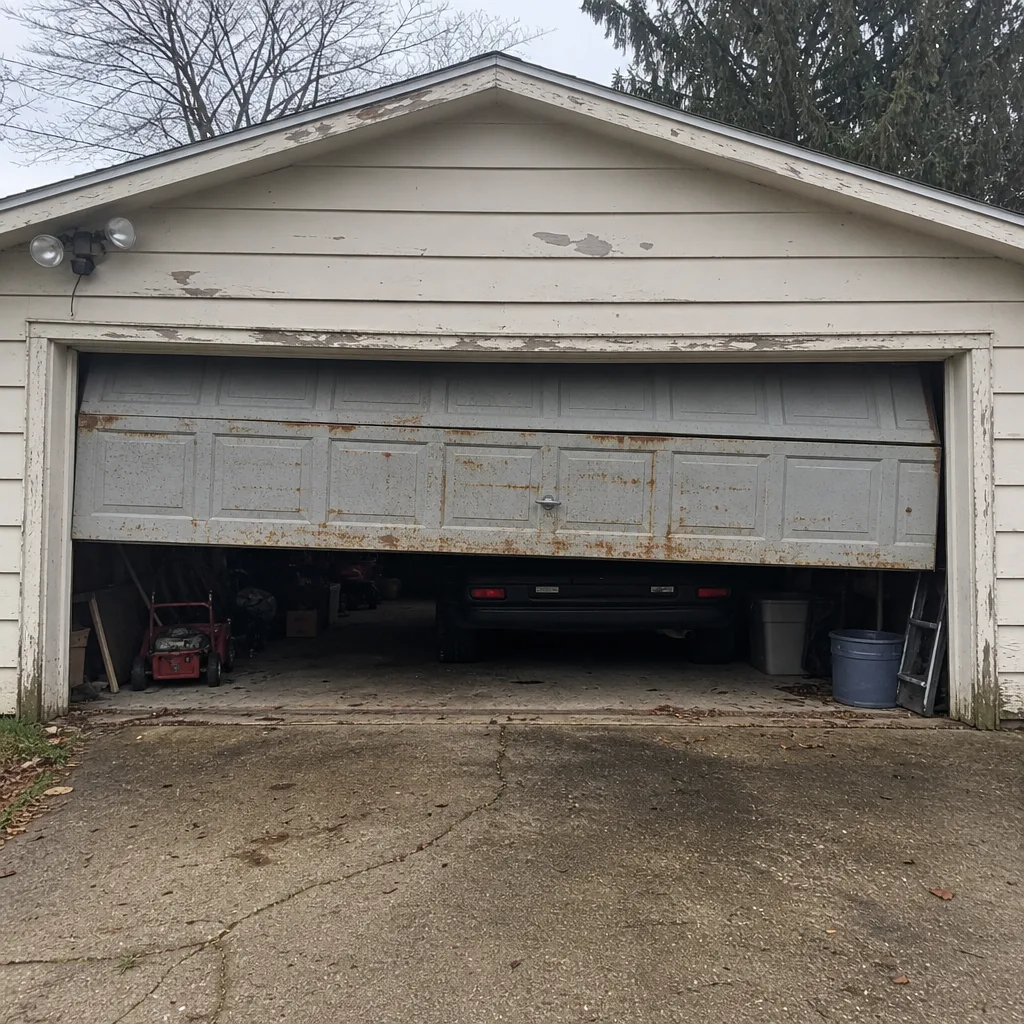
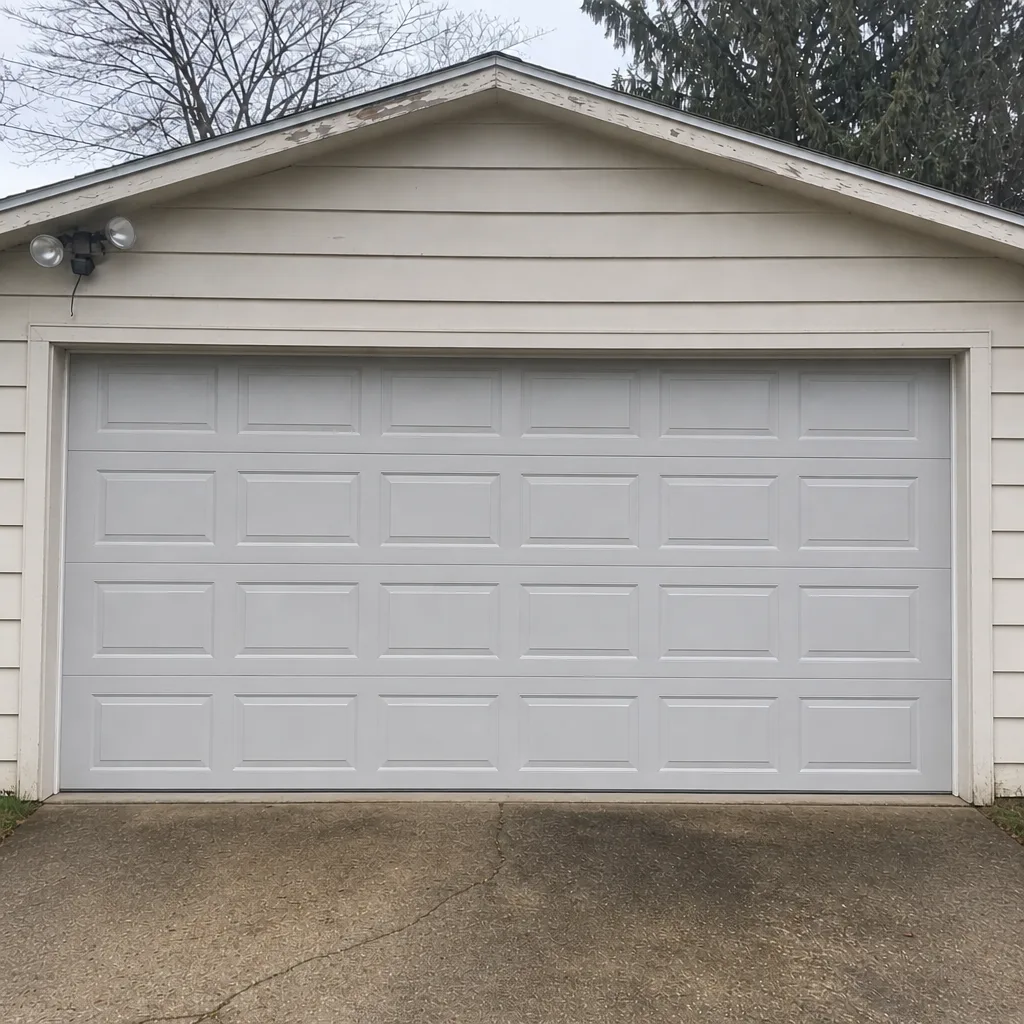
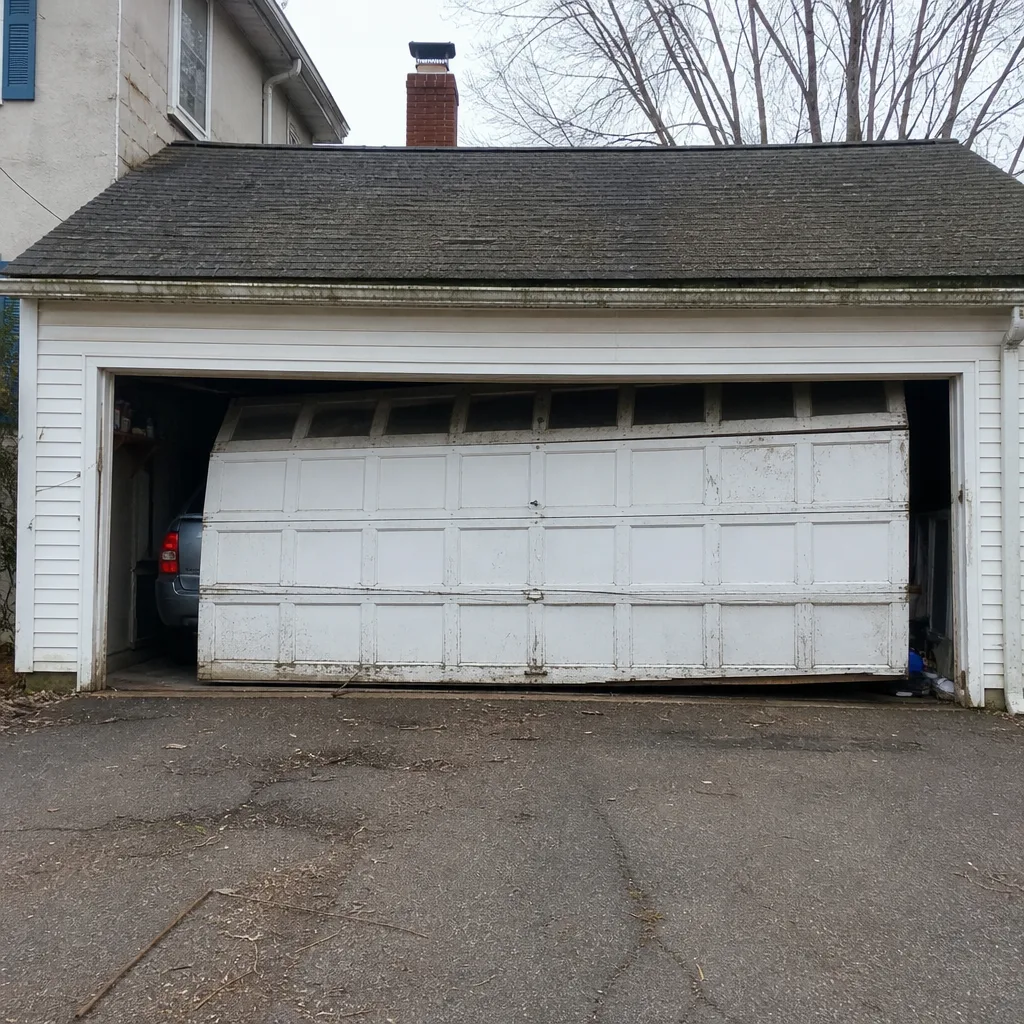
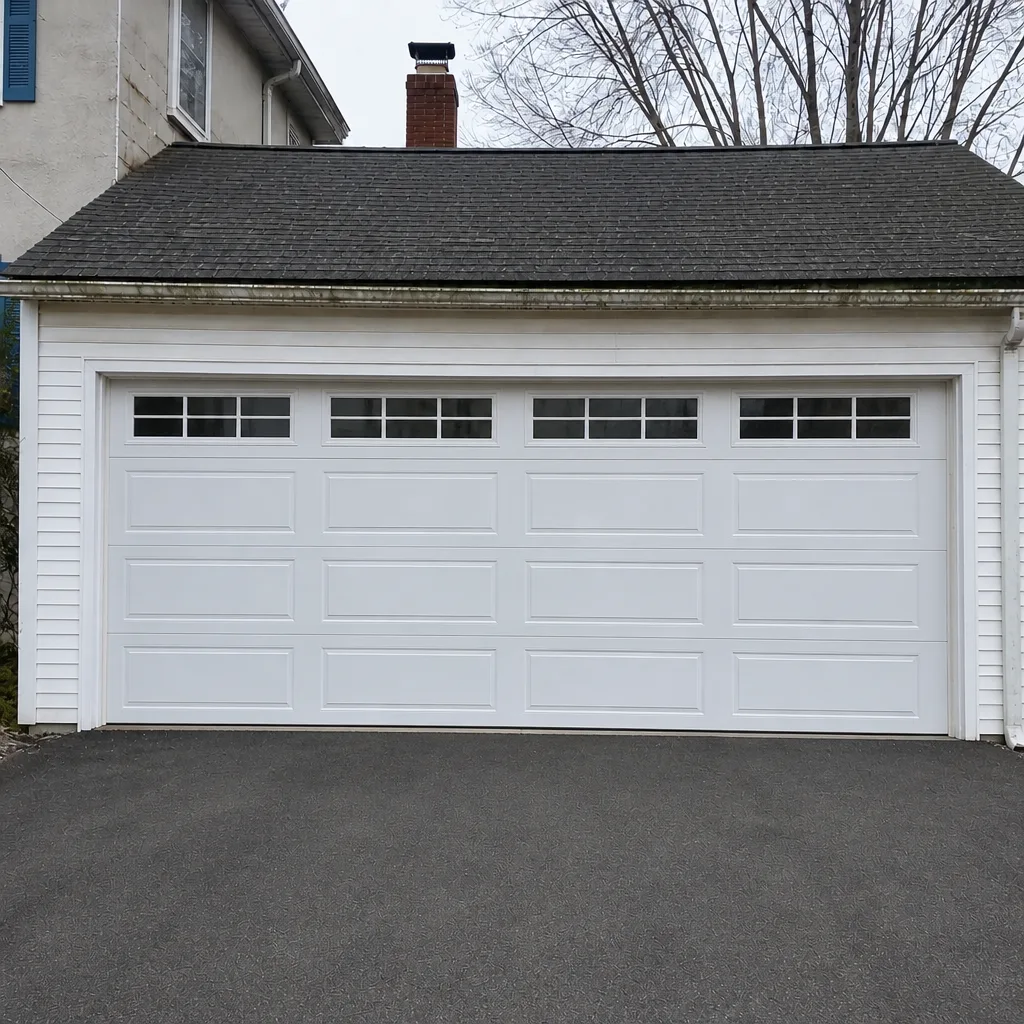
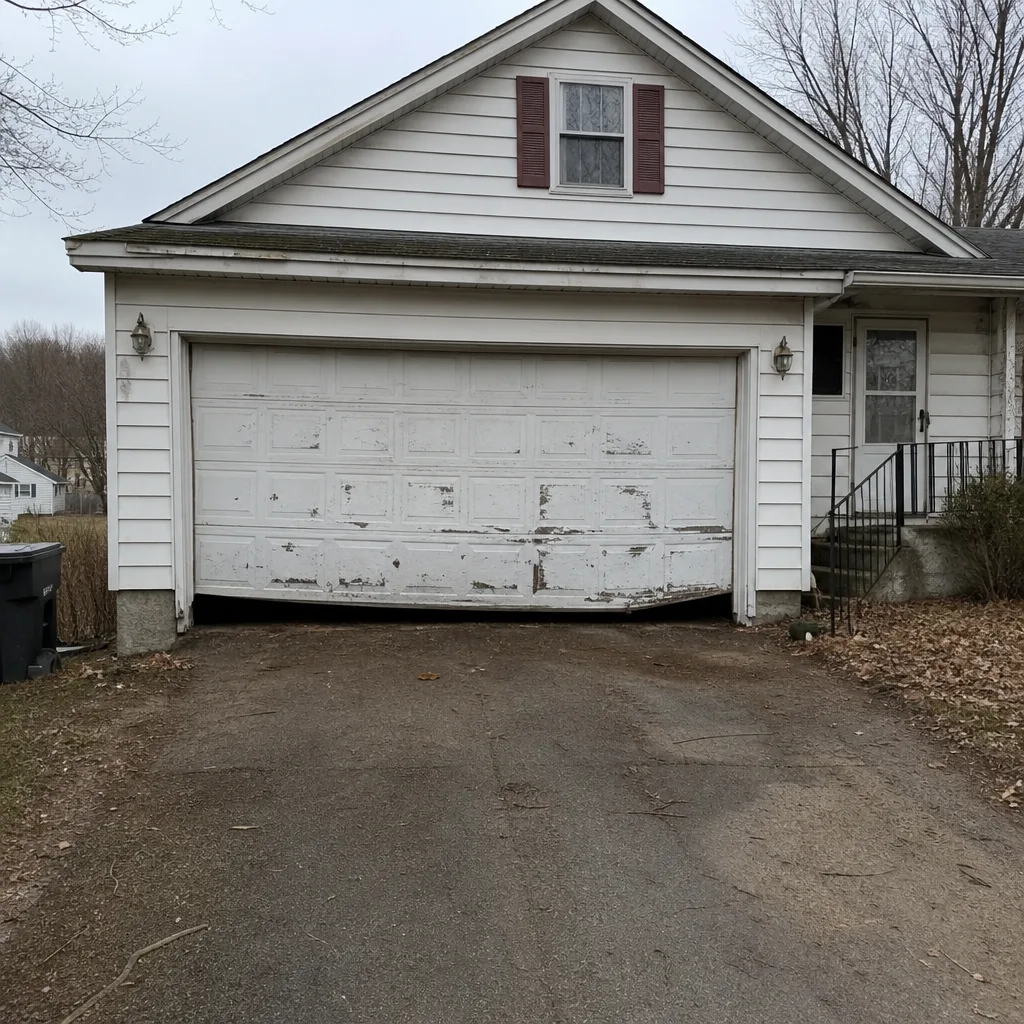
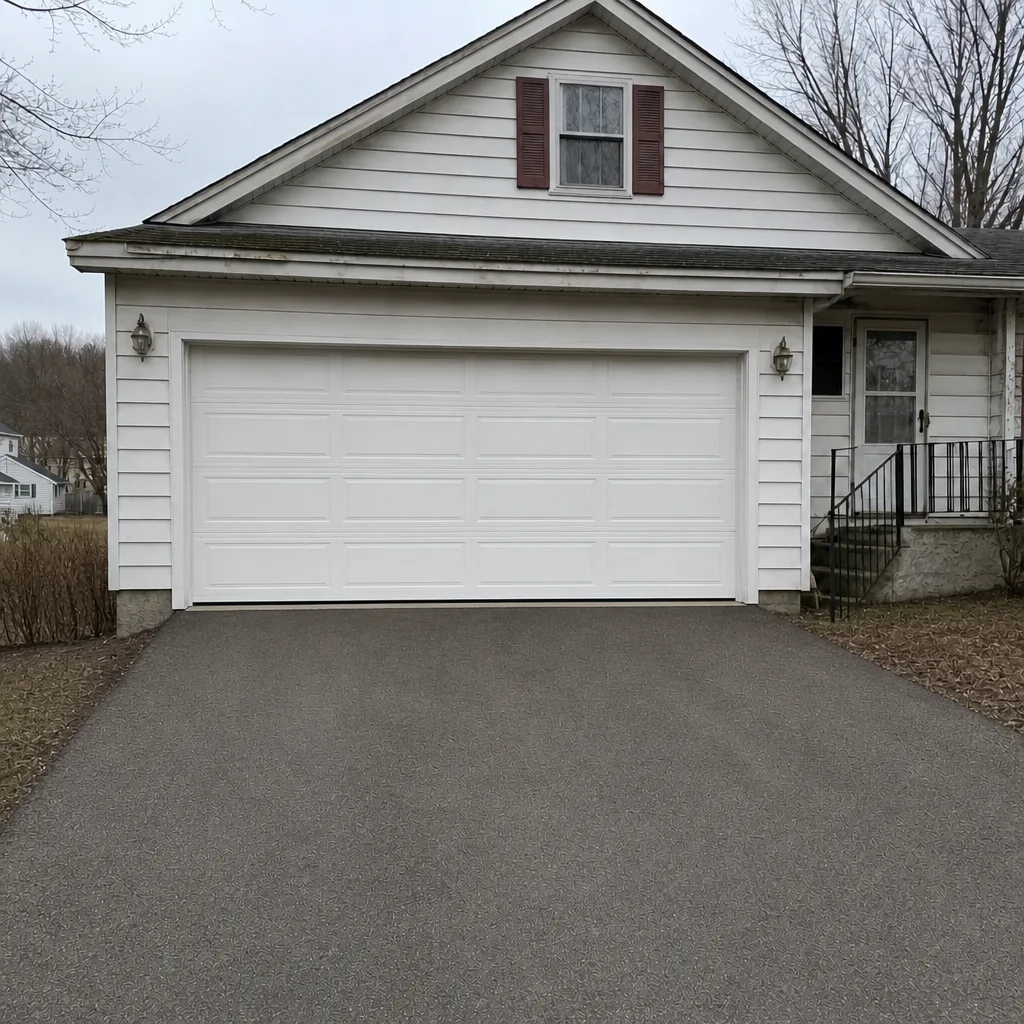
See the difference
 Before
 After
 Before
 After
 Before
 After
When to Call a Professional
Call a professional when the problem involves a spring, a cable, a bottom bracket, a drum, or any part of the door’s torsion system. Call when you’re unsure. Call when the door is uneven, noisy, or slow and the safe checklist hasn’t fixed it. Call when the door has become dangerous. A door that won’t close is a home security matter, and an opener that keeps running without moving the door can be a sign of a deeper mechanical problem. Call Waterbury Garage Door Repair for a free estimate in Waterbury. We handle the whole scope, from a broken spring to a full new door, and our technicians have up to 8 years of experience on the most common brands: LiftMaster, Wayne Dalton, Craftsman, Raynor, and more. Call (833) 513-8667. We answer 24/7. Fast dispatch from 7am to 7pm, Sunday through Friday.
Frequently Asked Questions
It’s not recommended. Torsion springs are under high tension and give no warning before they let go. The injury risk from a winding-bar slip or a sudden release is serious, and that’s why our trained technicians handle spring repairs as a specialty. Call (833) 513-8667 – estimates are free.
It depends entirely on the part and the door, so we quote each job based on the actual repair. The price is quoted and agreed before any work starts. That’s the clearest answer, and the free estimate gives you a specific number rather than a guess. Call (833) 513-8667 for that quote.
Often, yes. We treat emergency garage door service as a core part of the business, and we answer 24/7. Fast dispatch from 7am to 7pm, Sunday through Friday. Call (833) 513-8667 and we’ll let you know what’s possible.
No. The written estimate sets the price, and it’s quoted and agreed before any work starts. If the diagnosis turns up something different, you’ll hear it from us before anything is done. Call (833) 513-8667 for a free estimate.
The local professionals we connect you with are licensed and insured as their state requires. We work with a network of vetted technicians, and the same standards apply to spring repair, opener repair, and new installation. Call (833) 513-8667 with questions.
A repair fixes a specific part, while a replacement is the whole door. As a rule, a persistent problem across multiple parts on an older door is worth pricing both ways. A technician can tell you honestly which one makes sense when they see the door. Call (833) 513-8667 to schedule a free estimate.
The Bottom Line
Most garage door DIY questions miss the real line. It isn’t about whether you’re handy enough. It’s about which tasks live under stored mechanical energy, and springs, cables, and bottom brackets are on the other side of it. The safe zone covers lubrication, tightening, photo-eye checks, and balance tests. The dangerous zone starts at the spring. Waterbury’s freeze-thaw winters and road salt age every component together, which makes a specialist’s diagnosis and safe handling more valuable, not less. Our technicians know the brands in your garage and fix them right the first time. For a free estimate on any repair, call (833) 513-8667.
Written by the team at Waterbury Garage Door Repair.