
Last updated November 23, 2026
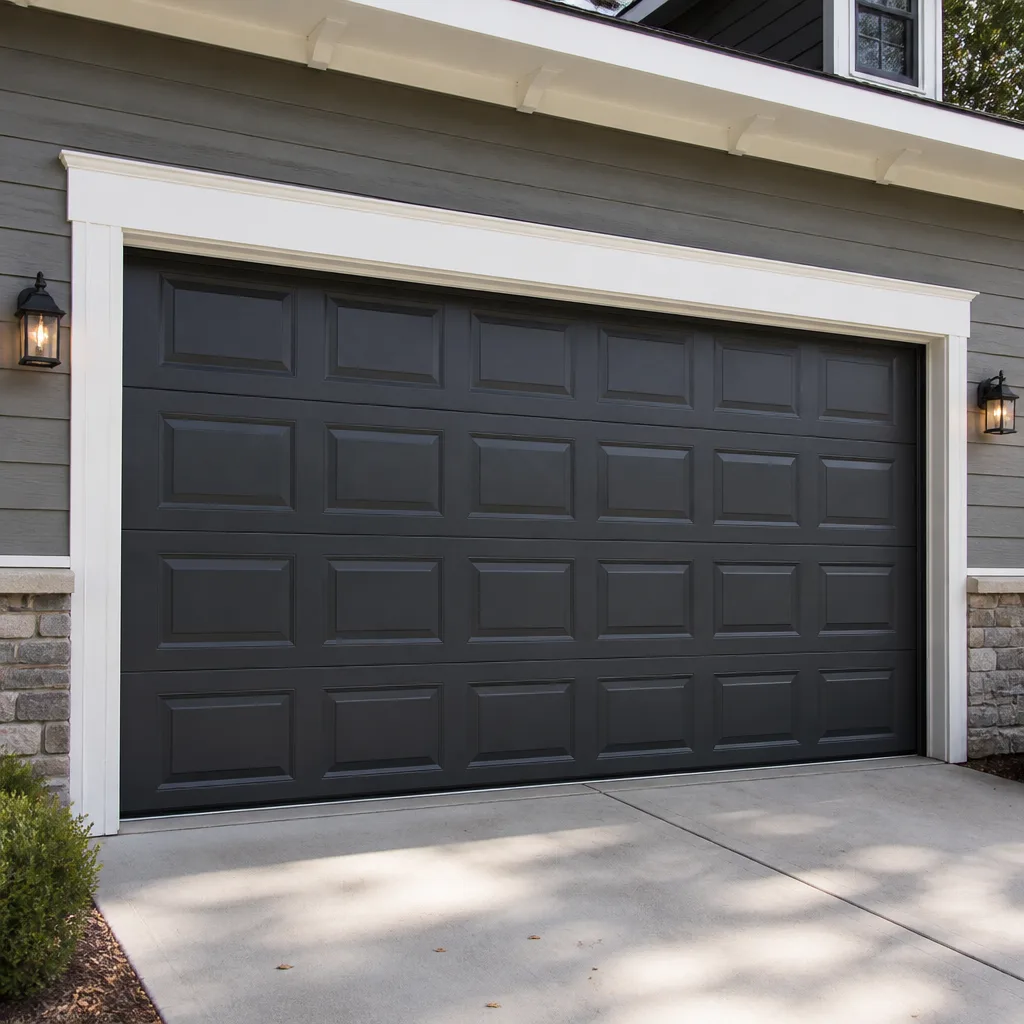 Raised-panel steel
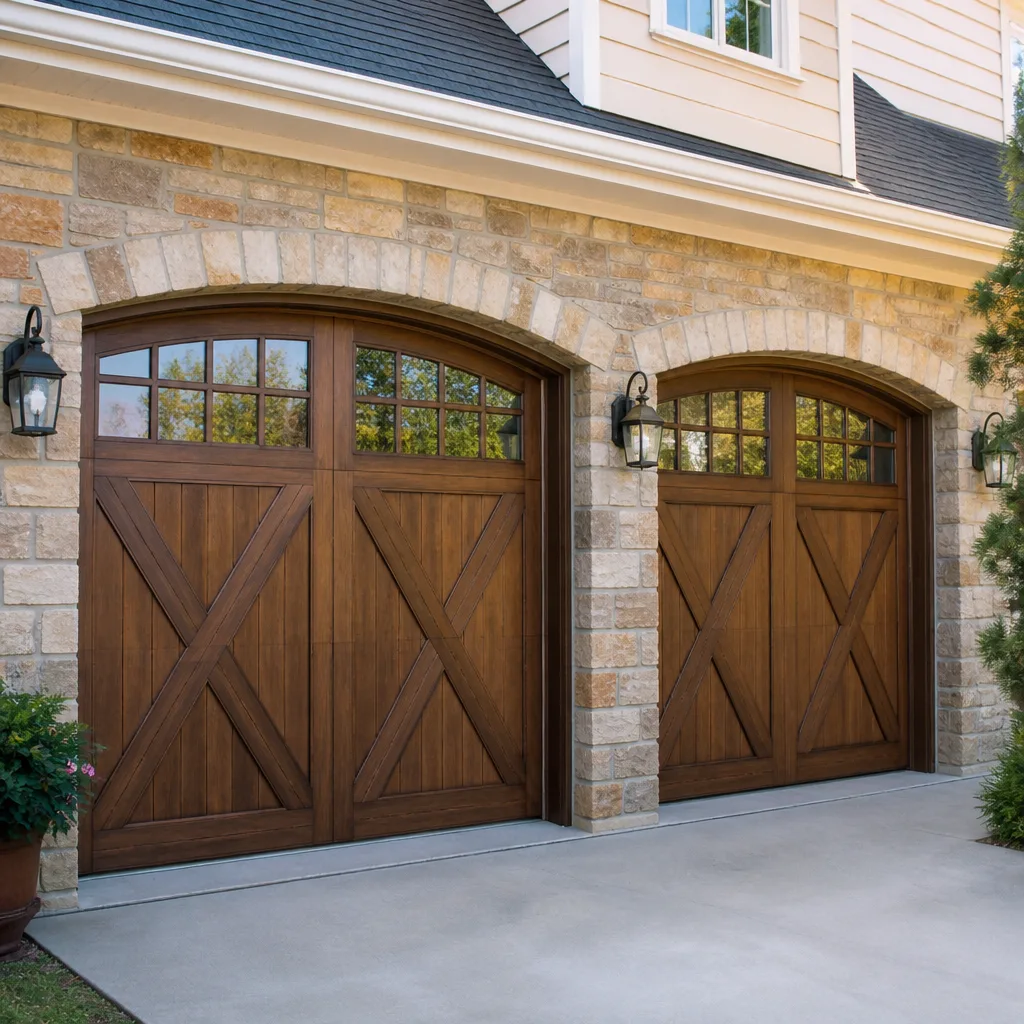 Carriage house
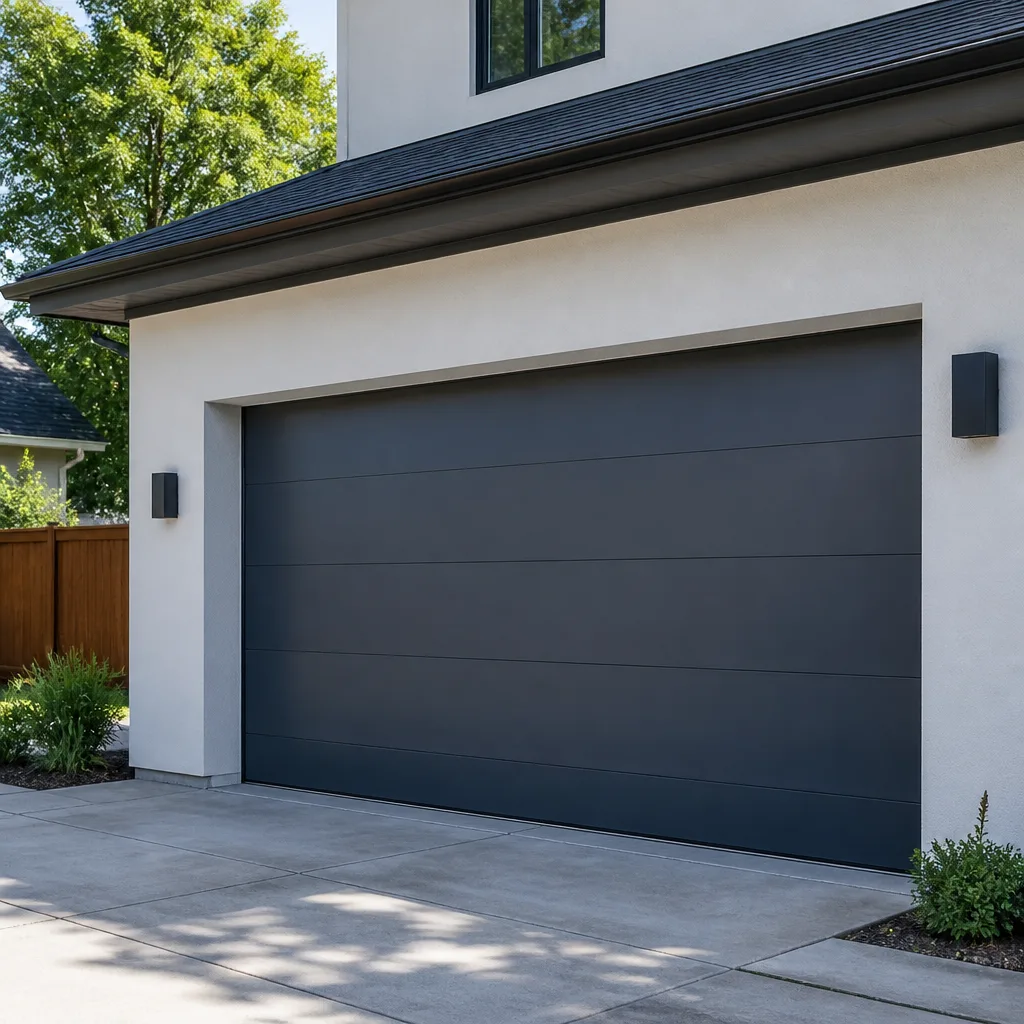 Modern flush
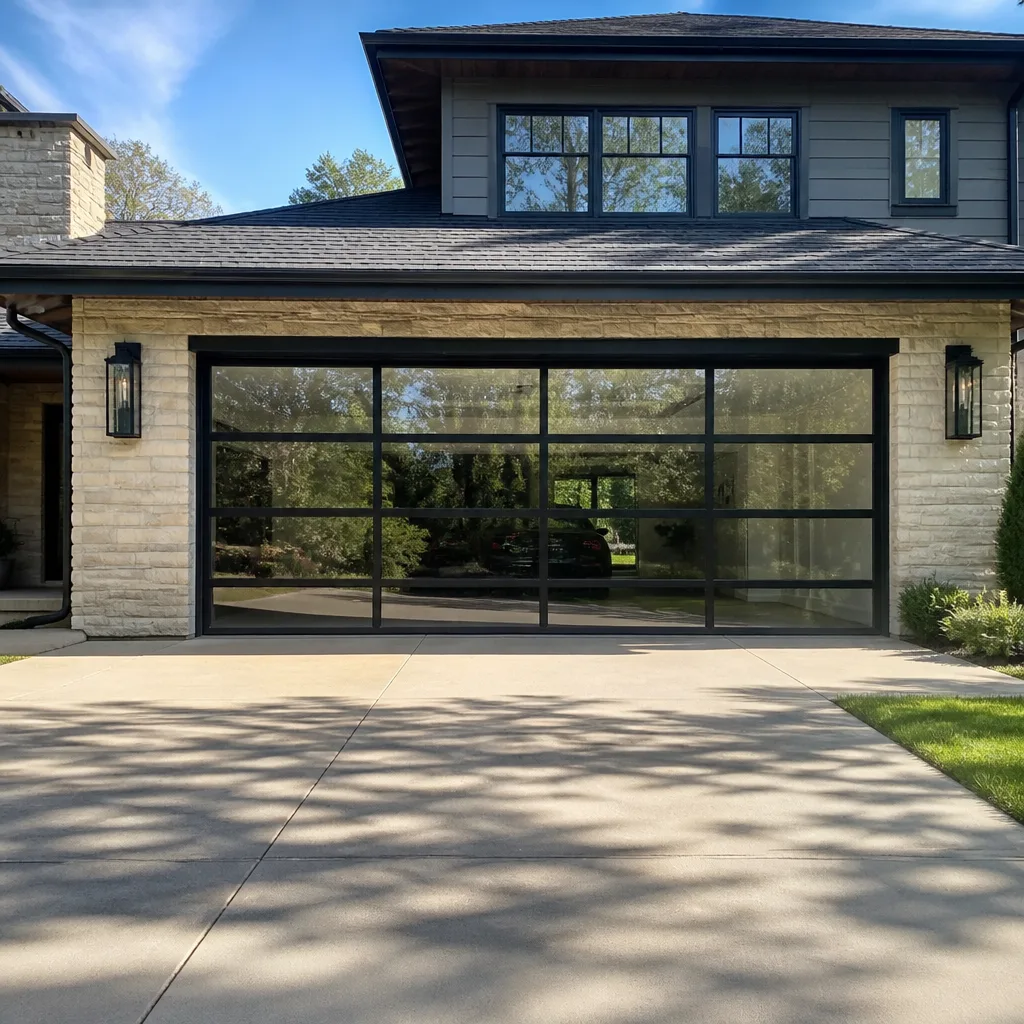 Full-view glass
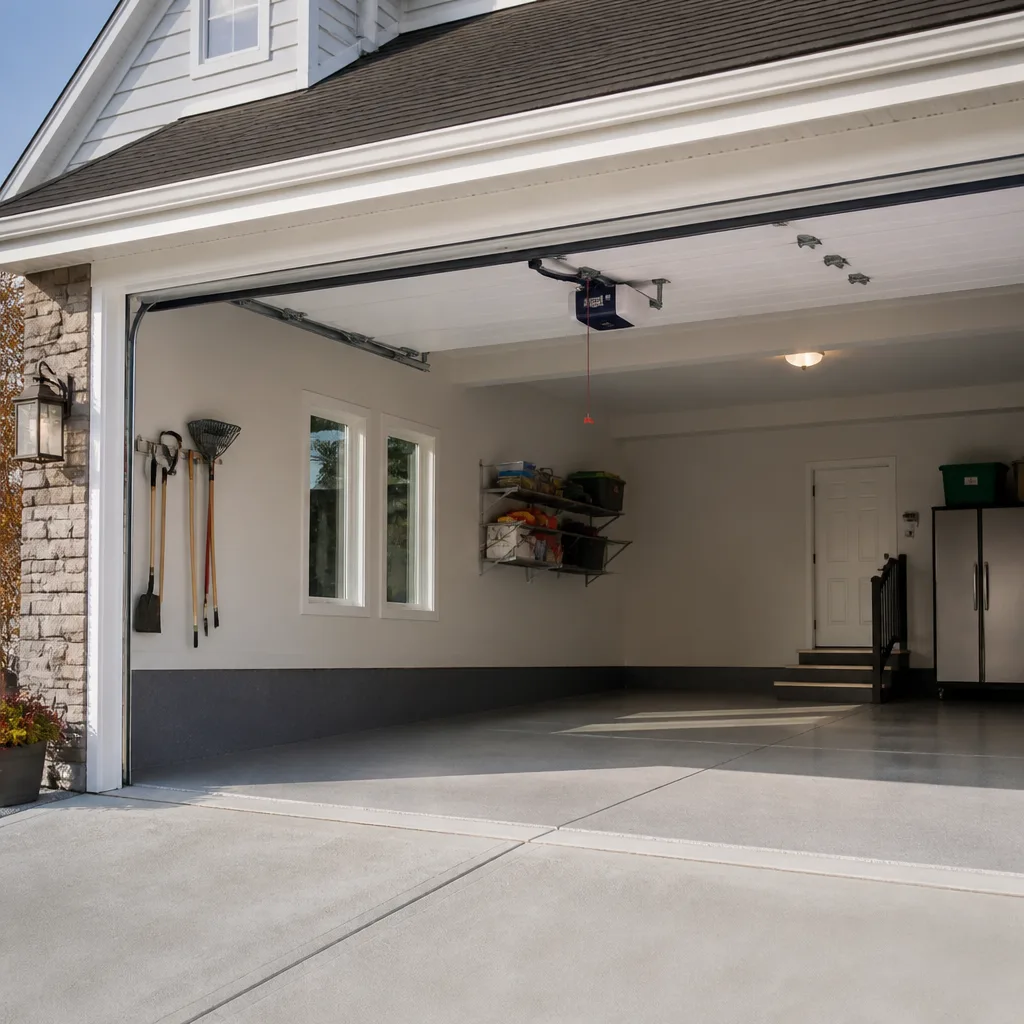 LiftMaster openers
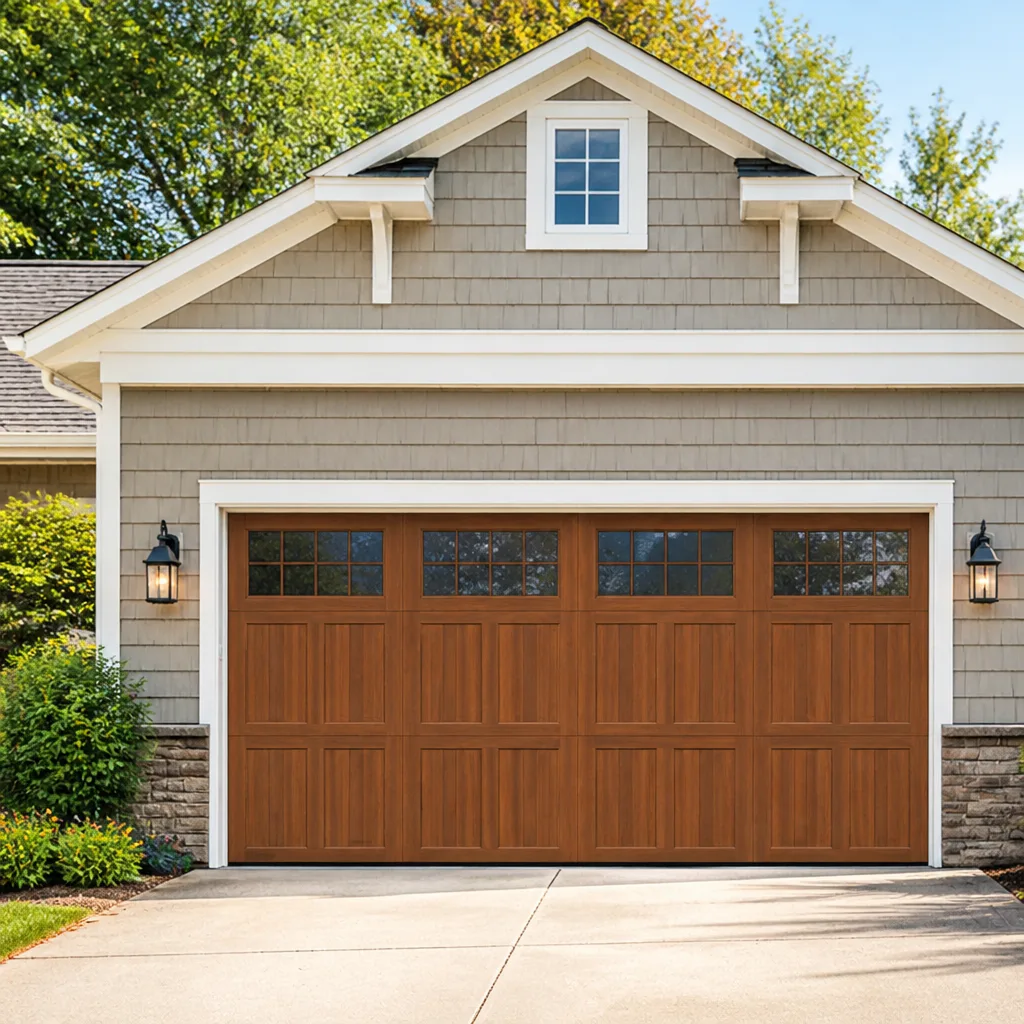 Chamberlain openers
Full 25-point door and opener safety check with every visit - springs, cables, rollers, tracks, and your LiftMaster or Chamberlain opener included
You get a price before we start. It does not change when the pro arrives.
Get your free estimateGarage Door Permits, Codes & Inspections in Waterbury, CT: What You Need to Know
Most Waterbury homeowners assume a garage door is exempt from permitting because it’s not a room and not a roof. That assumption is where trouble starts. Connecticut adopted updated building code provisions tied to UL 325 opener safety standards, and work done before those provisions were enforced can fail a home inspection during a sale even when the door opens and closes fine on the day of the walkthrough. This guide walks through which garage door projects in Waterbury need a permit, which don’t, what “like-for-like” replacement actually means under Connecticut code, how UL 325 affects a new opener, and how to check permit status at City Hall before a listing goes live.
Quick Answer
In Waterbury, a garage door replacement that matches the existing size, header and opening typically does not require a building permit, but any project that changes the structural opening, adds a new opener or adds electrical work usually does. Permits are issued through the City of Waterbury’s building department, and the inspection focuses on UL 325 compliance, entrapment protection and the framing around the opening. If you’re selling a Waterbury home, confirm permit status before the buyer’s inspector does.
Styles & brands we work with
- Raised-panel steel
- Carriage house
- Modern flush
- Full-view glass
- LiftMaster openers
- Chamberlain openers
Table of Contents
- Which garage door projects need a permit in Waterbury?
- What does “like-for-like” replacement mean legally?
- How UL 325 affects openers and entrapment protection
- What a Waterbury building inspector looks for
- Resale risk: unpermitted garage work in New Haven County
- How to pull a permit or confirm status at City Hall
- How Waterbury weather and housing stock affect the work
- Common mistakes to avoid
Which garage door projects need a permit in Waterbury?
The short version: if you’re swapping a door for one that fits the same opening, you probably don’t need a permit. If you’re changing the opening itself, adding an opener where there wasn’t one, or touching wiring, you probably do. The Connecticut State Building Code treats a garage door as an exterior component of the building envelope, not as a decorative fixture, and that’s the framing that drives the permit question.
Here’s how the split usually shakes out in Waterbury:
- No permit typically required: direct replacement of a door with one of the same size and same general weight class, replacement of torsion or extension springs, replacement of rollers, hinges, cables, weatherstripping or bottom seals, and replacement of an existing opener with a UL 325-compliant unit wired to the same circuit.
- Permit typically required: enlarging or reducing the opening, changing from a single door to a double or vice versa, replacing the structural header over the opening, adding an opener to a door that never had one, running a new electrical circuit for an opener, and adding new framing if rot has compromised the jamb.
- Always ask the building department: converting a manual door to automatic, installing a high-lift or low-headroom track system, or anything that involves a change to the wall above the opening.
The reason permits show up here at all is safety, not paperwork. A garage door is the largest moving object in most homes, and a door that’s hung out of square, or a header that’s been notched without engineering, is a genuine hazard for anyone walking under it. The permit exists to put a trained eye on that framing before it disappears behind drywall and trim.
Waterbury’s housing stock matters to this question. The city has a large inventory of early-to-mid 20th century homes with detached or attached garages built long before any of this was codified. If your garage predates the current code and you’re replacing a door in an opening that was never square to begin with, the work is often closer to a structural repair than a swap. Call the building department and confirm. It’s a five-minute call that protects the resale value of your Waterbury home.
If you’re not sure which side of the line your job falls on, our team can walk the opening with you before anything is ordered. That’s the kind of conversation that belongs to garage door repair rather than to a permit office, and we’d rather have it before the door arrives than after.
What does “like-for-like” replacement mean legally?
Homeowners hear “like-for-like” and think it means “the same door, same size, no problem.” In a code context, the phrase means the replacement must match the original in every dimension that affects the building envelope and life safety: opening width, opening height, headroom, and the structural loads the door imposes on the header and jamb. A door that fits the hole but weighs forty pounds more than the original does not qualify as like-for-like in a structural sense.
Where contractors often stretch the term is in two places:
- Weight class. A Clopay insulated door and an uninsulated door of the same size can weigh very different amounts. The torsion springs, the track, and the opener are all sized to that weight. Swapping up to a heavier door without touching the springs is not like-for-like no matter what the receipt says.
- Opener capacity. Replacing a 1/3-horsepower opener with a heavier door still attached to it falls outside like-for-like. The opener has a duty cycle and a pull rating, and exceeding it is a UL 325 problem, not just a wear-and-tear problem.
Here in Waterbury, we’ve seen plenty of installs where a heavy Wayne Dalton door got hung on the same extension springs that came with the home, and the door worked beautifully for about a year before the springs stretched past service. That’s what “like-for-like” is meant to prevent. The term is a code standard for structural equivalence, not a marketing phrase.
When we quote a replacement, we note whether the new door is staying in the same weight class as the original. If it isn’t, the springs and opener get resized along with the door. It’s the only way the installation actually stays like-for-like in the sense the code cares about.
How UL 325 affects openers and entrapment protection
UL 325 is the safety standard that governs automatic garage door operators, and the version Connecticut enforces now includes specific requirements for entrapment protection. On a practical level, that means a modern opener has to detect an obstruction and reverse, and it has to have a secondary protection method beyond that reversal. The most common secondary protection in Waterbury homes is a photo-eye pair mounted on the track near the floor.
What the standard requires, in terms an inspector will actually check:
- Primary protection: the operator’s inherent reversing feature, which relies on the opener sensing resistance when the door contacts an obstruction.
- Secondary protection: a photo-eye system, a door edge sensor, or another approved entrapment device that detects an obstruction before the door contacts it.
- Manual release: a working disconnect so the door can be operated by hand if the opener fails, with the handle reachable from outside the door.
- Warning label: the entrapment warning label mounted where it’s visible, typically near the wall control or on the door itself.
- Wall control placement: the button mounted high enough and far enough from the door that a child can’t reach it from inside the garage.
The trap for Waterbury homeowners is a door that operates correctly today but was wired and installed before the current standard was enforced. A Craftsman opener from before the photo-eye era can pass a visual walkthrough and still be non-compliant. When a buyer’s inspector tests the safety reverse and the door doesn’t reverse, the deal gets complicated.
This is why we recommend any new opener install be treated as a code item rather than a convenience item. Our garage door opener repair work includes checking entrapment protection on the existing setup before we hand it back, and any new opener we install comes with its secondary protection connected and tested. We’d rather spend fifteen extra minutes confirming the photo-eyes than leave you with a door that fails a home inspection.
What a Waterbury building inspector looks for
If your project needs a permit, an inspection follows. Inspectors aren’t looking for reasons to fail you, but they are checking specific items, and it’s worth knowing what those are before they arrive.
- The header and framing. The inspector confirms the header over the opening is sized and supported correctly, that any notching has been done within code limits, and that the jamb is solid.
- The opener installation. Mounting height, clearance, wiring to a dedicated circuit where required, and a working manual release.
- Entrapment protection. The photo-eye system or edge sensor is tested, and the automatic reverse is confirmed. A door that fails the reverse test fails the inspection.
- Warning labels. The entrapment warning must be present and legible.
- Wall control placement. High enough and remote enough from the door that entrapment of a child is unlikely.
- Labeling. The opener’s compliance label is visible and matches the model installed.
Waterbury inspectors tend to be practical, and they’re going to test the door the same way a buyer’s home inspector will. That’s not a coincidence. The building code and the inspection report are both measuring the same safety features.
We’ve found in our work around Waterbury that the most common inspection issue isn’t structural at all. It’s photo-eyes mounted too high, or an opener that reverses on resistance but has no secondary protection wired in. Those are small fixes if they’re caught before the inspector shows up.
Resale risk: unpermitted garage work in New Haven County
Here’s the part of this that surprises homeowners: unpermitted garage work doesn’t usually become a problem the day it’s done. It becomes a problem the day the house sells. New Haven County real estate transactions involve a title search and, in most cases, a buyer-ordered inspection. A permit that was pulled and closed doesn’t come up. A permit that was required and never pulled can surface, and the conversation after that is rarely pleasant.
What the seller usually faces when this comes up:
- A closing timeline that gets compressed while the permit is pulled retroactively or the work is documented.
- A buyer’s inspection report that flags the opener as non-compliant under UL 325, which then has to be remediated as a condition of closing.
- A title issue in some cases where open permits were never closed, which can delay or complicate the sale.
None of this means a small repair was a mistake. Replacing a spring or a roller doesn’t require a permit and doesn’t create resale exposure. The exposure comes from the jobs that did require a permit, were done without one, and left behind no record of the work being done to code.
If you’re planning to list a Waterbury home in the next year or two, it’s worth spending an afternoon confirming that any garage work done at the house was permitted correctly. That’s much easier to sort out now than during a thirty-day closing window. Our team has walked a lot of Waterbury garages in that window and the answer is almost always “fix the photo-eyes and stop worrying about it.” Occasionally it’s not.
How to pull a permit or confirm status at City Hall
Waterbury’s building department, at City Hall, is where garage door permits are issued and where you’d check the status of existing work. The process is straightforward and doesn’t require a contractor to file it, though most homeowners let the installer pull the permit because the installer’s name has to be on the record anyway.
The steps look like this:
- Identify the scope. Write down exactly what’s changing: door size, door weight class, opener model, whether any wiring is involved, whether the header is being touched.
- Call the building department. Ask whether your specific scope requires a permit. Have the model numbers and opening dimensions in hand when you call. Ask specifically whether a UL 325 compliance check will be part of the inspection.
- File the permit application. The application typically requires the property address, a description of the work, the contractor’s information, and in some cases a drawing or manufacturer spec sheet.
- Schedule the inspection. Once work is complete, the inspection gets scheduled and the inspector comes out. The permit isn’t closed until the inspection passes.
- Confirm the permit is closed. This is the step people skip. A permit that was pulled but never inspected stays open on the property record. If you confirm a closed permit now, you won’t have to confirm it later during a sale.
If you’re checking on existing work rather than new work, ask the building department to pull the property’s permit history. They can tell you whether a garage permit was ever issued, what it covered, and whether it was closed. This is public record and doesn’t require any special paperwork.
We handle permit pulls and inspections as part of our garage door repair and installation work when the scope calls for it. You don’t have to navigate City Hall on your own if you’d rather not, but we’d always rather you know what’s happening than have it happen behind your back.
How Waterbury weather and housing stock affect the work
Waterbury sits in a part of Connecticut that gets a real winter, with freeze-thaw cycles that work on wood framing and metal hardware for months on end. This matters to garage door permits more than most homeowners expect, because temperature extremes are part of what drives the failure modes the code is trying to catch.
Torsion springs lose tension in cold weather, and extension springs can crack under the stress of a heavy door in a cold garage. Weatherstripping along the bottom and sides hardens and pulls away from the frame. Jamb wood absorbs moisture and swells, which throws the door slightly out of square. Over enough seasons, the door’s path through the opening gets tighter and tight, until the opener has to push against real resistance to close.
That resistance is exactly what the reverse test measures. A door that worked perfectly all summer can fail a UL 325 reverse test in February because the wood has swelled or the rollers have flattened in the cold. An inspector who comes in winter is testing the door in exactly the conditions where it’s most likely to jam.
Waterbury’s housing stock adds a layer to this. Older garages in Waterbury were built before anybody was measuring headroom carefully, so you occasionally find a door that’s been shimmed into the opening to clear the ceiling and doesn’t sit square. When the door gets replaced, the new one comes in parallel. When the opener gets replaced, it has to be sized to pull a door that’s slightly heavier than the manufacturer spec because of that. In both cases, the technical answer is “get it right the first time so the inspector doesn’t have to come back.”
Brand familiarity helps here. A Clopay door and an Amarr door of similar dimensions don’t hang exactly the same way, and the opener mounts differ too. We work on both, and we work on the openers that go with them, so the setup we hand you matches what the inspector expects to find on that brand.
Common Mistakes to Avoid
- Assuming all garage door work is exempt. Direct replacements usually are. Structural changes and new openers usually aren’t. If you don’t know which category your job is in, call the building department.
- Letting “like-for-like” cover a weight change. A heavier door is not like-for-like just because it fits the opening. Springs and opener capacity have to be resized with it.
- Skipping UL 325 checks on a new opener. A photo-eye system that isn’t wired in or isn’t tested will fail the inspection. Confirm the safety reverse is working before the inspector arrives.
- Leaving an old permit open. A permit pulled but never inspected stays on the record. That’s a problem during a Waterbury home sale, even if the work was done correctly.
- Not confirming permit status before listing a Waterbury home. A buyer’s inspection can flag unpermitted work. Better to sort it out now than during a closing window.
- Mounting photo-eyes too high on the track. The system needs to detect an obstruction at floor level. High-mounted eyes pass a visual check and fail the functional test.
- Hiring the door install without checking the opener. A new door on an aging opener is a UL 325 question waiting to happen. The opener’s duty cycle and pull rating need to match the door that goes on it.
See the difference
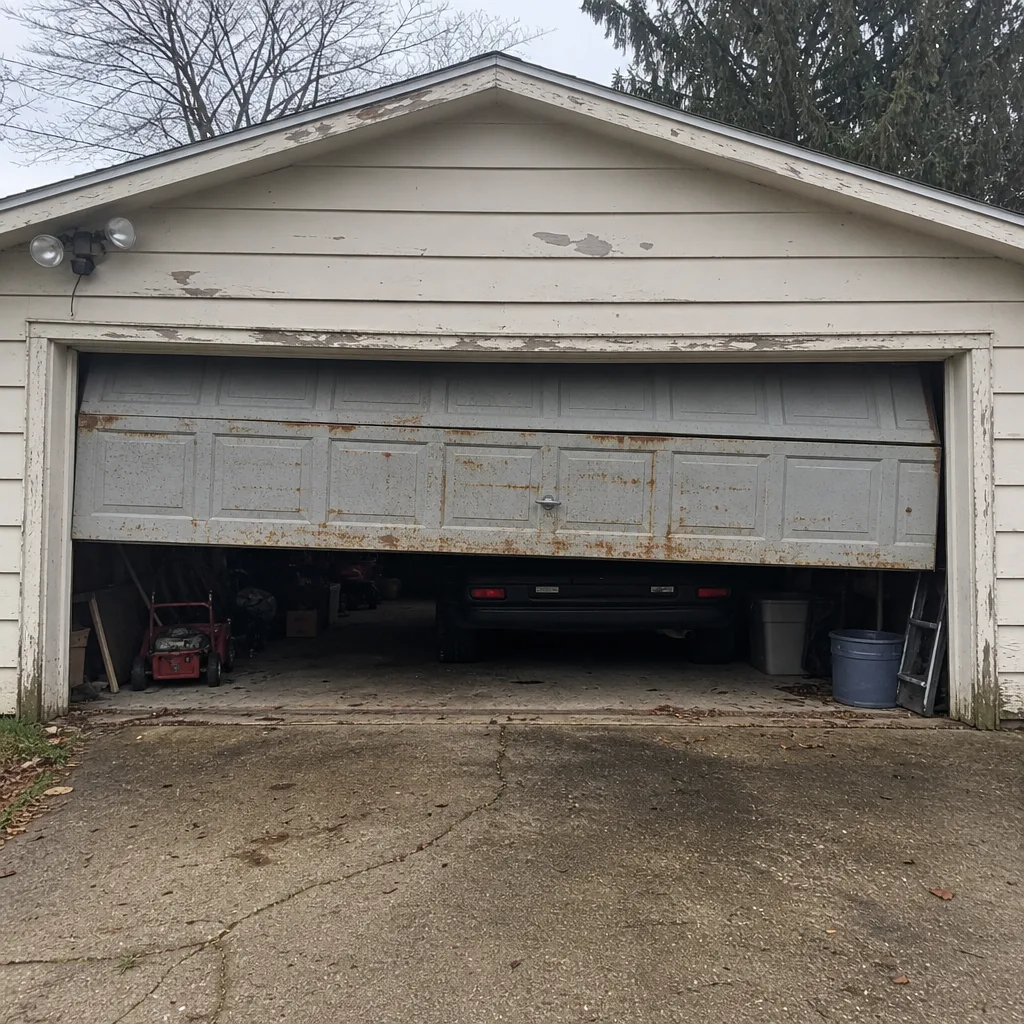 Before
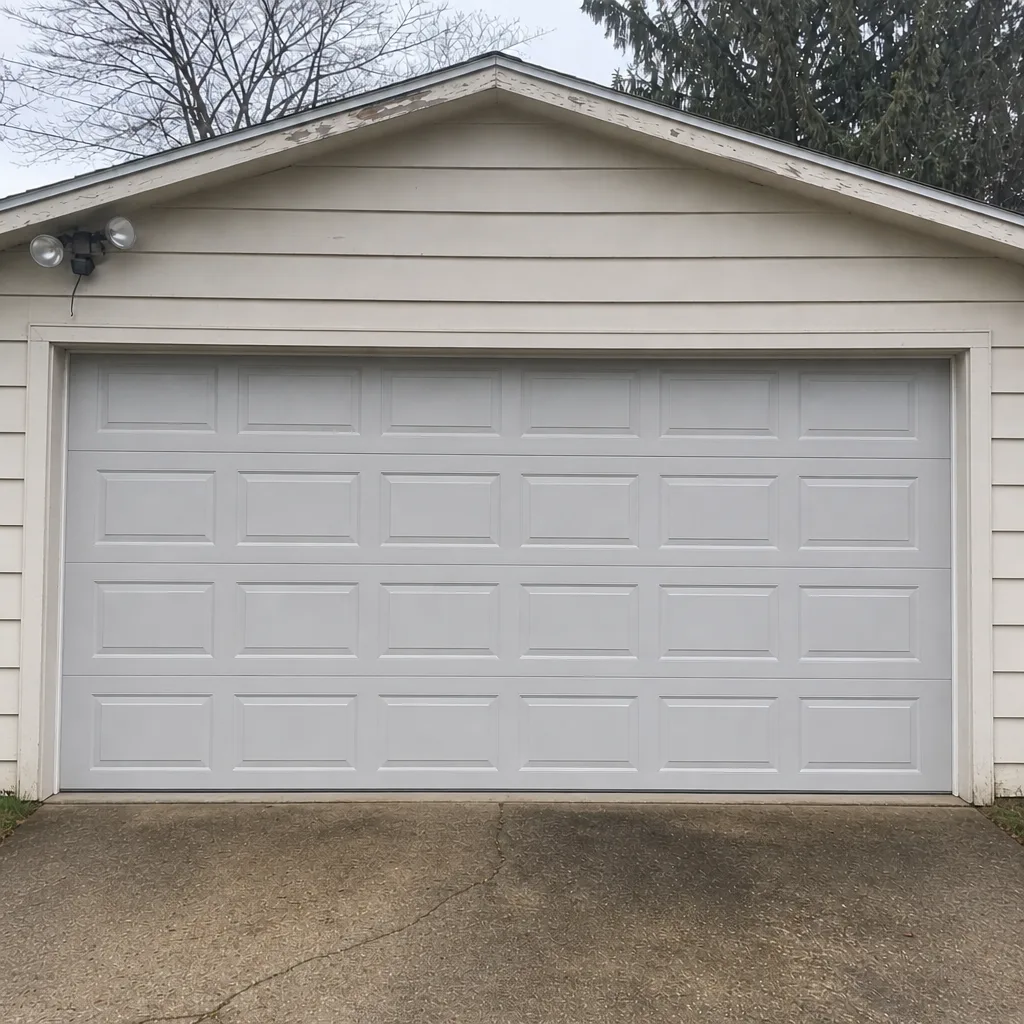 After
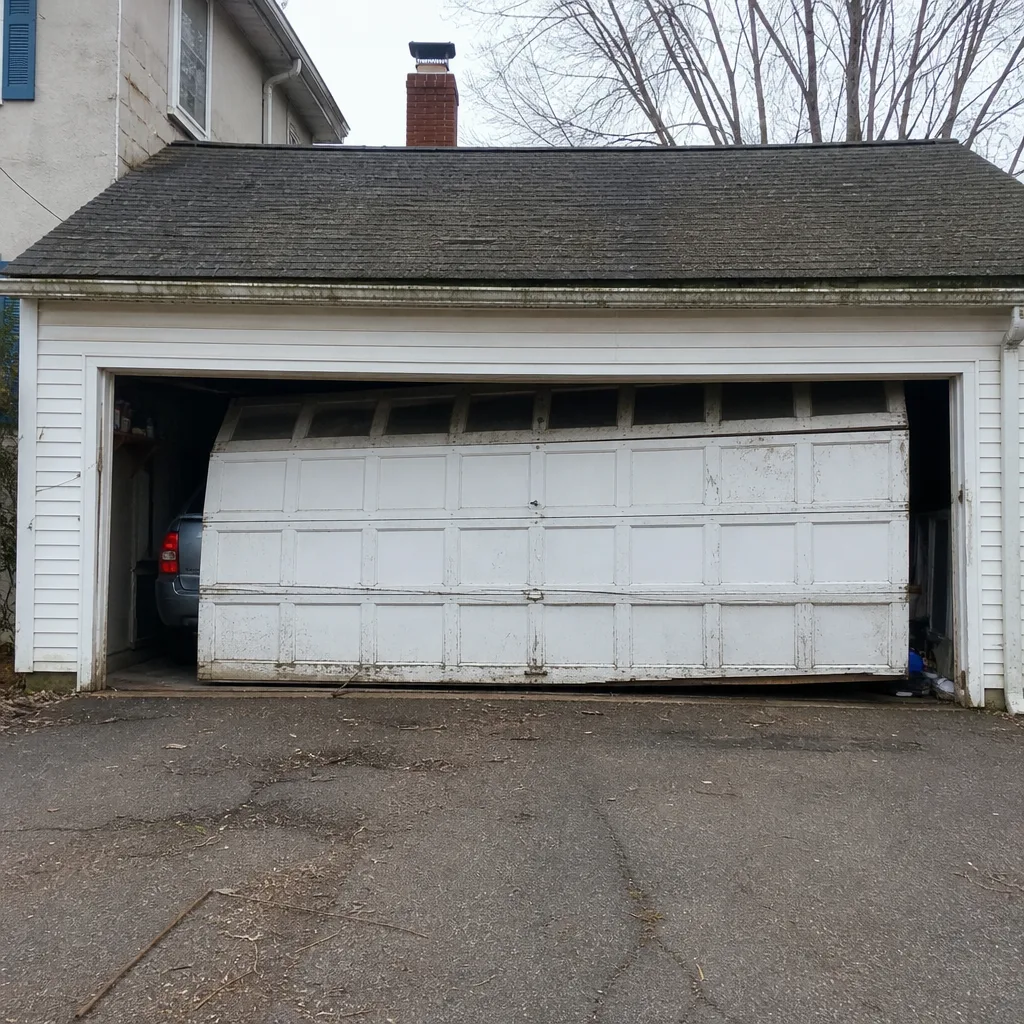 Before
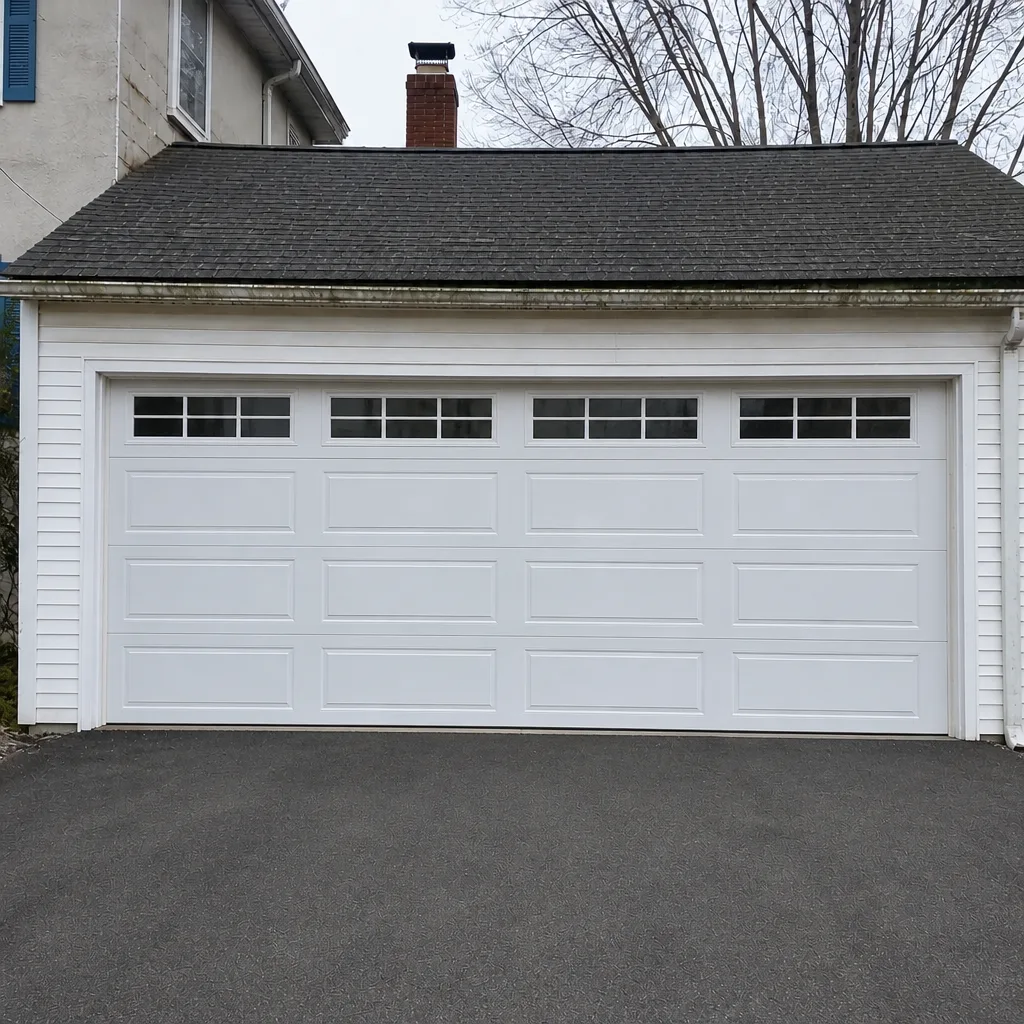 After
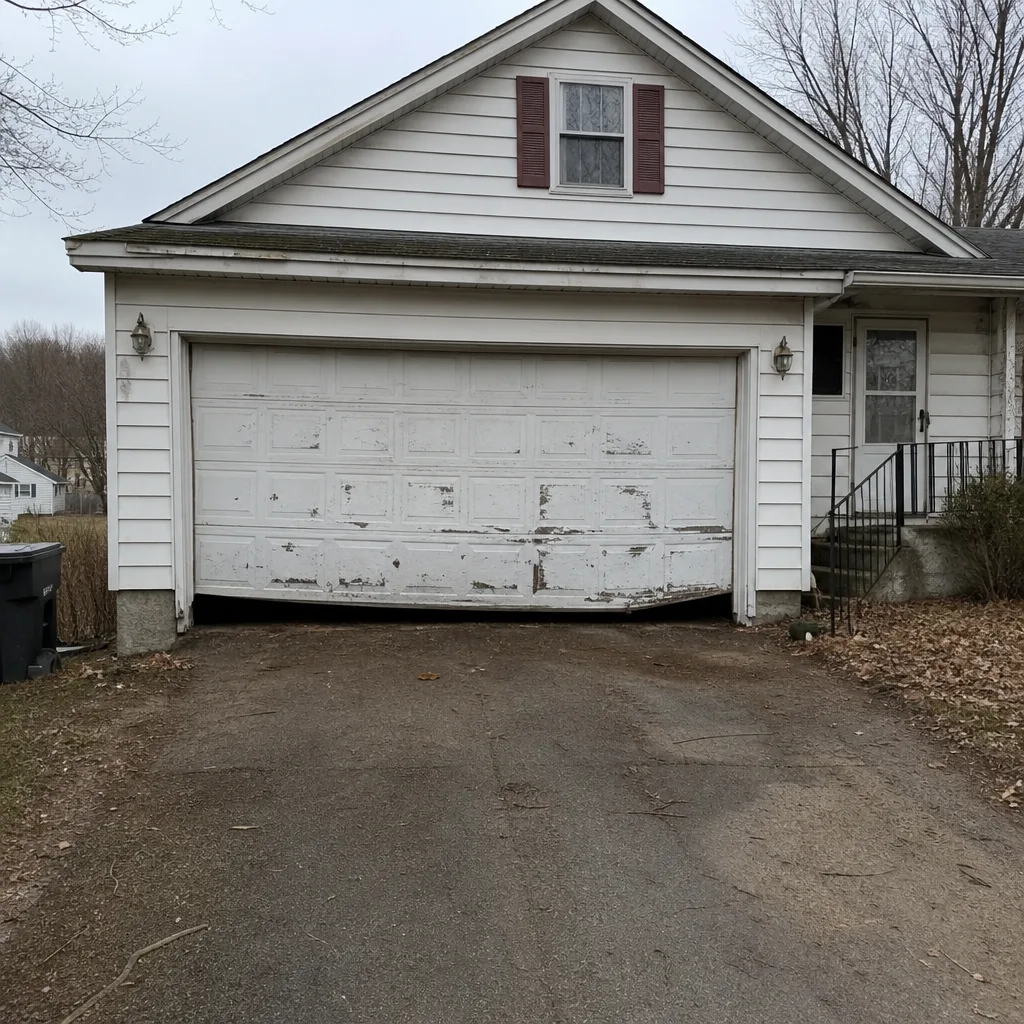 Before
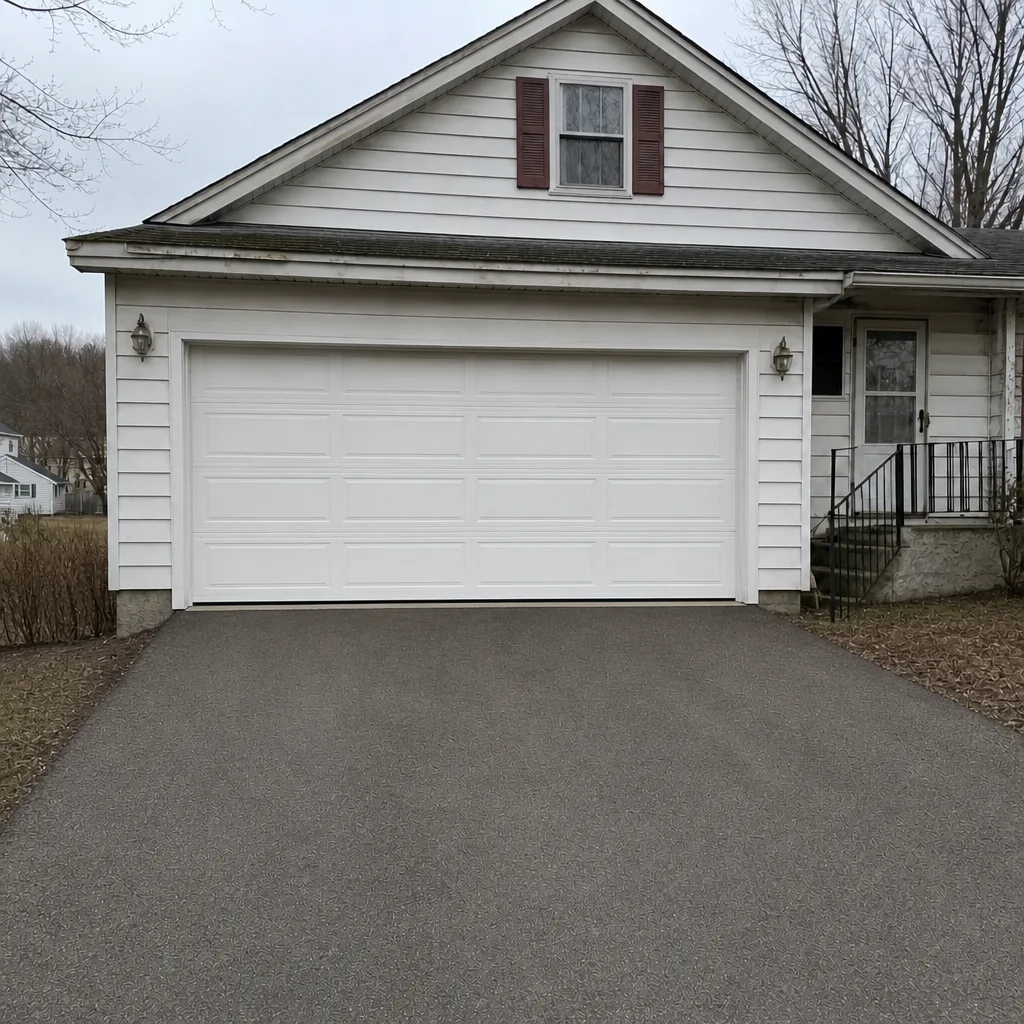 After
When to Call a Professional
Call a professional when the job involves a spring, torsion or extension. Those are the parts of a garage door system that store real kinetic energy, and a spring under tension can cause serious injury if it releases unexpectedly. This isn’t a repair to attempt on your own, and it isn’t something we’d describe in a step-by-step here. If the spring is broken, leave the door closed and call.
Call us as well if the door won’t close at all, if the opener reverses on its own or fails to reverse, if the door comes off the track, or if you need a written record of the work for a permit or a sale. These are the calls where a specialist’s diagnosis saves you from a second trip. Waterbury Garage Door Repair offers free estimates in Waterbury, works on LiftMaster, Chamberlain, Genie, Clopay, Amarr, Wayne Dalton, Craftsman and Raynor equipment, and handles the full job from a broken spring to a full new door without handing you off. Call (833) 513-8667. We answer 24/7. Fast dispatch from 7am to 7pm, Sunday through Friday.
Frequently Asked Questions
In most cases, no. A direct replacement of a door with the same size and weight class in the same opening usually doesn’t require a permit. If the opening is being changed, the header is being modified, or a new opener is being added, a permit is typically required. Call the City of Waterbury building department with your specific dimensions and confirm before the work begins.
Legally, like-for-like means the replacement matches the original in every dimension that affects the building envelope and the structural loads on the opening, including weight class. A door that fits the opening but weighs more than the original is not like-for-like unless the springs and opener are resized with it. If you’re unsure, ask the building department to confirm.
UL 325 is the safety standard for automatic garage door operators, and it governs entrapment protection. Modern openers are required to have both a primary reversing feature and a secondary protection method such as photo-eyes or a door edge sensor. An opener installed before the current standard was enforced may work fine and still fail a home inspection under UL 325. If your opener predates photo-eyes, that’s the item to look at first.
Yes, it can. Unpermitted work that required a permit can come up during a buyer’s inspection or title search, and it can delay or complicate a New Haven County closing. Open permits that were never inspected are the most common issue. Confirming permit status at Waterbury City Hall before you list is the simplest fix.
Call the City of Waterbury building department at City Hall and ask them to pull the property’s permit history. That record shows what permits were issued, what scope they covered, and whether they were closed. It’s public information and doesn’t require any special paperwork to request.
We can pull permits and coordinate inspections as part of the work when the scope calls for it, and we can confirm what the City of Waterbury requires for your specific job before we start. The estimate is free and the price is set by the written estimate, which is quoted and agreed before any work begins. Call (833) 513-8667 for an exact quote.
The Bottom Line
Garage door permits in Waterbury come down to three questions. Does the job change the opening or the structural header? Does it add an opener or electrical work where there wasn’t any? Is the new door the same weight class as the old one? If the answer to any of those is yes, confirm the permit requirement at City Hall before work starts.
Doors that were installed before UL 325 entrapment protection was enforced can pass a walkthrough and fail a home inspection during a sale. Checking the photo-eyes and the safety reverse now is a small step. Sorting it out during a Waterbury closing is not.
Our technicians have up to 8 years of experience across the eight major door and opener brands, including Clopay, Amarr, Wayne Dalton, LiftMaster, Chamberlain, Genie, Craftsman and Raynor. We can walk through the permit question with you, handle the work, and make sure the inspection passes. Whether you’re installing new or just want to know what the code actually requires, we’re here for it.
Call (833) 513-8667 for a free estimate. We answer 24/7. Fast dispatch from 7am to 7pm, Sunday through Friday. Estimates are free and the written estimate sets the final price.
Written by the team at Waterbury Garage Door Repair.